Review by Ian Keogh
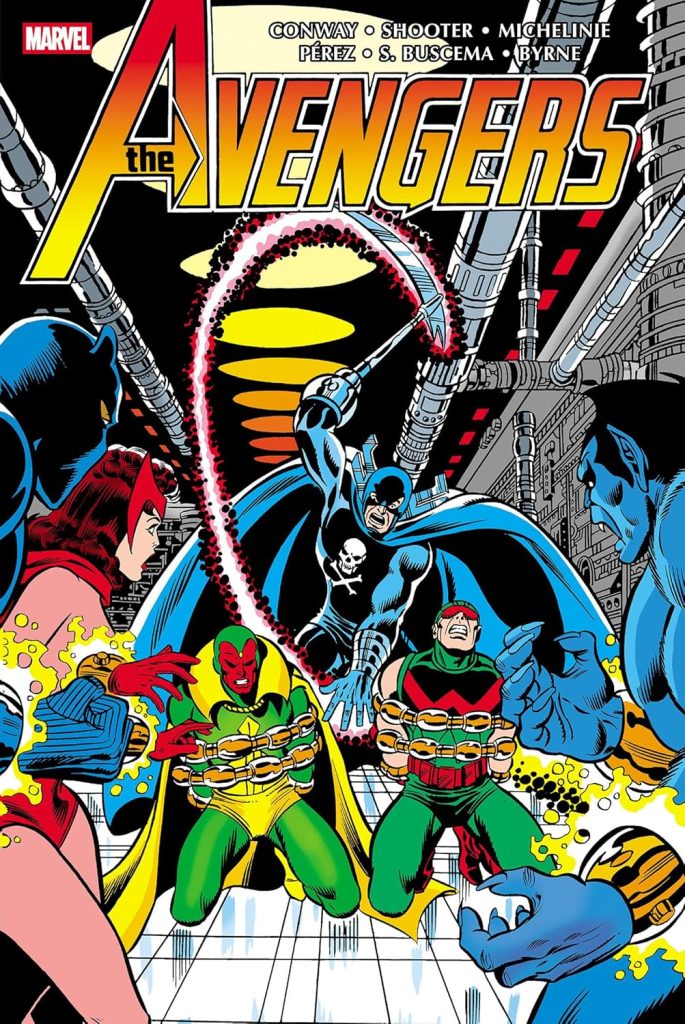
Clocking in just shy of 1200 pages, Avengers Omnibus Vol. 6 is one monster of a book, almost double the size of any previous volume, so why hold over Steve Englehart’s final two Avengers issues from Avengers Omnibus Vol. 5? Follow the links below for more detailed information about specific content, but in brief it takes the Avengers from summer 1976 to autumn 1979 encompassing some excellent stories and some excellent art, the latter primarily from John Byrne and George Pérez. Sadly, pretty well all fill-ins along the way are poor.
After a solidly plotted membership change, with another to follow, the collection opens with a run of ordinary work. There’s greater thought about the cast in Jim Shooter’s early material, but allied with weak plots and melodramatic dialogue. However, he greatly improves and even draws an issue none too badly. Pérez, though, makes Gerry Conway’s efforts look better than they are.
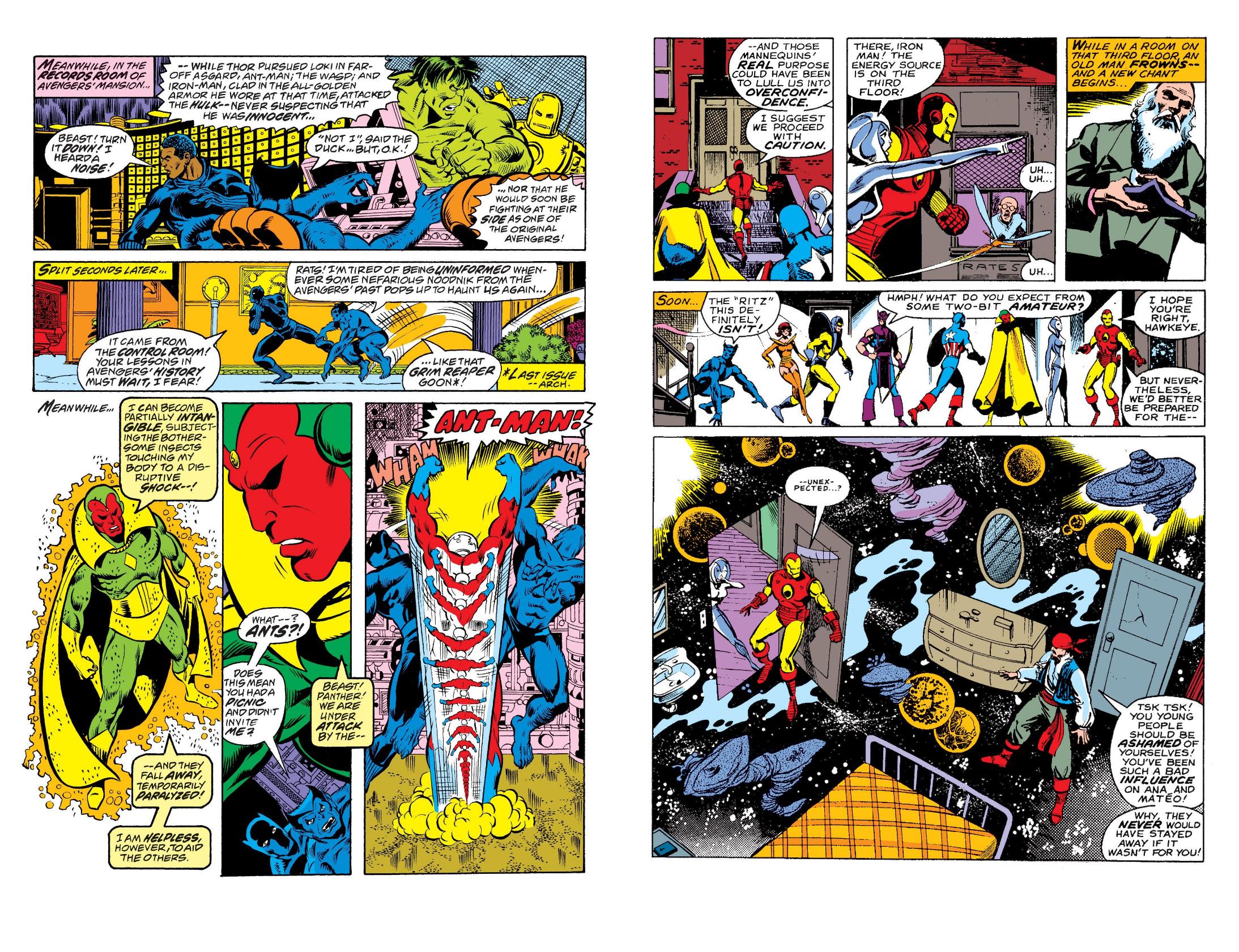
It’s followed by a golden period of around a dozen consecutive issues written by Shooter and drawn by either Byrne or Pérez where the action really still sizzles. The characters have motivation, personality and power, the Avengers face foes worthy of their combined might, and little unexpected moments feature. Shooter rarely resorts to characters explaining themselves via thought balloons, so his writing remains contemporary, although some attitudes to women aren’t. The winning sequence extends into the start of his most ambitious story, ten chapters of a reality-altering foe with diversions along the way, but sadly artist Dave Wenzel was learning on the job in 1978 and can’t achieve the the necessary glamour or grandeur. In paperback it’s available as The Korvac Saga (or Tomorrow’s Avengers Vol. 2) and in hardcover as Marvel Masterworks: The Avengers Volume 17. Also notable is Jim Starlin writing, drawing and involving the Avengers in an ending to his Warlock story, but while very good on its own, it’s better appreciated after reading the material leading up to it, say in Warlock by Jim Starlin: The Complete Collection.
The other notable sequence is Nights of Wundagore in paperback, and although there’s an ordinary detour with the Absorbing Man, the primary plot concerning the parentage of Quicksilver and the Scarlet Witch is well developed. Steven Grant and Mark Gruenwald erase a previous unsatisfactory solution, and Byrne’s art hits his Avengers peak, creating mood and emotion in a foreign land.
Smaller chunks of this collection have previously been reprinted as The Private War of Doctor Doom, The Bride of Ultron, and The Yesterday Quest, the Epic Collection The Final Threat and in hardcover as Marvel Masterworks: The Avengers Volume 16 and Volume 18. In black and white look for Essential Avengers Vol. 7, Vol. 8 and some of Vol. 9.
After the actual Avengers stories there’s a fair amount of what could be considered bonus material, although little stands out. The best is the Falcon’s first solo outing by Mark Evanier and Sal Buscema with a mystery to be solved. Otherwise there’s a sentimental short Christmas tale touring the Marvel universe, a teaming of Hawkeye and Two-Gun Kid, and two issues of What If…? starring forms of the Avengers, neither of them memorable. Roy Thomas’ idea of 1950s superhero The 3-D Man is conceptually strong, but it’s resolutely of its era, as is Jim Craig’s art.
The better issues match the peaks of previous volumes, but you have to go back a long way to reach anything as poor as some fill-ins, and why do Marvel persist in repeating the mistakes of the past instead of shunting them to the end and letting continued stories flow?