Review by Woodrow Phoenix
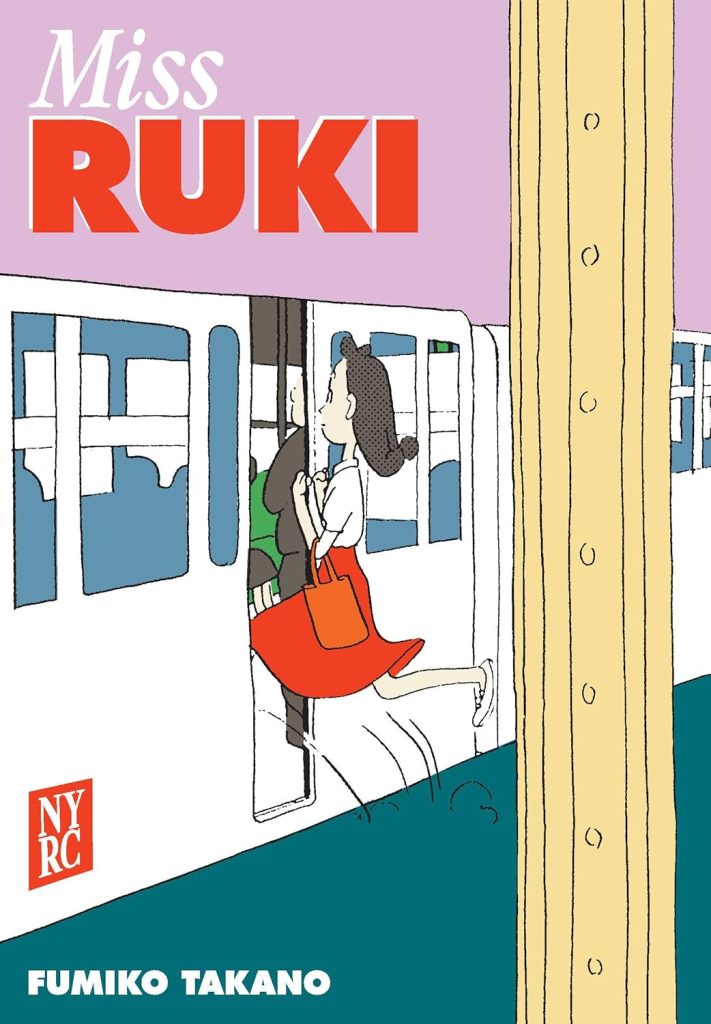
Miss Ruki collects 58 episodes of a monthly comic strip that appeared in Hanako, a Tokyo-based women’s magazine, between 1988 and 1992. It is written and drawn by Fumiko Takano, a superstar in Japanese manga. Namechecked as a major inspiration by creators including Taiyo Matsumoto (Tekkon Kinkreet, Blue Spring), Naoki Urasawa, (Master Keaton, Asadora, 20th Century Boys and Pluto), Hiroaki Samura (Blade of the Immortal) Katsuhiro Otomo (Akira) and Keigo Shinzō (Tokyo Alien Bros.), she is the recipient of two of Japan’s most prestigious awards. In 2003 she won the Tezuka Osamu Cultural Prize and in 2015 she was the second-ever manga artist to win the Iwaya Sazanami Literary Award. The chances are, though, you will never have heard of her because her work is so idiosyncratically Japanese, and not genre or youth-oriented that none of it has been translated into English until now.
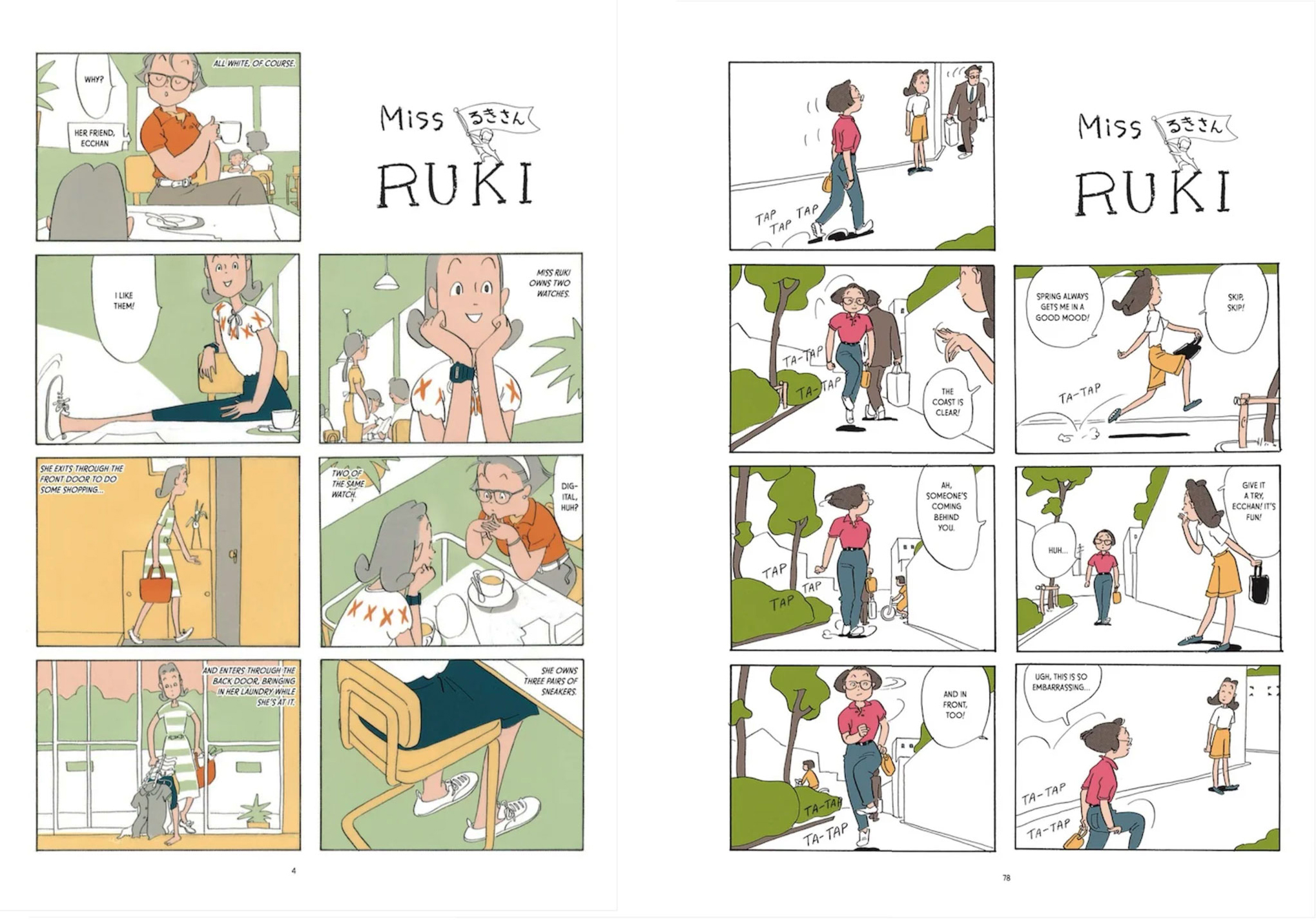
Flipping through this book to get a quick sense of what it’s about won’t help you understand why it’s such a beloved strip. You have to slow down and take your time with it. Miss Ruki is a series of two-page vignettes from the lives of two young women living in Tokyo. The slightly eccentric Ruki follows her own path, unconcerned with trends or fashions, while her friend Ecchan is a more typical shopping and restaurant-hopping, urban professional ‘office lady’. The style is minimal, as sketchy outlines with limited colour palettes in shades of green, purple, orange, are applied seemingly at random to observations of bike punctures, buying the right kind of rice, library visits and subway mishaps. It produces little moments of interaction so light and inconsequential they barely seem to qualify as stories at all. If you look again you will begin to see the crisp precision of the layouts of each panel; the casual but beautifully alive body language, perfectly captured; the inventive, stylish poses and angles with every line and hue placed exactly where it works the best. You will begin to notice how much subtext is packed into conversations of just a few words. One strip opens with Ecchan suggesting they try a new restaurant she’s just read about: “A modern twist on middle eastern fishing village cuisine… out there orientalism is in right now,” she says with her nose buried in Hanako magazine. “I don’t want to eat anywhere that requires nerve,” Ruki replies.
Takano’s comic strips are presented here unaltered from the way they were originally made and printed. The reading order is vertical rather than horizontal, and tiers are arranged from right to left. This means reading down one row, then moving left to read down the next. Remembering how this works is a little challenging at first, but the rigid structure of an eight-panel grid helps to keep you going consistently in the correct direction. Subtle, odd and funny, Miss Ruki captures the 1980s in Japan with style, delicacy and the occasional barb.
The more you look, the more impressive it gets. The accumulation of little details about the values of the two women, what they think and how their relationship flexes and evolves brings them to life in such an endearing way, you will return to these pages again and again. A fascinating and instructive afterword in the form of a ‘translator’s note’ from the very skilful Alexa Frank gives an outline of Fumiko Takano’s career and some useful contextual explanations for the manga industry, the settings and themes of Miss Ruki and the consumer culture of Japan’s 1980s bubble economy.