Review by Graham Johnstone
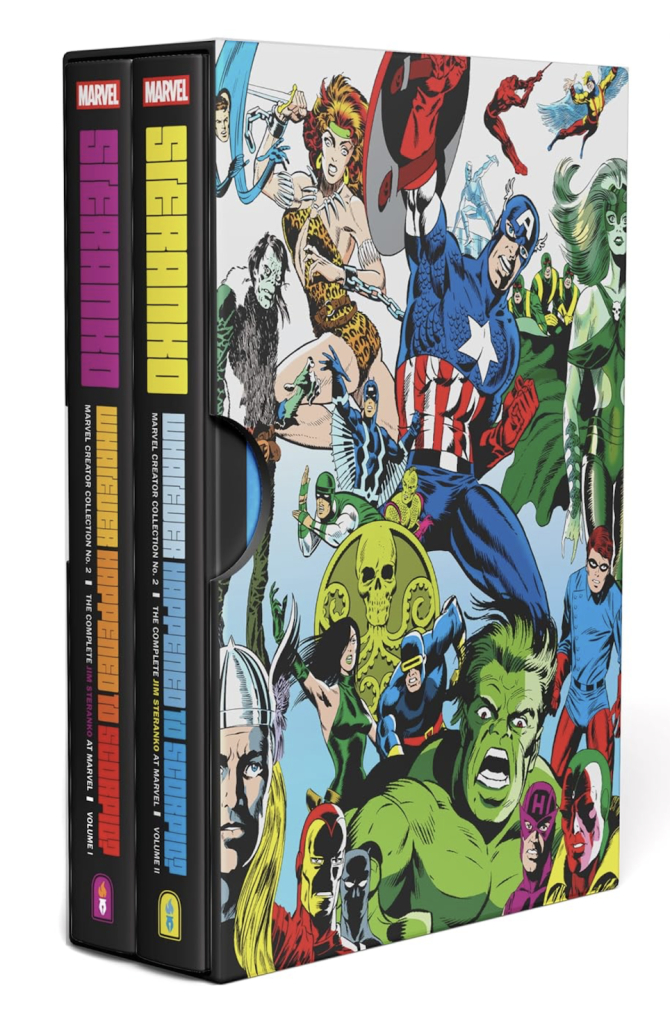
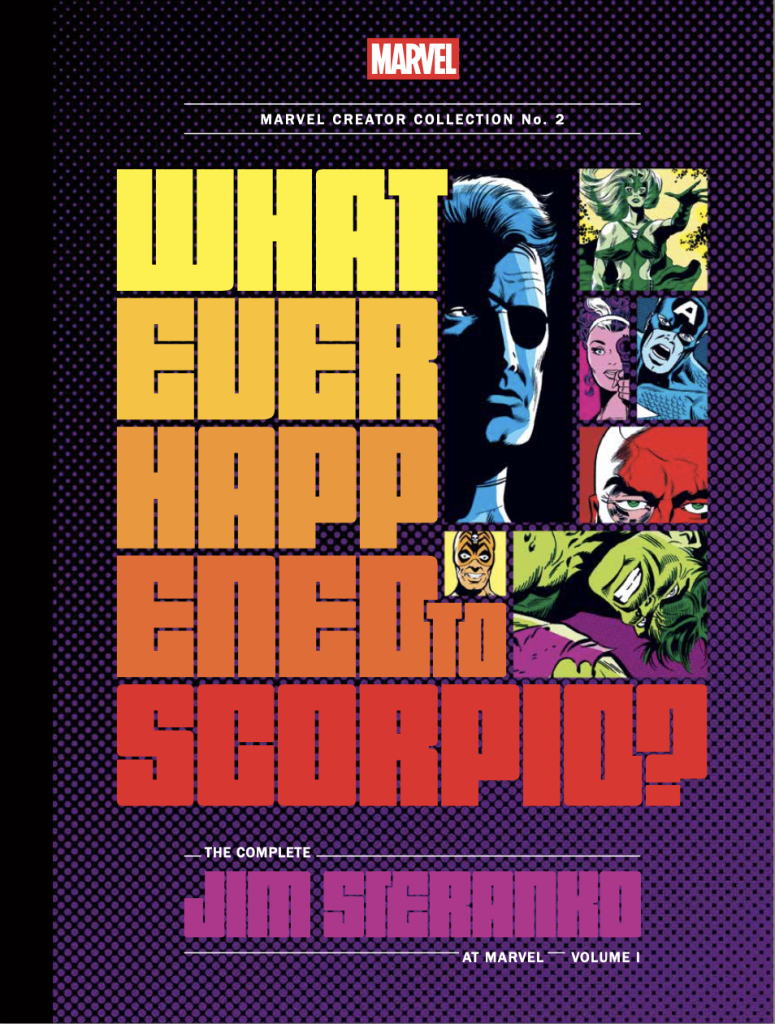
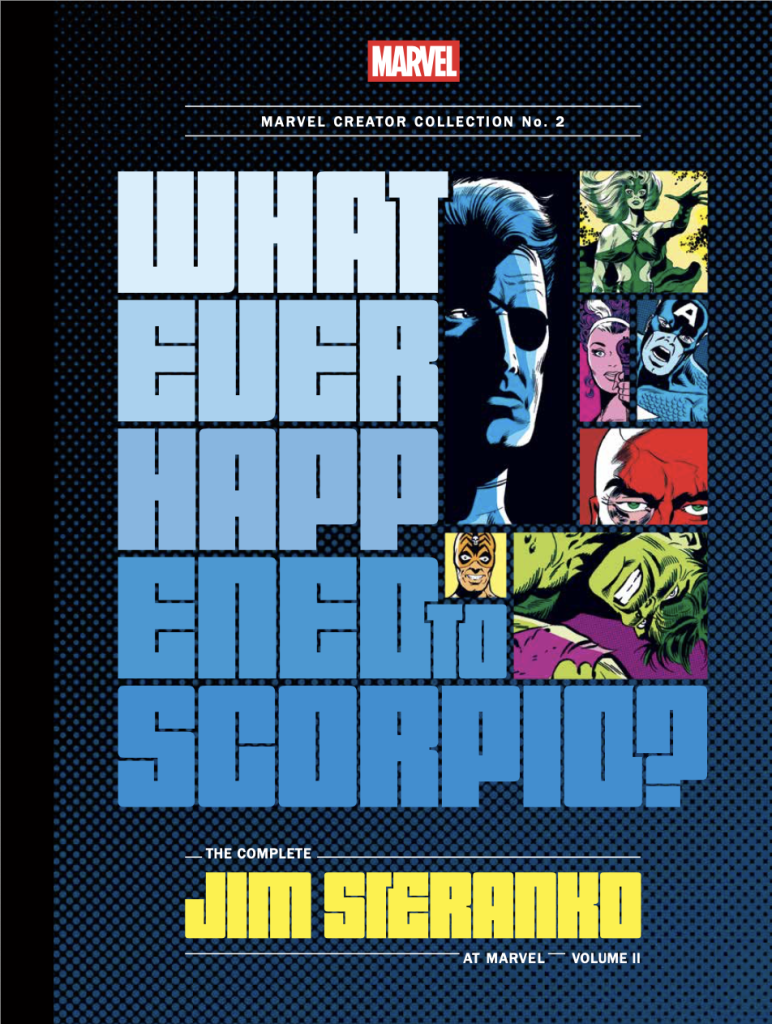
Whatever Happened to Scorpio? is a neat strap-line for The Complete Jim Steranko at Marvel. The title of one of his best stories, it also alludes to the artist/writer’s spectacular rise, then disappearance from comics.
Steranko is much admired for his 1960s Marvel comics, most famously his stylish update of the spy genre in Nick Fury: Agent of S.H.I.E.L.D. Previously, collected in Masterworks hardbacks, Artist/Artisan editions, and more, these are mostly out of print, and fetch high prices, as is the Visionaries paperback collecting his other Marvel work. So there’s surely demand for this two-volume hardback slipcased set.
Debuting on S.H.I.E.L.D. in 1966, each Steranko episode was better than the last. He matched predecessor Jack Kirby’s storytelling and dynamism, adding elegance, innovative page designs, fine art influences and 1960s cool. Steranko invents multiple new gadgets, and updates WWII veteran Fury himself, with a super-heroic ‘uniform’, fashionable civvy suits, and a designer-cool bachelor pad. Steranko’s enjoyment is infectious.
Remembered for splash pages, and spreads, Steranko’s design skills extend to mixtures of large and small panels, tall and wide panels, extreme close-ups and panoramic vistas. Figures push against, reach and jump out of panels. Ingenious one-offs include circular panels rotating round a central motif, panels interlocking ‘jigsaw’ style, and panel borders incorporating labyrinths. The latter requires the reader to turn the book to follow Fury’s physical and mental journey. These effects, a treat in themselves, enhance already strong storytelling.
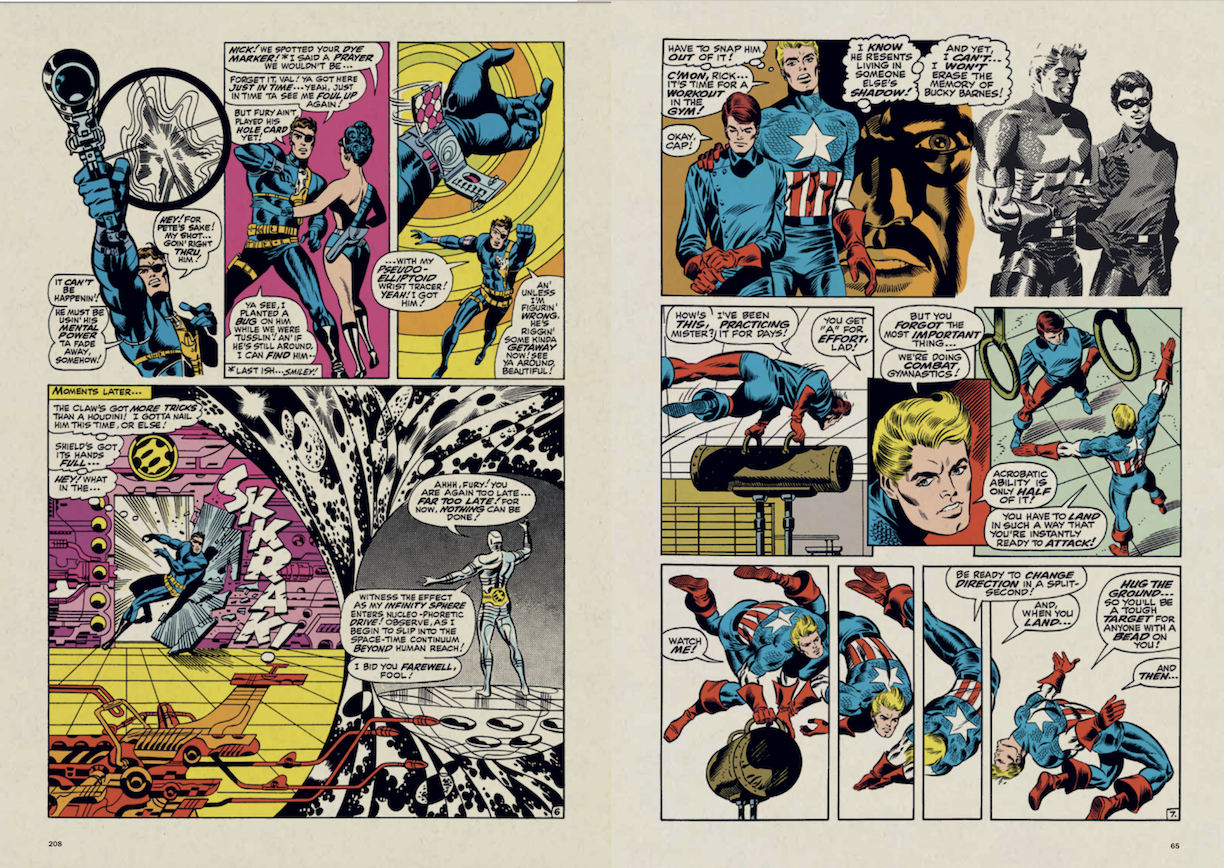
The extent of Steranko’s skills is well demonstrated by the ten pages of 1968’s ‘Armageddon’. The splash page has figures stark against a white background, title lettering integrated into the scene and filled with flames. A single panel shows Fury in both close-up and long shot. A pair of panels combine colour, greyscale and binary black and white segments (pictured), as Fury chases a foe into ‘the space-time continuum’, where their mental battle is depicted as psychedelic patterns. That still leaves room for four pages of S.H.I.E.L.D. agents storming an enemy base – it reads as four single page panels, but also as a spread and a double-spread. That’s an astonishing amount of creativity.
The rendering is typically excellent, Steranko’s brushwork both elegant and dynamic. Other inkers, barely blunt his brilliance. Steranko mostly handled his own colouring, making dazzlingly fresh use of the limited palette, grey and white. Purples, magentas, and greens evoke the era’s psychedelia in music and art, while colour choices evoke changes of mood or scene. Few peers had such control over their final pages, and it pays off powerfully.
As writer, Steranko slipped easily into the verbose Marvel style. After an inherited H.Y.D.R.A. storyline, his own first arc repeats its formula of arch-villain, global threat, destructive device, and even conflicting loyalties of female wards. Subsequent shorter stories add appeal, with new agents, and glimpses of civilian life, like Fury’s designer penthouse and glamorous guest. Steranko, also a comics historian, draws from Marvel’s WWII and Cold War forerunners. He continues to overload his art with text, but gains finesse and wit, and evidently enjoys stretching out in later full-length episodes.
A few more stories followed, two X-Men episodes are undermined by others writing and inking. However, three issues of Captain America (pictured, right) are Steranko’s best, and two genre shorts demonstrate his visual versatility. These comprise Volume II here, and the earlier Visionaries paperback.
This $90 slipcased set adds learned essays, an interview from Steranko’s heyday, cover art, and apparently everything he ever drew for the company. For those wanting The Complete Jim Steranko at Marvel this is the clear best option.