Review by Frank Plowright
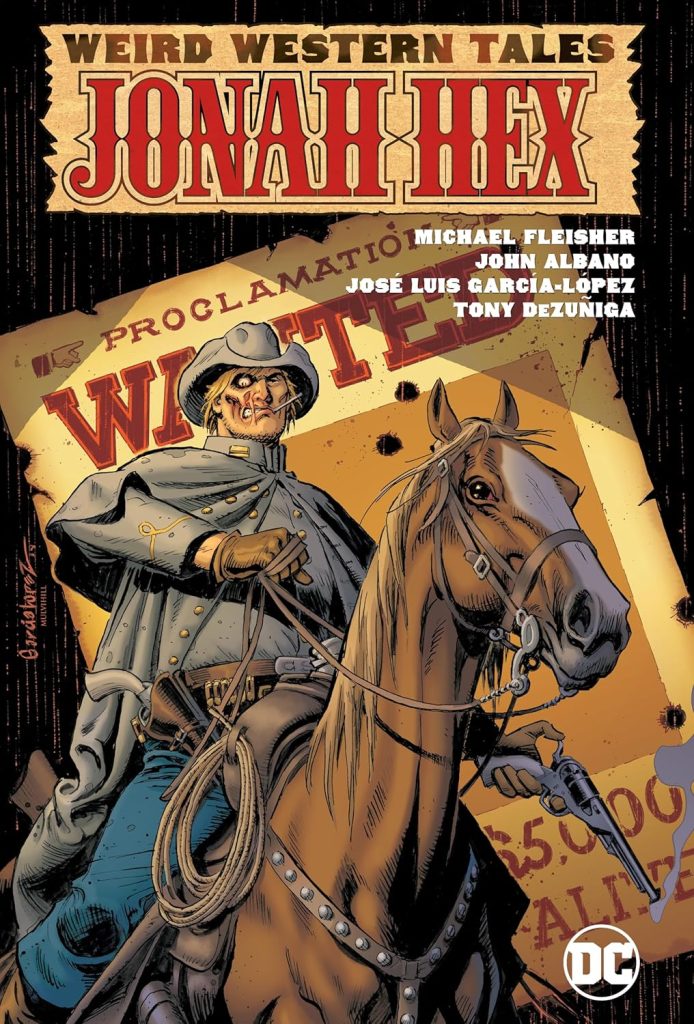
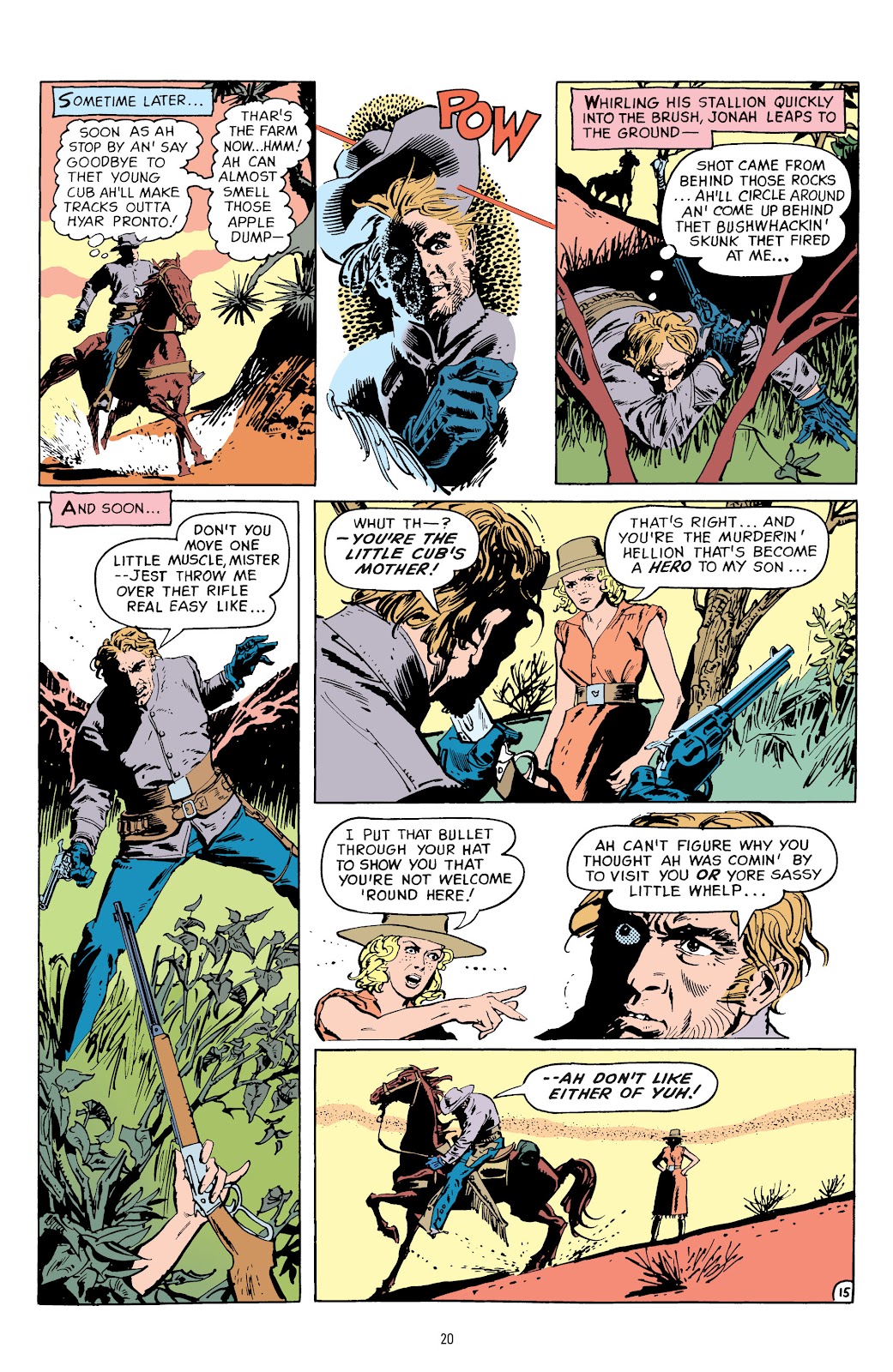
While Michael Fleischer’s name is most readily associated with Jonah Hex’s 1970s appearances, his creation was down to John Albano and importantly artist Tony DeZuniga, who designed the scarred bounty hunter’s gruesome and scruffy appearance. They established the loner’s look, the surly attitude, and DeZuniga’s gritty style characterised Hex and his environment along with the reprehensible types he hunted down.
Albano’s tales set the pattern of Hex either with a target in mind or running into trouble. This might be through wearing his grey Confederate uniform in the years following the US Civil War, or his contrary and violent attitude. His fearsome reputation as an accurate shot prevents even more problems. To supply some sympathy, though, Albano ensures that while Hex’s methods might be as uncompromising as his nature, he has a sense of honour and justice, and those he guns down are hateful types. Albano and DeZuniga pre-empt the following Fleisher material by having Hex visit a town suppressed by a woman in a wheelchair. The ending’s not without compromise, but Fleisher surely saw how he could amplify the shock.
DeZuniga defines Hex, but this collection showcases a number of other great artists seen at their best on oversized pages. Rather surprisingly, the elegance of Jose Luis García-López doesn’t detract from Hex’s rough world, but most artists head toward the grittier end of the scale. These include people whose American work is relatively limited, and strips drawn by George Moliterni and Noly Panaligan are a treat, while Doug Wildey would draw only a handful of comics after his contribution here.
By Wildey’s arrival Fleisher still requires Russell Carley to break down his plots for artists, but those plots are inventive and engaging while springing well concealed surprises. They also feed in Western mythology, Wildey drawing a story about a gang seen as local celebrities for constantly disrupting the activities of the hated railroad company.
Weird Western Tales features single chapter stories almost exclusively, but Fleisher has hints of continuity concerning Hex’s past and people believing his Civil War activities resulted in betrayal and death of his comrades. The plot seems resolved here, but would later recur.
It’s been pointed out elsewhere that the writers weren’t greatly concerned about accurate portrayals of Native Americans in the 1970s, and these stories follow a pattern established from the earliest Western films depicting them as enemies without contextualisation. Mitigating that is Hex not greatly concerned about who he kills as long he personally perceives them an enemy, but you’ll know if the portrayal crosses a line for you.
Otherwise, this is broadly a selection of finely crafted tales featuring a distinctive protagonist and exceptionally well drawn.
This material was previously published in black and white as Showcase Presents Jonah Hex Volume 1, with the final stories spilling over into Volume 2, while a sampling are found in colour in Welcome to Paradise.