Review by Win Wiacek
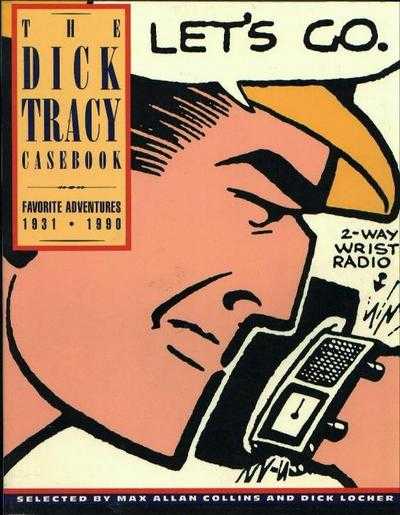
At the height of the Great Depression cartoonist Chester Gould searched for strip ideas. A decent guy incensed by the exploits of gangsters, he settled on getting it off his chest with a procedural crime thriller championing the ordinary cops who protected civilisation. Dick Tracy launched in 1931 and rapidly became a huge hit, with the attendant media and merchandising hoopla that follows. Amidst toys, games, movies, serials, animated features, TV shows et al, the strip soldiered on, influencing generations of creators and entertaining millions of fans. If you’ve never seen the original legend in action this still readily available collection is a great introduction.
Selected by Max Allen Collins and Dick Locher, who delivered the strip after Gould’s 1977 retirement, it presents complete adventures from each decade of the strip’s existence to the 1990 publication date. That offers a grand overview of the development from radical, ultra-violent adventure to forensic police procedural, through increasingly fantastical science fiction and finally back-to-basics cop thriller under Collins’ own scripting.
From the 1936 comes the memorable and uncharacteristic ‘The Hotel Murders’ wherein the terrifyingly determined – some might say obsessed – cop solves a mystery with a sympathetic antagonist instead of the usual unmitigated, unsavoury, unrepentant outlaw. Whodunits with clues, false trails and tests of wits were counterproductive in a slam-bang, daily strip with a large cast and soap-opera construction, but this necessarily short tale follows all the ground rules as Tracy adopts sidekick Junior and tracks down the killer of a notorious gambler.
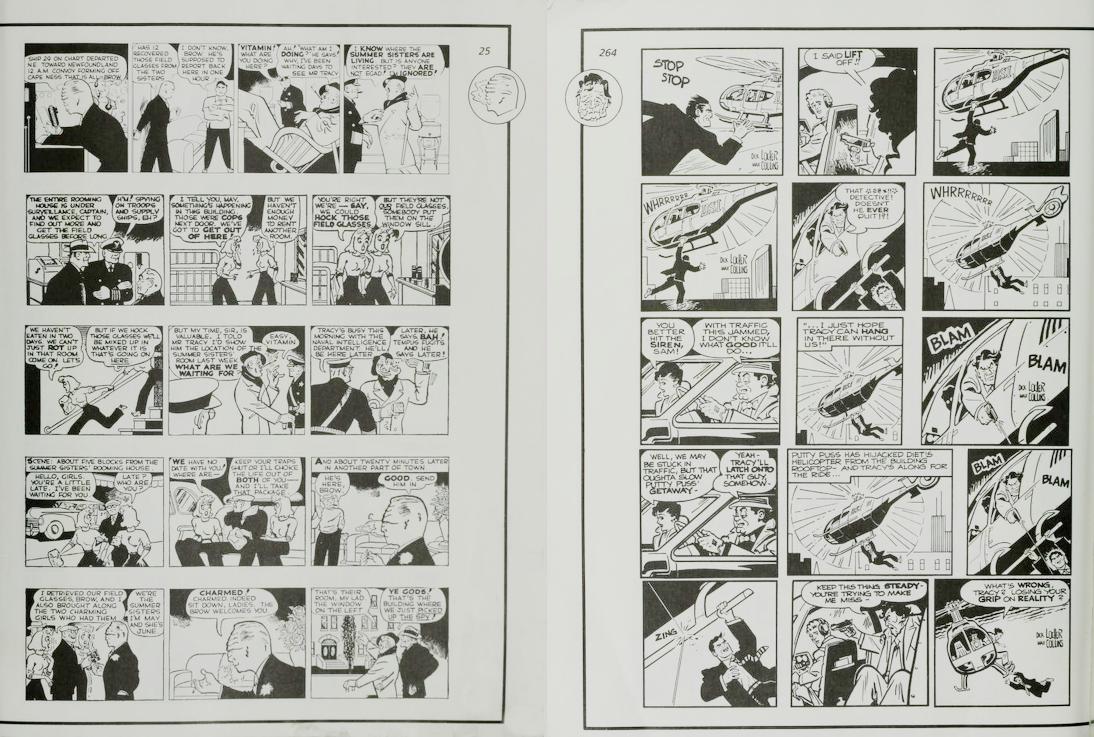
The best case of the 1940s – and for many the best ever – was 1944’s ‘The Brow’ in which the team hunt down a brilliant, ruthless Nazi spy (sample art left). This is a complete reprinting, as other strips have been edited for violence and one edition simply left out every Sunday instalment.
By the 1950s Gould was at his creative peak. ‘Crewy Lou’ from 1951 and 1952’s ‘Model’ show the range of his abilities. The first is an epic of minor crimes and perpetrators escalating into major menaces whilst the latter is a short shocker with the conservative Gould showing social ills could still move him to action in a tale of juvenile delinquency as Junior grows into a teenager and experiences his first love affair.
As with many established cartoonists, the revolutionary 1960s were a harsh time. Dick Tracy especially foundered in a cultural climate of radical change where popular slogans included “Never trust anybody over 21” and “Smash the Establishment!”. The strip’s momentum faltered, perhaps as much from the shift towards science fiction themes as any old-fashioned attitudes. From 1960, ‘Spots’ predates the worst excesses, but still displays the artist’s stark, chiaroscurist mastery in a terse thriller demonstrating the fundamental secret of Tracy’s success and longevity.
1978’s ‘Big Boy’s Open Contract’ is by Collins and Rick Fletcher, although Gould still consulted with the new creative team. It features the thinly disguised Capone analogue Tracy had sent to prison at the very start of his career, and whose last attempt at revenge tragically cost the dutiful hero a loved one whilst forever changing the strip.
From 1987-1988 the final tale is ‘The Man of a Million Faces’ by Collins and Locher (sample art right). A sneaky bank robber and his perfect gimmick proves that sometimes a back to basics approach produces the best results.
Dick Tracy is a milestone strip that has influenced all popular fiction, not simply comics. This fantastically readable chronological primer is a wonderful way to sneak into his stark, no-nonsense, tough-love, hard justice world.