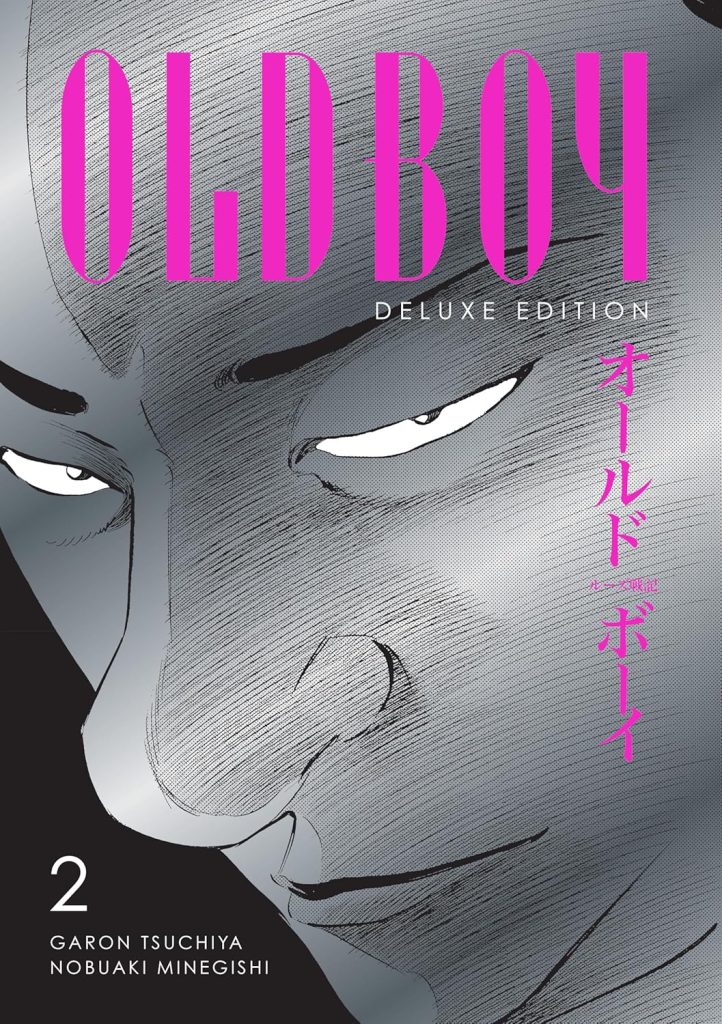
Review by Ian Keogh
This second and concluding part of Old Boy is every bit the tense psychological drama that the first was. A man named Goto was held captive for ten years without knowing why or on whose orders. By the time Volume 1 concluded he’d been able to put a face to the person responsible, but doesn’t recognise him from his past, so why he was targeted remains a mystery.
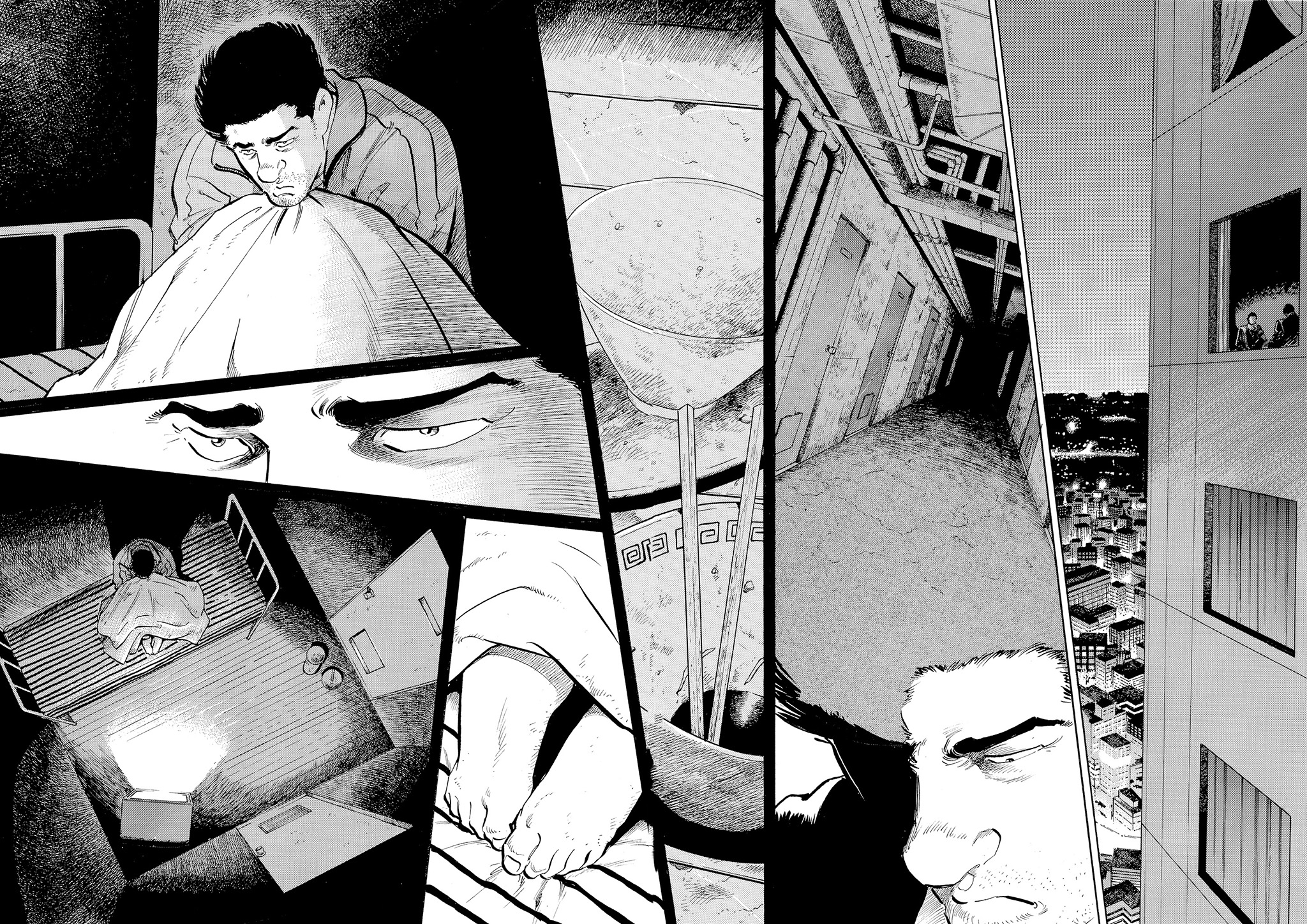
Despite his having being unjustly imprisoned for ten years Goto has always been shown as a purposeful and resilient personality, but writer Garon Tsuchiya now whips away his certainties to leave a very different man. Nobuaki Minegishi has already continually proved a masterful artist, and here underlines that by completely changing the way he draws Goto for a while, no longer upright and confident, but hunched and uncertain. Minegishi’s pages are wonderful throughout, setting the scenes physically and emotionally and doing the same for the people. His only slight flaw comes with a newly introduced character who’s meant to have been Goto’s teacher when he was twelve, yet looks to be his age in the present day.
Tsuchiya’s mastery is absolute. With Old Boy being a finite series, and relatively short as such for Japanese comics, he never reaches the point of prolonging mysteries to eke out a few further chapters. His pacing is incredible, always well considered even when leisurely. At one point there’s a lengthy conversation involving three people also highlighting the contribution of translator Kumar Sivasubramanian. It’s nuanced, with a constant undercurrent of cruelty, the malice and manipulation in the carefully chosen phrases hitting home every time. Personal embarrassment is also well used in a later scene, Tsuchiya pinpointing a character’s weakness with precision.
For most of Old Boy Goto may be strong and forceful, but he’s also a victim and a puppet on a string. Cleverly, there are opportunities for him to take his own revenge, but he’s stopped from doing so by a compulsion to learn why he’s been a target. Tsuchiya exploits that, but you’ll also be amazed at his facility for later returning to seemingly trivial events only to reveal their meaning.
Of course, all the subtlety and trickery would count for nothing if the eventual revelations and the finale disappoints. It doesn’t. Tsuchiya first eloquently explains away a couple of moments that may have seemed a little too convenient, one dating all the way back to the earliest chapters, then entirely reconfigures what we imagine has been happening. It’s subtle and it’s astonishing, and one couldn’t imagine an American writer using the same device. This is a magnificent crime thriller and mystery losing none of its potency for now heading towards its thirtieth anniversary.
This hardcover edition is desirable, but used copies of the four smaller sized paperback editions comprising the book can still be found, beginning with Volume 5.