Review by Ian Keogh
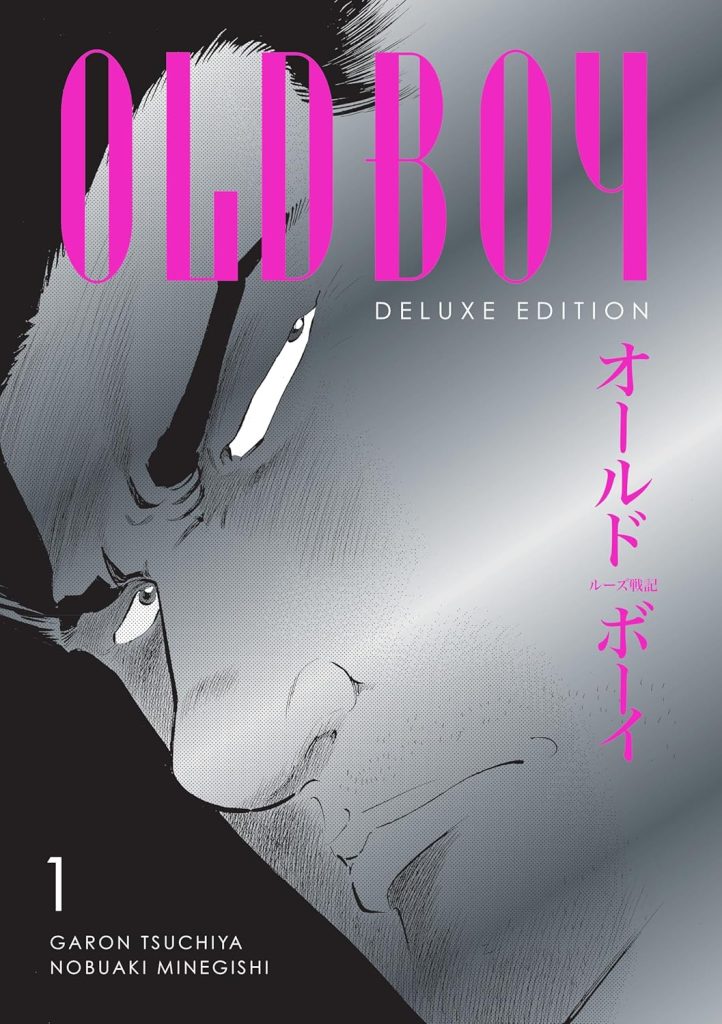
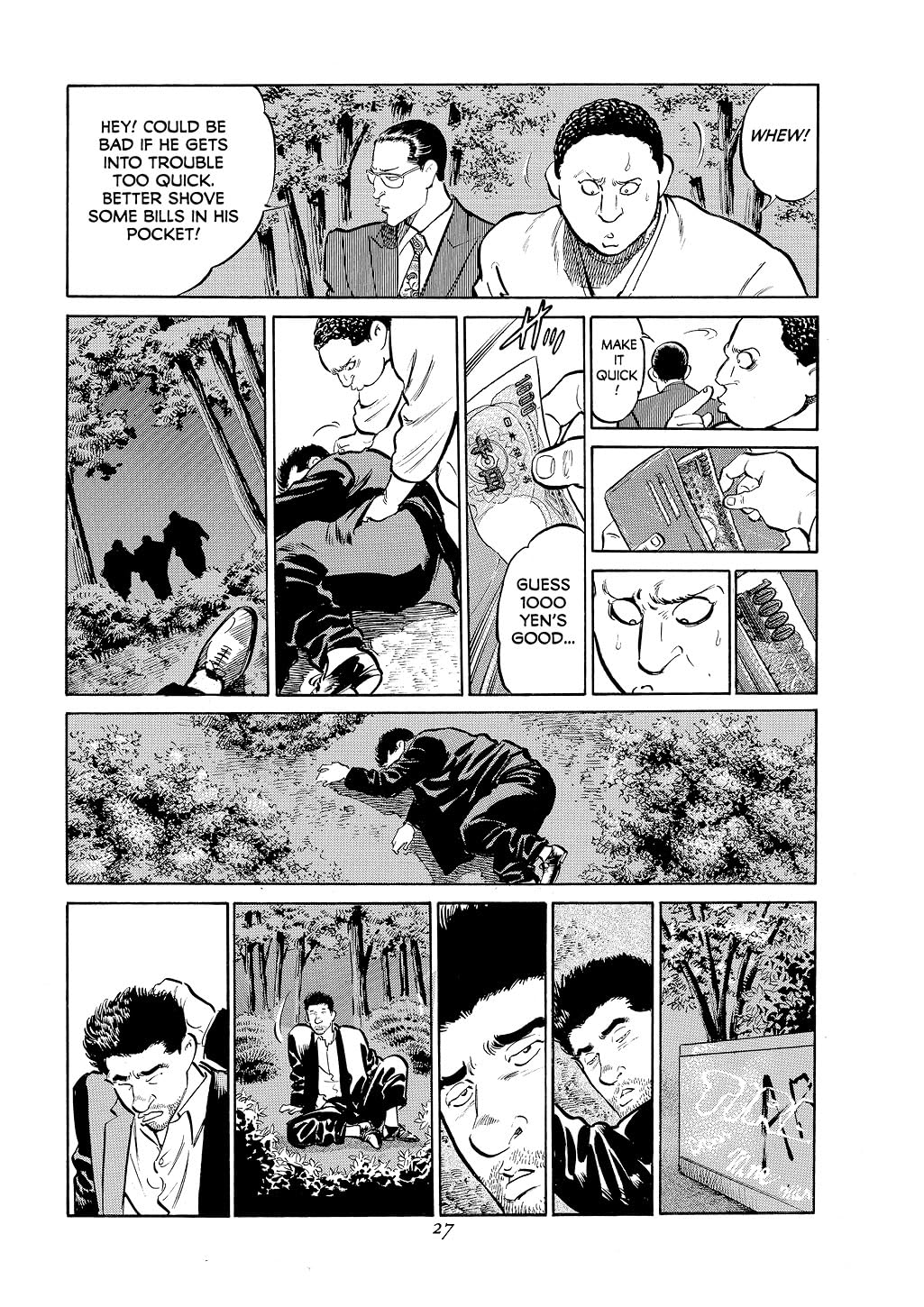
Every story needs a killer hook, and with Old Boy Garon Tsuchiya should immediately captivate anyone who enjoys a mystery. We’re introduced to a man we first know as Yamashita, but later revealed to be named Goto, who’s imprisoned in a small room. Yamashita has some comforts and is regularly fed, but his captivity isn’t the result of any legal procedure and no-one will tell him why he’s been imprisoned. With as little ceremony as his abduction, we see him beaten unconscious and dumped in a park after ten years.
It’s a situation that would break most people, but Yamashita is very resolute and determined to get to the bottom of what’s happened to him. He’s well developed through small insights, such as a point where he acquires a gun, but decides not to use it in case it limits his options. He’s extremely emotionally withdrawn, a thoughtful natural consequence of his imprisonment, but seems to strike unnaturally lucky in finding a friend soon after his release. It’s too convenient, but a series feature is Tsuchiya later recontextualising scenes and giving them extra meaning. As his investigations continue, Yamashita learns he’s not entirely free of his captor, who contacts him via an untraceable phone.
A compelling plot is accompanied by astonishingly good, yet disciplined art from Nobuaki Minegishi. He works in a realistic style, but his characters are distinctively designed, with Yamashita’s instantly recognisable pug nose an example. His storytelling is excellent, often breaking down scenes into a number of small panels per page, and there’s a real delicacy to his linework.
As is the case for most Japanese comics, Old Boy was originally serialised, and the drawbacks transfer into the collection. The complexity means flashbacks frequently feature, necessary for the full understanding of a scene when serialised, but the same scene can repeat several times here.
Requiring readers to be as patient as Yamashita is a clever move on Tsuchiya’s part, as very little is revealed without Yamashita becoming aware of it. This is a decompressed narrative, but with a purpose greater than extending the page count. It’s important to understand how Yamashita experiences time after his captivity, and his frustrations at being continually strung along. This volume combines the first four pocket-sized paperbacks in a single larger volume, and while further questions are continually raised, very few are answered for a long, long time. It’s only toward the end of over eight hundred pages that some answers are supplied and some realisations drop into place.
If you’d prefer more information about individual sequences head to the reviews of the paperbacks, starting with Volume 1, but Old Boy is best experienced as with very little knowledge other than it being a first rate mystery thriller. The next four small paperbacks are combined into a second Deluxe Edition concluding the story.