Review by Graham Johnstone
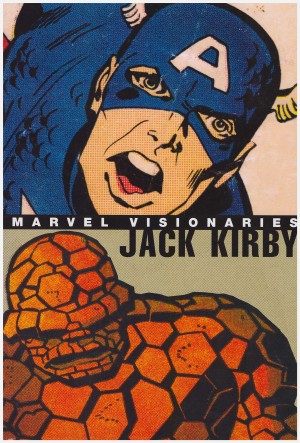
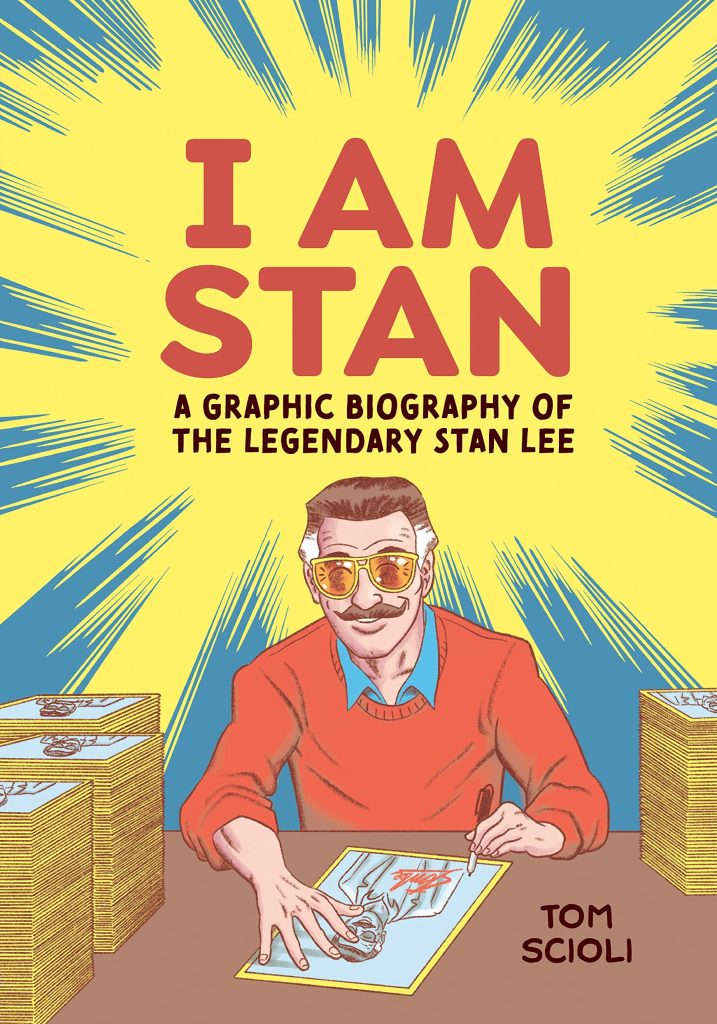
Stan Lee and Jack Kirby are together credited with creation of most of Marvel’s iconic characters, and Tom Scioli’s biography of Kirby super-powered the case for the artist’s wider contribution. I Am Stan is a welcome look at the Marvel editor/writer’s side of the story.
Scioli’s love of Kirby is obvious from Fantastic Four: Grand Design, or channelling New Gods for Gødland, yet he approaches Lee objectively by telling the whole story in dialogue and action, without author commentary. The earliest scene shows Stan’s father despondent amidst the 1930s Depression, perhaps explaining Stan’s entrepreneurial spirit, and relentlessly upbeat attitude. Lee’s final years, loss of beloved wife Joan, and alleged elder abuse by his friends/handlers, are sensitively handled and poignant. The rest of these two hundred pages cover the expected milestones, and many unexpected ones. There’s his 1947 The Secrets Behind the Comics, Stripperella with Pamela Anderson (seriously), and the ambitious rise and ignominious collapse of internet content company Stan Lee Media. That’s a packed and powerful life story, convincingly told by Scioli.
He details Lee’s various ‘dead-end’ jobs (including obituary writing), before family connections at Timely Comics make him office boy for Joe Simon and Jack Kirby. They’ve just given the company the lucrative Captain America. Stan overhears them talking about moonlighting for a rival publisher before a cut to owner Martin Goodman firing them… while Stan watches from the doorway. Scioli runs through Lee’s two decades before his 1960s heyday. Forgotten ‘creations’ include Nellie the Nurse, and Silly Seal, knock-offs of rival comics and the latest B-Movies. The outwardly affable Lee’s management style is a shocker – installing CCTV in the famous ‘bullpen’, attempting to rate-fix with rivals, and when pushed to return original art in the 1950s, defacing it first. All of which undercuts Lee’s bombastic accounts of his success.
The peak Marvel years are well covered, offering distilled accounts of the creation of each key character. Coverage of Stan’s Soapbox, the Merry Marvel Marching Society, and Voices of Marvel vinyl record, testify to Stan’s tireless promotion of the Marvel brand. Newcomers and seasoned Marvel ‘marchers’ alike should find this an engaging and illuminating read.
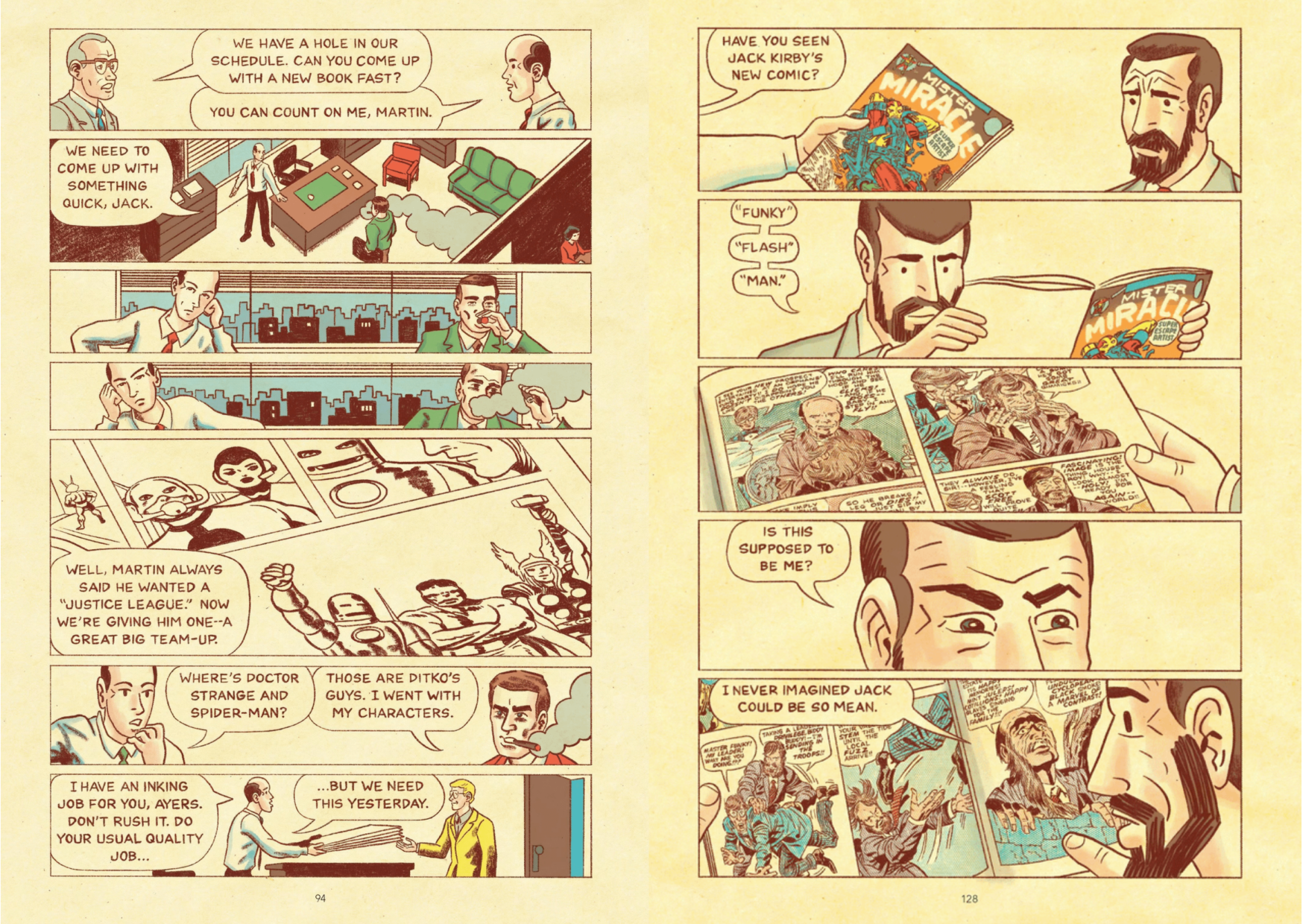
Scioli offers clues to Lee’s input. We see he and Kirby having a ‘story conference’ working the 1950s staples of monsters and sinister science (‘cosmic rays’) into superhero revival The Fantastic Four. We see Kirby drawing pages, and then Lee typing a script. Kirby and Steve Ditko bring anthology shorts, that becoming recurring characters Ant Man and Doctor Strange. We see Stan adding the text to drawn stories, then recruiting artist/little brother Larry Leiber to similarly ‘script’ Thor. Stan querying why Jack hasn’t included Spider-Man in The Avengers debut (pictured), is perhaps the most telling moment. We’re seeing Lee as editor co-creating the concepts, but the artists as uncredited plotters. Scioli shows Goodman telling Stan if he needs more money to earn more script fees – whether readers consider that mitigating circumstances, it’s evidence of a balanced account.
It’s all nicely drawn, simpler yet better than the Kirby book, as Scioli works multiple aspects into widescreen panels, with room for as much dialogue as needed. Characters are recognisable and age realistically, even the be-wigged Stan. Appealing visual touches include Warholesque Pop Art images repeated in changing colours, and a Stan’s-eye-view of typing hands – homaging his self-aggrandising Origins of Marvel Comics.
Scioli impresses with his diligence, nuance, and balance, visual and verbal economy, and nous for telling details. Newcomers will find this illuminating, and seasoned Marvel ‘marchers’ should find it credible on both historic facts and the emotive issue of creative credit.