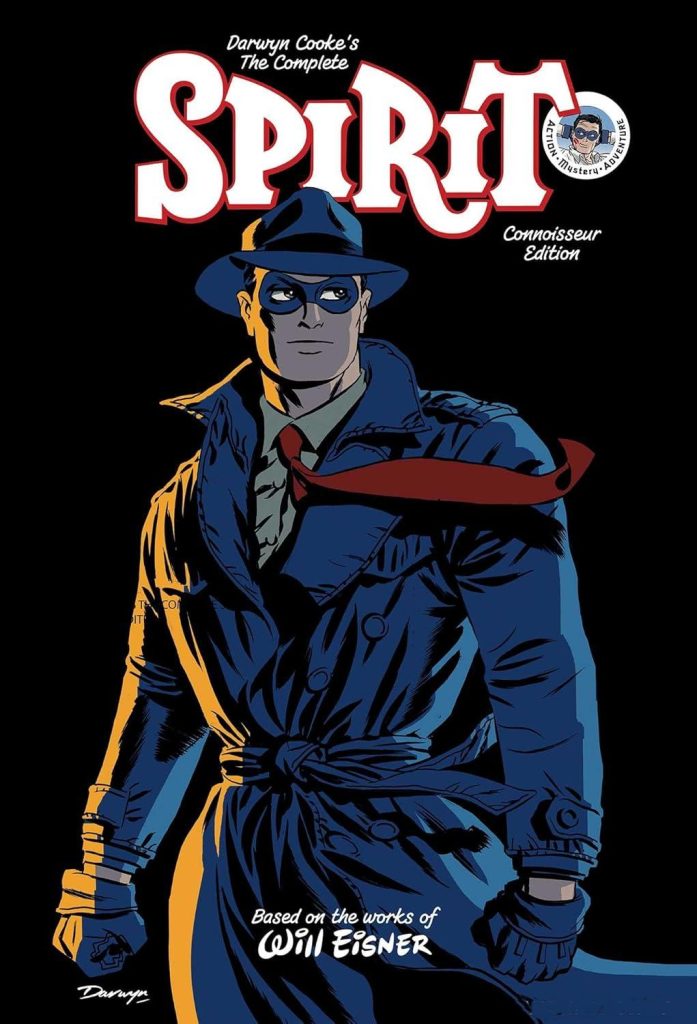
Review by Karl Verhoven
Looking at how well Will Eisner’s late 1940s and early 1950s Spirit strips stand the test of time it’s easy to forget that much of his earlier work isn’t as effective, and Eisner hardly shouted from the rooftops that many highly acclaimed stories were written by others. The key work, though, is the gold standard that’s eluded almost everyone since. Creators who grew up reading the 1970s and 1980s reprints have turned their hand to producing pithy short stories about the barely masked detective, and it’s been surprising how many big names haven’t quite managed to pull off the formula. Darwyn Cooke did.
Why he succeeded where others didn’t can be identified. There’s a reverence for Eisner’s work, but not a slavish devotion. Cooke uses both visual and narrative storytelling techniques devised by Eisner, yet frequently expands on them. Creating memorable splash pages inventively incorporating a Spirit logo is just a variation on a theme, but his use of narration moves forward. He resorts more than once to multiple narrators, and we also have the unreliable narrator. With all this Cooke benefits from having 22 pages at his disposal rather than the seven Eisner had to work with, but there’s no idle decompression here in a succession of compelling dramas. Notably, while maintaining Eisner’s mood, Cooke doesn’t set his stories in the 1940s. Eisner was producing contemporary material, and so does Cooke, and he’s unafraid of adding new characters. Ambitious TV journalist Ginger Coffee is a winner, although for a long time it seems Ellen Dolan is marginalised.
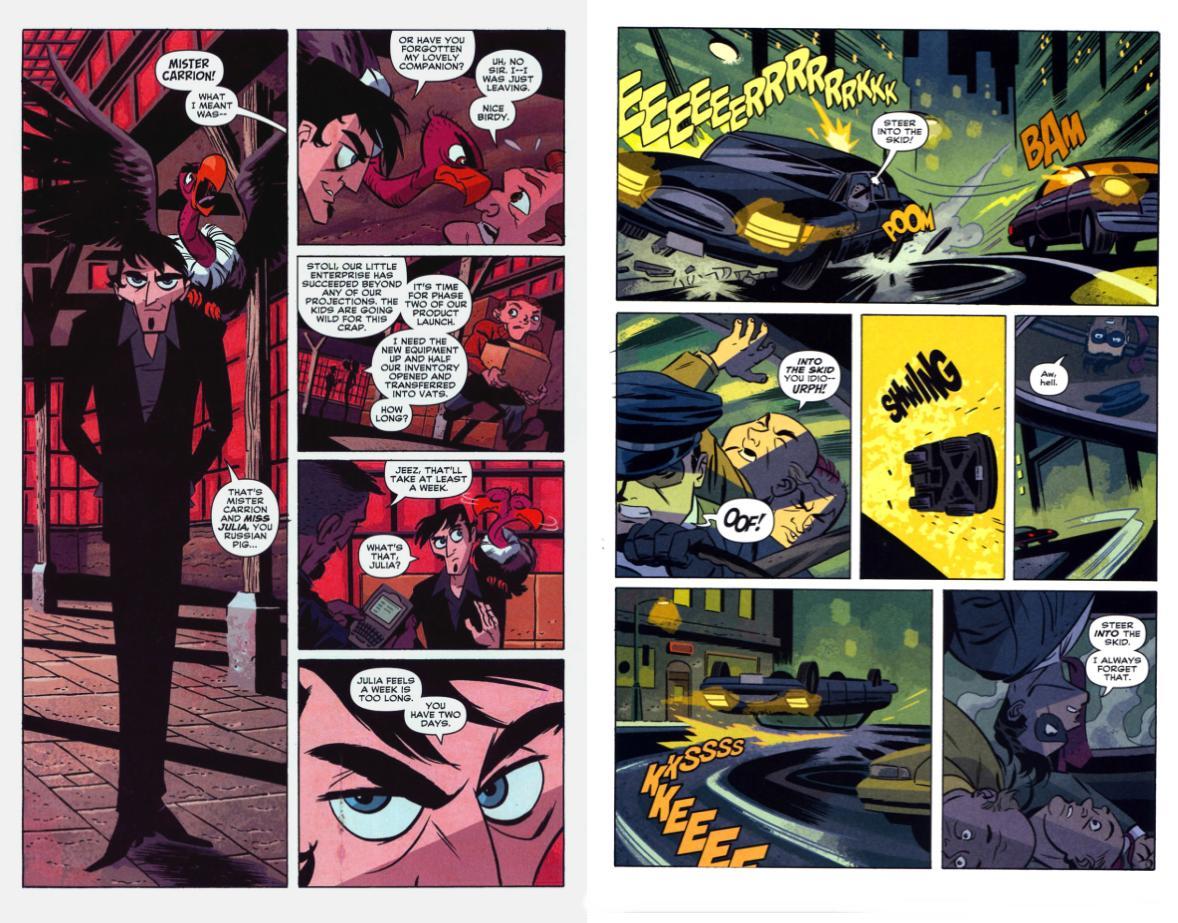
Like Eisner, Cooke is also a cartoonist at the top his game, creating beautifully composed atmospheric pages. Crucially, he doesn’t stick to the single style. A solo story for the Spirit’s companion Ebony White is saturated in black ink and shadow toward the end. He’s obviously indebted to the techniques Eisner developed in the 1940s, but employs them masterfully.
A dozen stories are featured, all of them self-contained, but building toward a bigger picture, and all of them immensely readable as Cooke’s writing is as good as his art. Pretty well every major character associated with the feature appears, and while Cooke’s visual versions of the ongoing cast are the classics, he devises new versions of villains, as per Carrion on the sample art. He also defines people instantly. Anyone having no idea about the feature knows all they need to about P’Gell from the glamour of her introductory illustration accompanied by the comment “I usually date kings, but you’ll do”.
When previously issued as The Spirit and The Spirit Vol. 2 the work of other creators accompanied Cooke’s contributions, diluting it. Here Jeph Loeb writes the opening Batman team-up very well, but conceptually this is otherwise all Cooke and magnificent. The oversized presentation allows better appreciation of the art, and a slipcase completes the deluxe package. If you can afford it, this is a great collection of a master standing on the shoulders of a giant.