Review by Frank Plowright
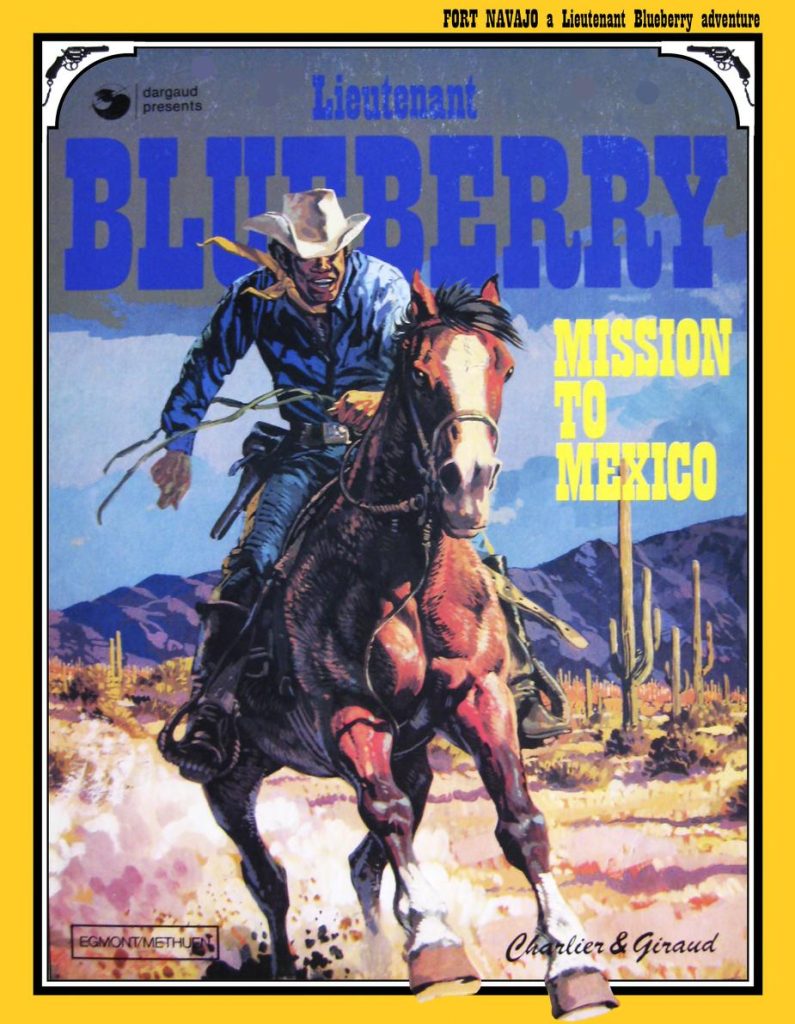
Mission to Mexico continues the five part introduction of iconoclastic Western hero Mike Blueberry, originally published in France during the 1960s and a feature Jean Giraud never stopped drawing despite his later fame as Moebius.
The background to the previous volumes has been a native tribe from Mexico framing the Apache for an attack on a farming settlement leading to war between the US Army and the Apache over large portions of what are now Arizona, Nevada and New Mexico. Blueberry knows the truth, and as Lone Eagle ended he was awaiting the result of a mission to wire the President in an attempt to save many lives by starting peace proceedings. Unfortunately, things don’t look good for Lieutenant Craig’s separate mission.
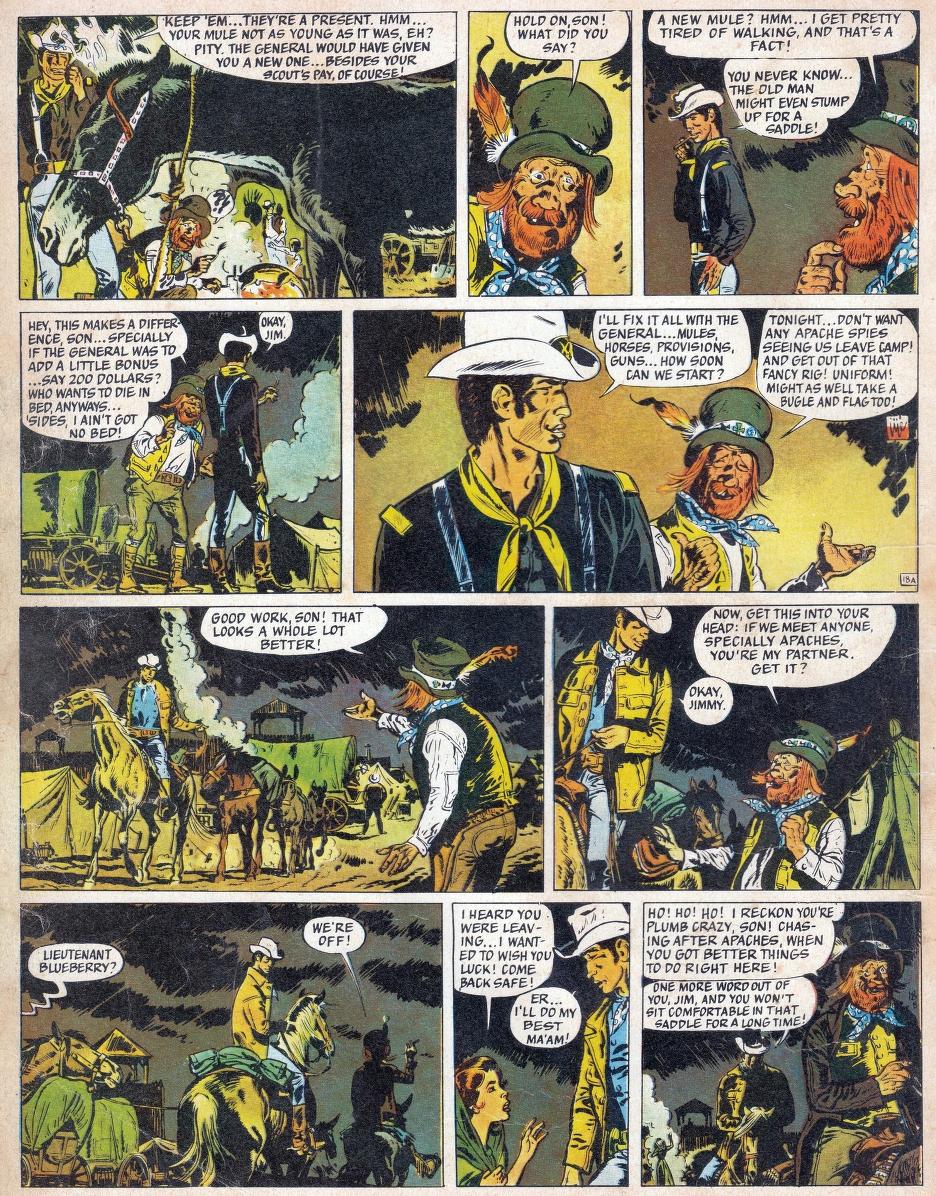
Jean-Michel Charlier’s plot hinges on whether presidential permission will be given for peace talks, and then whether Blueberry will be able to evade the hostile Apache and locate their chief Cochise to begin that procedure. To this end Charlier introduces prospector Jimmy McClure, more than fond of a drink, but with knowledge of the land. He’ll serve as foil to Blueberry throughout the remainder of his career. While McClure’s bumbling personality can be too exaggerated, he broadens the narrative possibilities, and Charlier ensures a reason for his presence beyond comedy.
As the title suggests, much of the plot is a journey, and Giraud is now a full action artist, cramming small panels with detail. Toward the end the number of people involved in ever more complicated circumstances are supplied in some phenomenal larger panels, composed as if paintings. McClure is a caricature from the start, grizzled and eccentric, but he’s kept just the right side of the line to perpetuate the strip’s period reality.
Seeds Charlier has sown in earlier volumes come to fruition here, especially useful in saving Blueberry’s life, and there are also references to the US Civil War, in the very recent past during Blueberry’s time. If it’s felt Blueberry has become too heroic and responsible, Charlier drives a stake through that idea with an eccentric piece of plotting true to Blueberry’s personality rather than the needs of a conventional heroic narrative.
This is another very serviceable Western, with Giraud’s art ever-improving, but unfortunately the story completing Blueberry’s introduction has never been translated into English, although if you can read French look for La piste des Navajos. His next English appearance skips several volumes to 1973’s The Iron Horse, published in 1991 by Marvel’s Epic imprint, but now very expensive if you can find a used copy.