Review by Ian Keogh
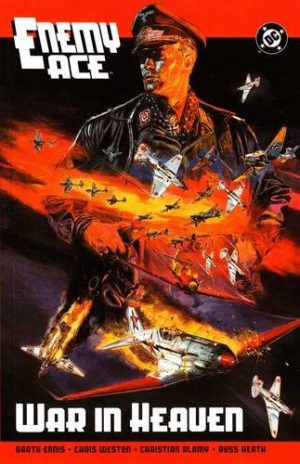
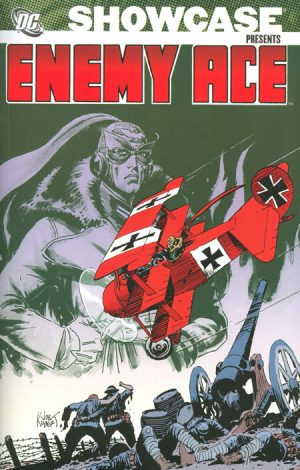
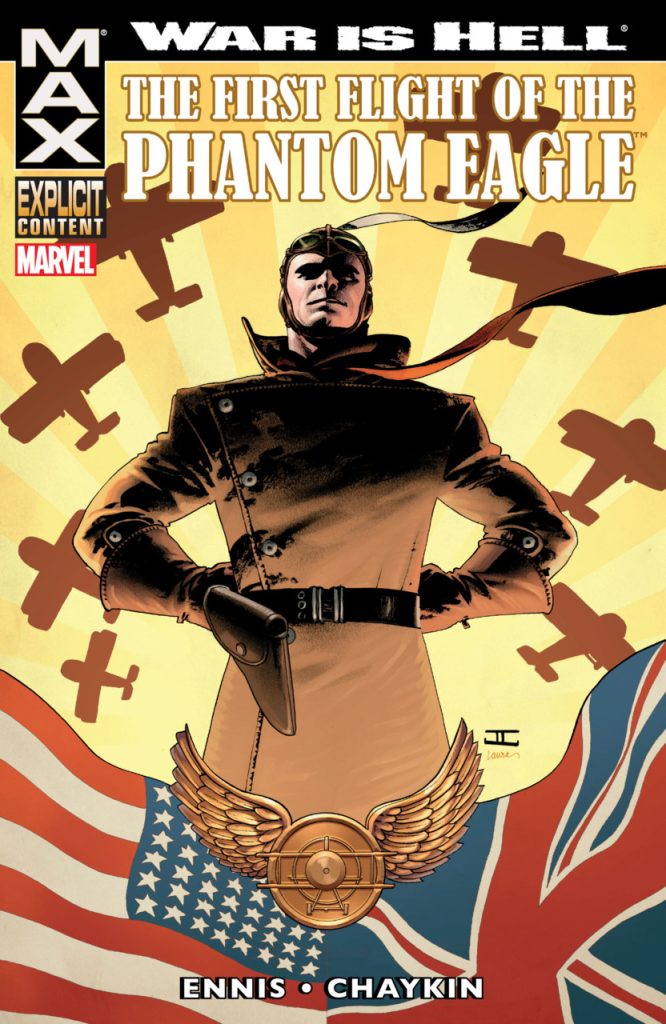
Unlike DC’s World War I era bi-plane pilot Enemy Ace, whose exploits both Garth Ennis and Howard Chaykin have worked on, Marvel’s Phantom Eagle is among their most obscure characters. Created in 1968 as a possible tryout for a series, the character was subsequently only seen three times, and not since the 1970s, which speaks to the popularity. As previously written, he was a typically gung-ho American pilot, confident and successful during the earliest era of combat planes.
Ennis takes a different approach. His Phantom Eagle isn’t the established flyer, but Karl Kaufmann, a young kid who turns up at an American base in Europe with forged papers assigning him there. Ennis is no great respecter of previous continuity, but here takes the anomalous aspects of earlier appearances and explains them. The Phantom Eagle flying a bright yellow plane, for instance, is ascribed to youthful certainty of success, while Kaufmann claiming distinguishing features ensures everyone knows who he is. This is balanced by the scepticism of his fellow flyers aware of the shocking mortality rate among World War I combat pilots.
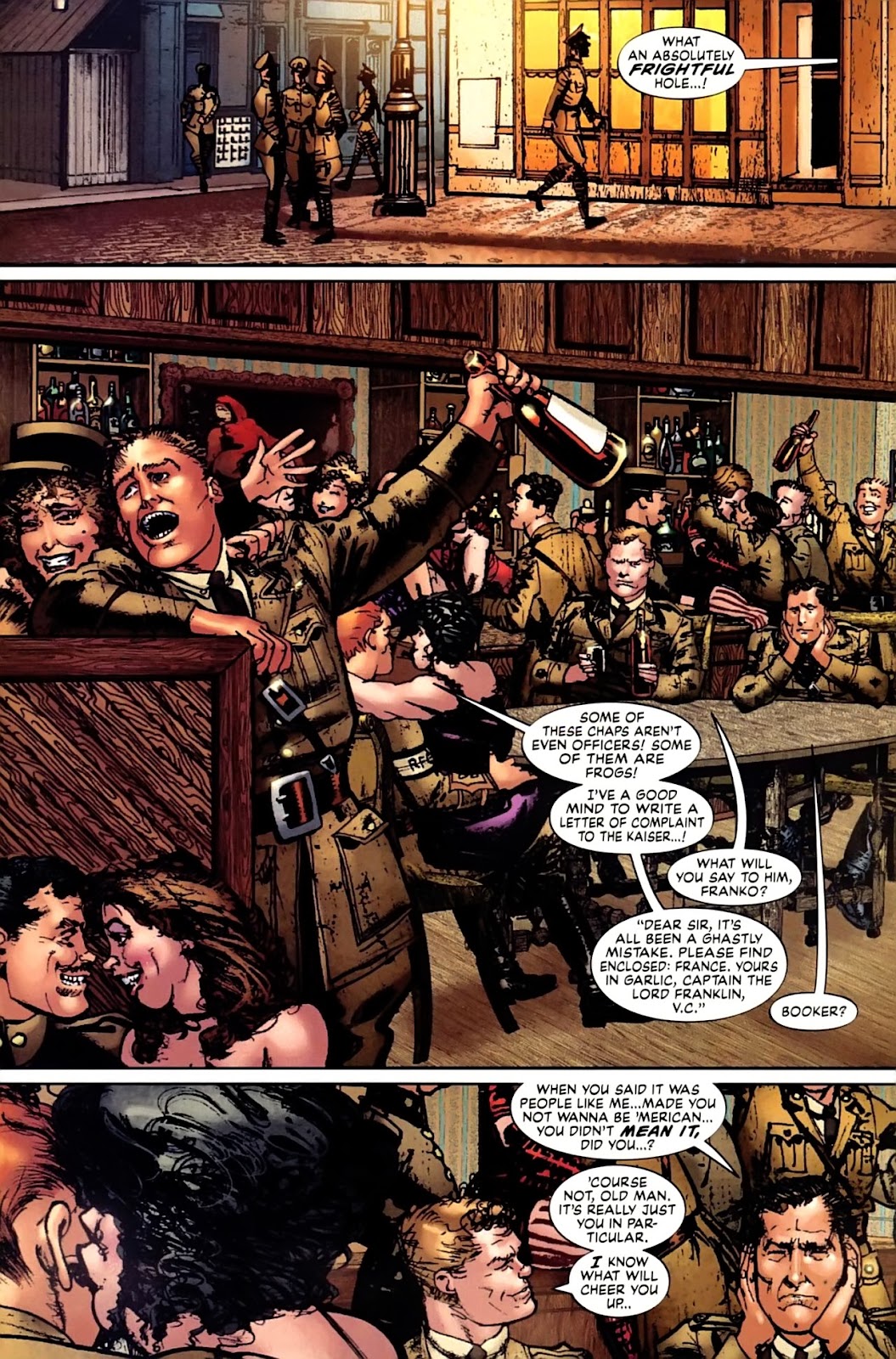
An accelerated coming of age story is drawn with some sensitivity by Chaykin. He only rarely exaggerates the comedy, although when he does the effect can be deliberately stomach-turning, and he poses characters well when delivering the sardonic aspects of the script. Kaufmann is rarely intended as anything other than a caricature, but Chaykin’s understated art is capable of evoking the occasional moments of sympathy. There’s considerable detail for scenes on the ground, but once the planes are in the sky there’s a pleasing sparsity, with Brian Reber’s colouring coming into its own.
Kaufmann is brash, ignorant and unlikeable, his faults well elucidated by a wry English commanding officer able to see a bigger picture than glory when reinforcements are few and spare parts almost impossible to come by. A key scene has the actualities of aerial combat pointed out to Kaufmann, entirely at odds with his idealism. By the end, though, Kaufmann has lived through the reality and is a hardened, different man who’s learned responsibility.
Ennis brings out the coffin humour of men knowing they’re not long for the world, but The First Flight of the Phantom Eagle falls between two stools. The moments of farce detract from the serious points being made, and those serious points can give the feeling of readers being lectured alongside Kaufmann as Ennis reels off other aspects of World War I combat. However, there’s thought, intelligence and some excellent art here, and their past work guarantees no comic with either Ennis’ or Chaykin’s name on it is ever going to be dull.
This also features in the hardcover Lost Marvels No. 2: Howard Chaykin Vol. 1.