Review by Karl Verhoven
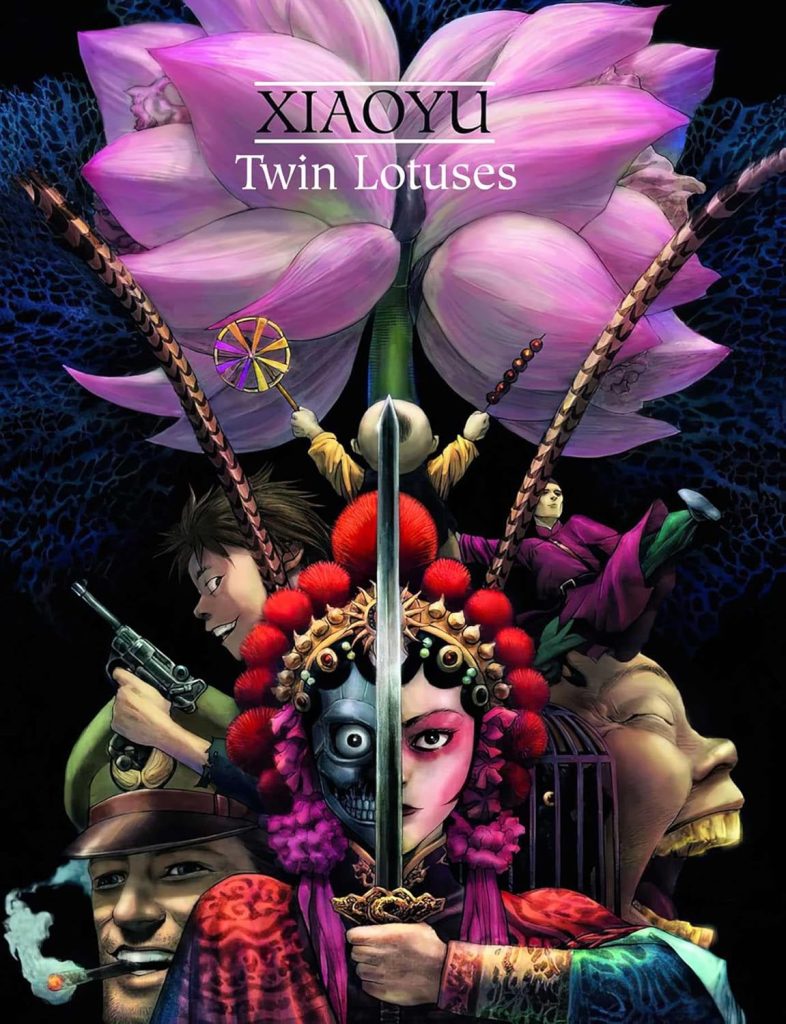
As explained in an opening statement, in China the lotus flower symbolises the strength of the relationship between siblings and brotherhood. Quite why this is the case remains without explanation, and it’s a long way into Zhang Xiaoyu’s spotlight on a Chinese community on the Yangtze river in the late 1930s before the title becomes relevant.
The focus is a kid named Snot-Nose, among a gang running wild through the streets who one day pick the wrong house to desecrate. Snot-Nose is forced to clean up the mess by the owner, a technological visionary named Fan Zhihouai who’s realised his country’s failure to embrace Western science as enabling a Japanese invasion. He recognises Snot-Nose as consumed by superstition and takes him on as a reclamation project.
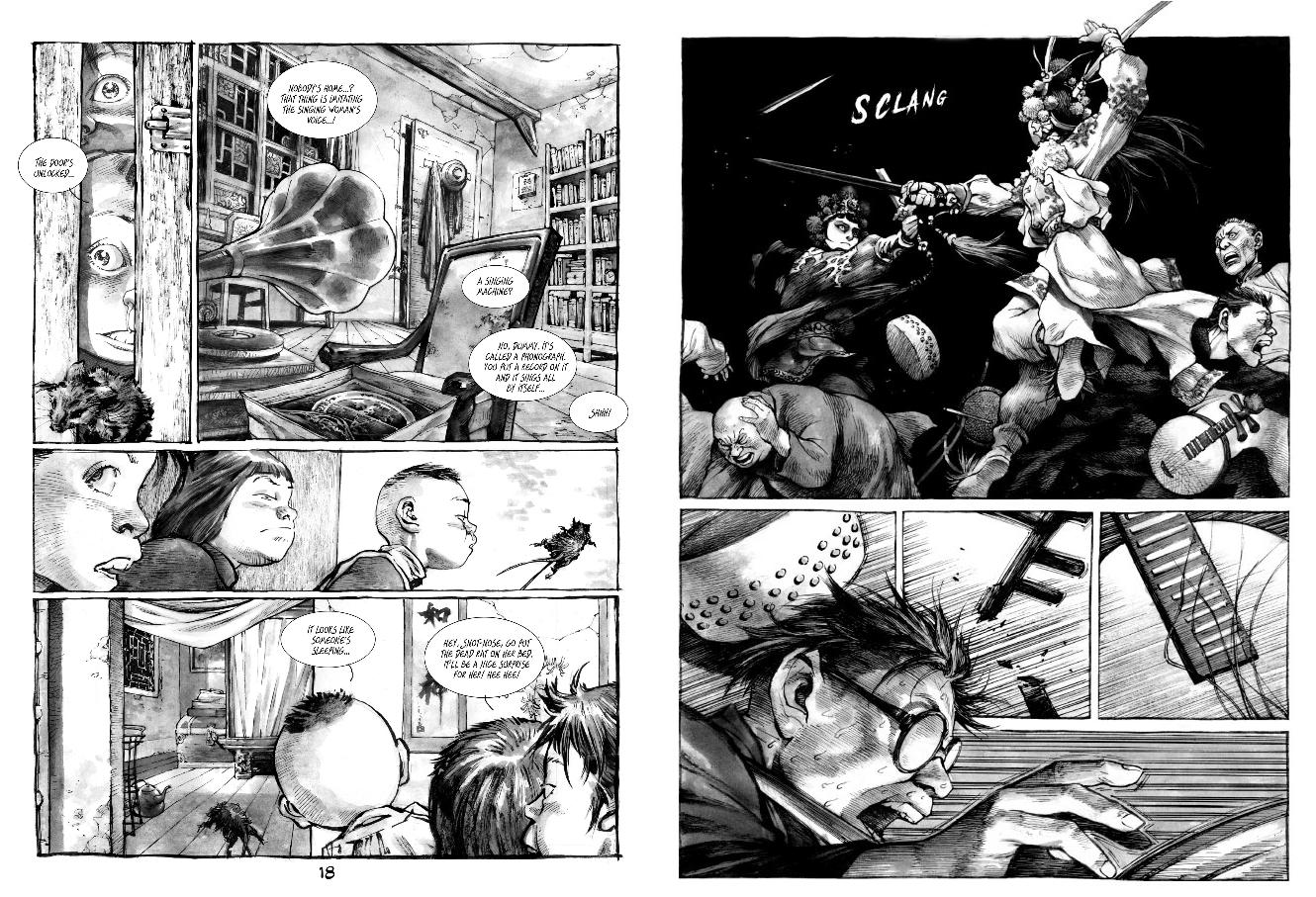
While Twin Lotuses develops into an absorbing saga with rich characters, the immediate attention-grabber is the richness of Xiaoyu’s illustration. In black and white with greytones a complete world is revealed. Starting with the spectacle of a costumed opera, the grimy worlds Snot-Nose and his pals occupy are drawn with a commitment to equal realism that ensures the fantastic elements stand out. The level of care is evident by events occurring in different conditions as the seasons change. Unusually for an artist with such dedication when it comes to the surroundings, Xiaoyu’s moving people are just as realistic, sweeping across panels whether as part of a stage show or something more dangerous. There’s not a page of Twin Lotuses that isn’t rich and striking.
There’s a warmth to the storytelling, yet sentimentality never trumps realism. Given a magnifying glass to stimulate scientific curiosity, Snot-Nose uses it to burn another child, and he’s a rich source of insults such as “you smell worse than a plugged up toilet that’ll drive the demon away”. Fan might be imperious and intimidating to child, but he’s revealed to be a broken man. While the stories are personal, the background is World War II coming early to China with the Japanese invasion and the black market that creates. The introduction of the characters is nuanced, with little indication of the parts they’ll play and the way Xiaoyu has Snot-Nose innocently navigate a perilous world is exceptionally plotted.
The effects of war on people are constant, and there’s a particularly clever piece of plotting in offering salvation from tragedy, yet transforming it into a hurtful example of human frailty. It cements Twin Lotuses as a masterful examination of people under pressure.