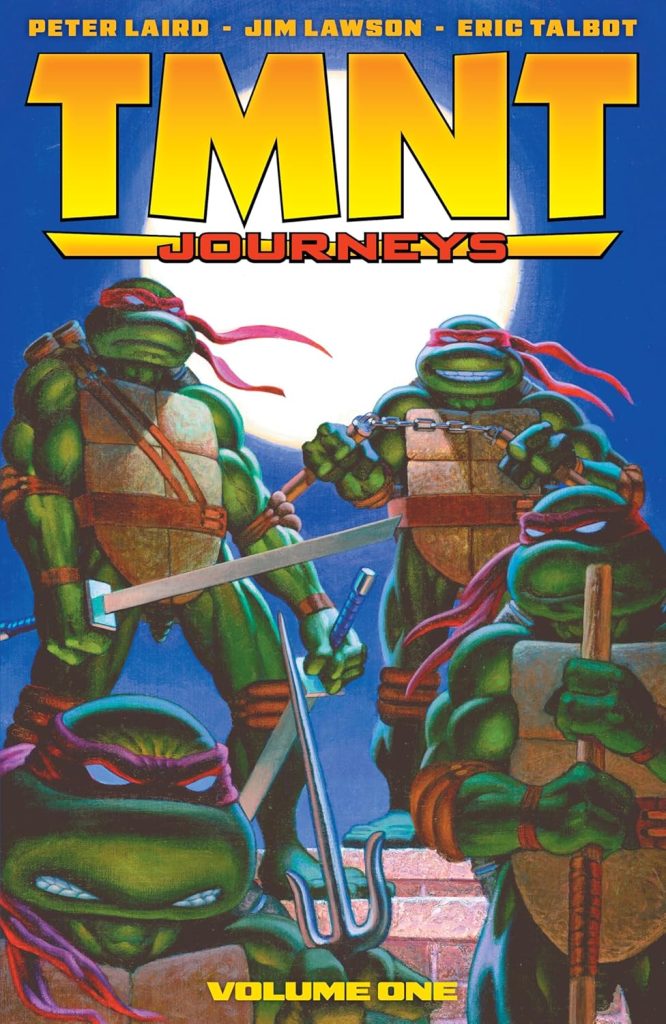
Review by Frank Plowright
In 2001 as far as the world was concerned the Teenage Mutant Ninja Turtles had seen their day in the sun and were long distant as yesterday’s fad. The perception mattered little to their co-creator Peter Laird, who’d never envisaged global success when starting the comic series, and was happy enough to begin anew.
This time Laird wrote scripts illustrated by Jim Lawson, at first inking them also, and the plan is for Journeys to reprint the entire series in collections for the first time. Laird begins by shifting the series forward fifteen years, reflecting the time passed since their actual comics début, and also fifteen years of technological progress in their world. Over a long first chapter Casey Jones and April O’Neill are also seen, as is Splinter, now training new protégées, among them Shadow, no longer a child. Karai appears later, as does perhaps the least expected pal from the earlier series.
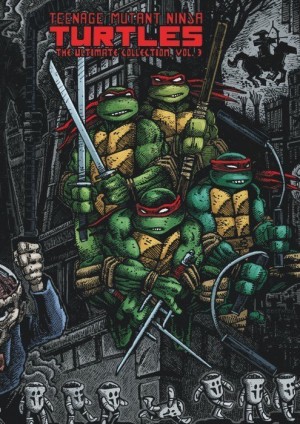
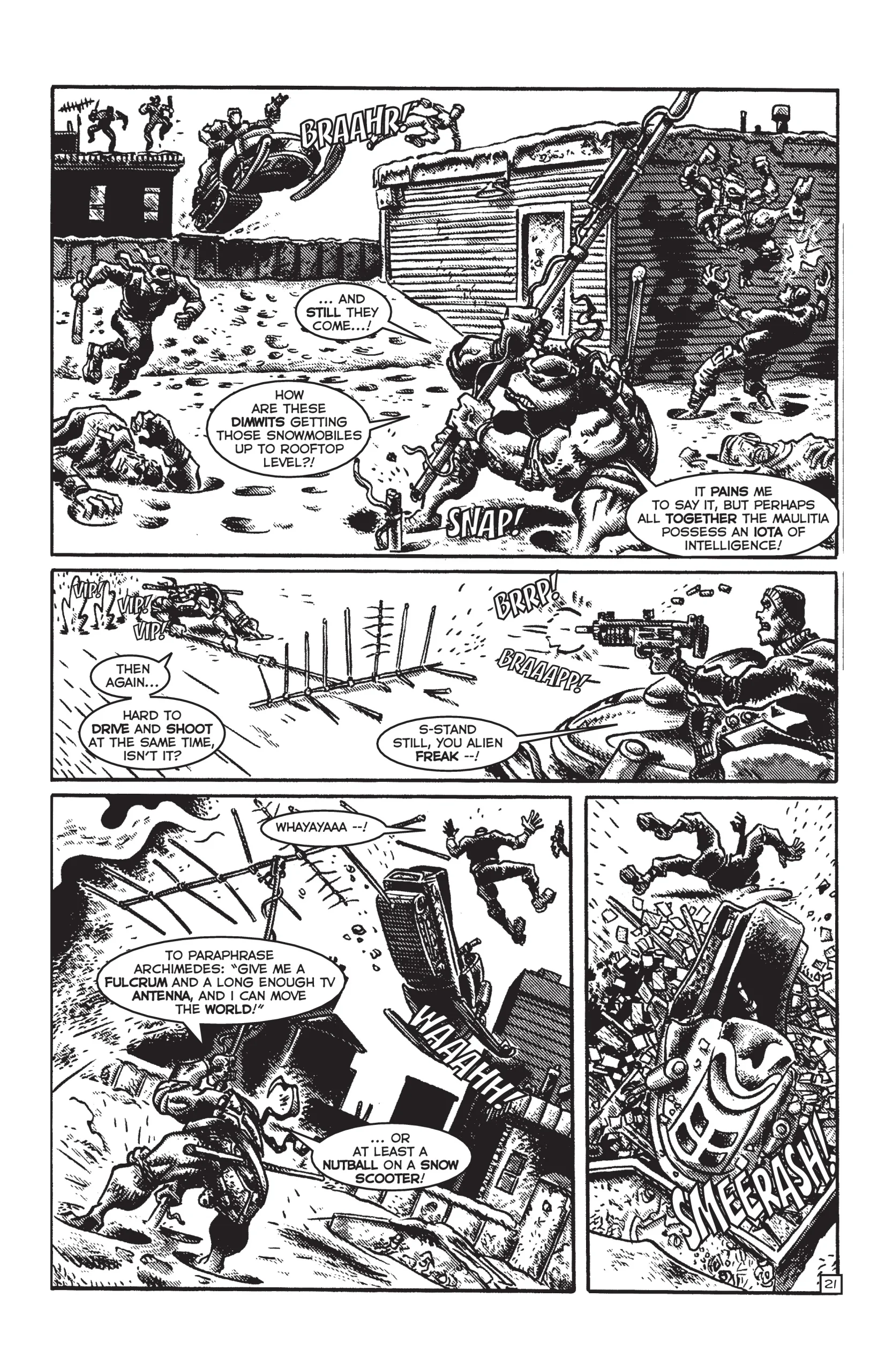
The biggest step away from the past, though, is the art. Lawson seizes on the grainy style characterising the feature in the past and expands on the possibilities. No longer looking flat and no longer lacking focus, the art here gives the turtles new life as they explore what for readers is a new world. Richard Corben’s black and white art seems a big influence, and page after page is something to study and admire. While the first three chapters are good, Lawson really kicks into high gear when New York is seemingly invaded.
Each chapter has a page count around 50% greater than a standard comic, but even taking that into account there’s a lot going on. Beyond the activities of the Turtles themselves, we see somewhat sinister developments on the moon, a monster in South American jungle, a secret hospital for superheroes and more. If there’s a complaint it’s that after an opening encounter with Marauders, there’s very little teenage mutant ninja action. And if one wants to be really picky, ageing the cast by fifteen years means the “teenage” aspect of the title is no longer valid. It’s perhaps why the title is contracted to TMNT.
Laird’s story cleverly frees the Turtles from the confines of the sewers, and as this opening volume ends they seem on the point of broadening their horizons further. Much of this volume has been set-up for what’s to come, very well drawn and maintaining interest, but the presumption is the pace will pick up in the next volume.