
Review by Frank Plowright
It’s been known for decades that comics are the perfect educational tool, and that merging words and pictures promotes greater comprehension, so a graphic novel about kids creating comics makes perfect sense.
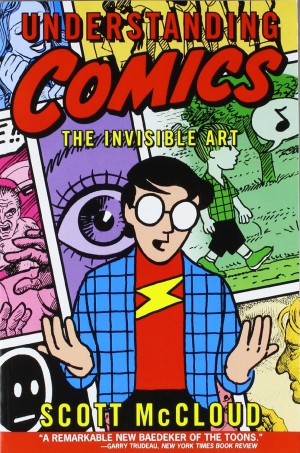
Published in 1993, Scott McCloud’s Understanding Comics remains a landmark instructional graphic novel. Raina Telgemeier, rumoured to be the biggest selling English language creator of graphic novels wondered if the same information could be incorporated in a graphic novel for younger readers. She’s perhaps unaware that for some while now process pages in the back of graphic novels published by David Fickling Books in the UK do just that, although not in story form.
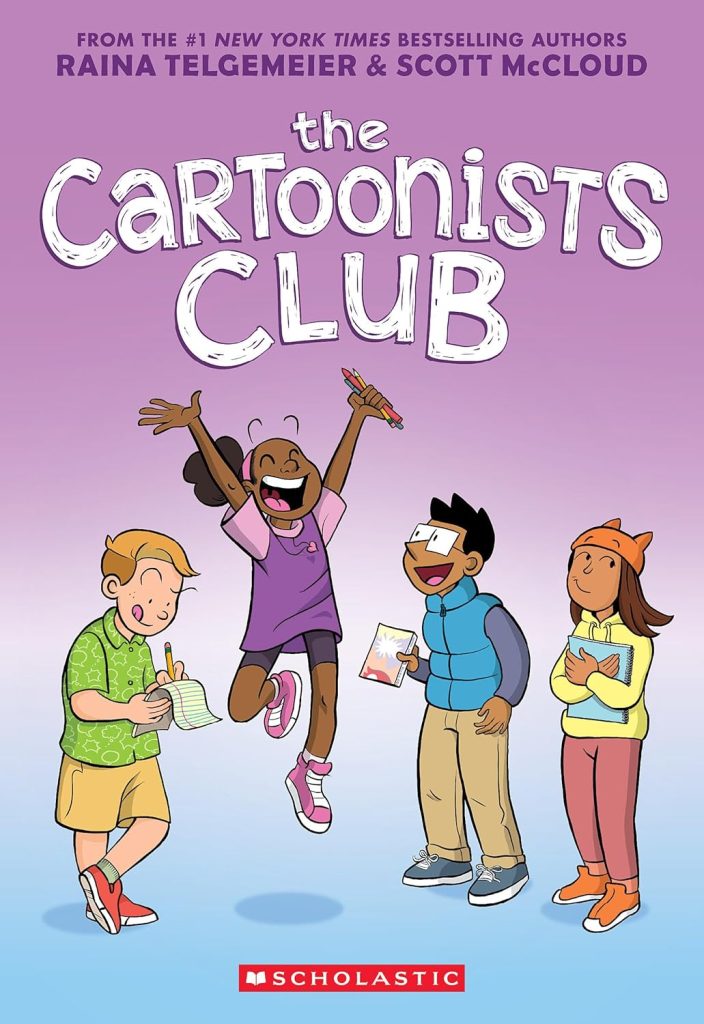
Telgemeier’s solution was to collaborate with McCloud on a story about a bunch of kids with individual strengths combining those talents to create comics. Howard is excellent at designing characters, but can’t come up with ideas for stories featuring them. That’s no problem for Makayla, positively overflowing with ideas, but not a great artist. They’re a natural creative pair, but don’t know how to go about putting a comic together. Neither does the extremely withdrawn Lynda, nor Art, who just likes making stuff. There’s an awkward page about pronoun use when Art turns up.
What Telgemeier and McCloud establish immediately through a teacher is that there is no single rigid way to create comics. Creators use the process that works best for them, whether that’s design first or written concept first. It’s apparent in the authors’ collaboration where both contribute to the writing and layouts, but Telgemeier does most of the drawing with McCloud drawing what the children produce.
Fitting McCloud’s instruction and practice techniques with Telgemeier’s instinctive storytelling for young readers won’t have been an easy task, yet the incorporation is smooth. With shorter attention spans it’s important to emphasise relatively quick results, and how to distil the essence of a story. It’s also stressed early that making mistakes is part of any learning process, and artists have erasers. Once the basics are covered the infinite possibilities are discussed, accompanied with some funny illustrations toying with form.
Such is the skill of both creators that although a complete primer for youngsters, lessons imparted can easily be taken on board by an older audience unwilling to work through the technicalities and comprehensiveness of Understanding Comics. The Cartoonists Club: it’s about time.