Review by Ian Keogh
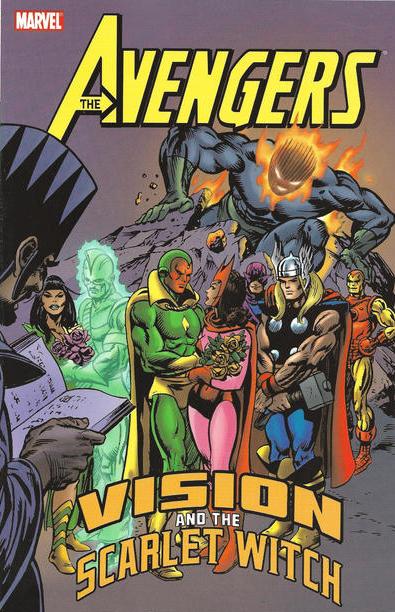
This is a rather bolted together collection from the days when Marvel didn’t believe four ordinary comics constituted a graphic novel. The main portion is Bill Mantlo and Rick Leonardi’s miniseries originally issued in 1982, but it’s preceded by the 1975 wedding of the Vision and the Scarlet Witch by Steve Englehart and Don Heck.
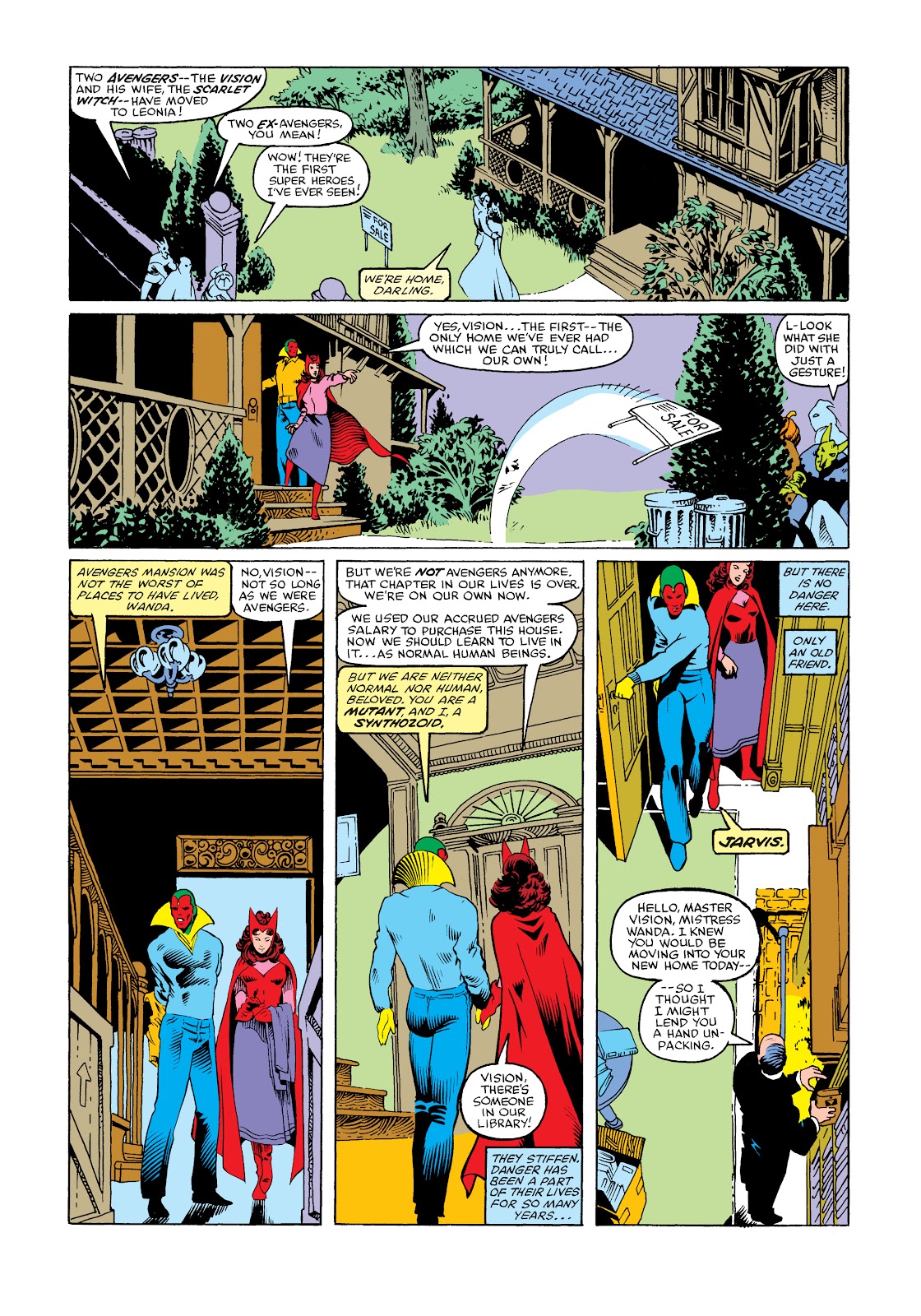
It’s some of the most uninspired artwork Heck ever produced for Marvel and was seemingly produced in one hell of a rush. Figures are stiff and posed, backgrounds are minimal and the action scenes are lacklustre. Further distancing this from any modern audience is the story culminating around a year’s worth of plots, and there’s a lot going on. Breezy captions offer some explanation, but good luck to any reader working out why Mantis is marrying an alien tree. It’s better experienced with the stories leading up to it as Avengers: Celestial Madonna or Marvel Masterworks: The Avengers Volume 14.
The acclaimed WandaVision TV show greatly focussed on the Scarlet Witch and Vision attempting to make a life for themselves away from the Avengers in suburbia, and Mantlo can be credited with that idea, although he doesn’t greatly exploit it. Each of his four chapters presents a different story, and the first is the only one not to concentrate on the convoluted backgrounds of the title characters. It has demons attacking the married couple’s home, and Leonardi’s well composed art really impresses. His version of the Vision is based on John Buscema’s brooding design, but he accentuates the cloaks both characters wear to good effect, and comes up with eye-catching page and character designs.
I had long been established that the Vision’s brain patterns were seemingly based on those of then dead character Simon Williams, Wonder Man, who later wasn’t so dead after all. His bigoted brother has never come to terms with the idea, and as the Grim Reaper consistently plagues the Avengers. He manifests again when the Vision is injured. The Scarlet Witch’s parentage has undergone assorted revisions, and in the 1970s it was believed 1940s hero the Whizzer was her father, although she’s not yet told him she’s discovered that isn’t the case. This is the series where he was supplanted by Magneto, but much of the good build-up is nullified by anyone with an interest in the Scarlet Witch knowing the shock revelation it leads to.
Mantlo supplies several other guest stars and a cameo for the Avengers over four chapters that are of their time in being somewhat overwrought, but he largely avoids thought balloons, letting the dialogue tell the story. This is still enjoyable if you have a fondness for the characters.
Mantlo and Leonardi’s work has been reprinted multiple times since this collection, always as part of larger books. It’s found combined with Steve Englehart’s subsequent longer Vision and Scarlet Witch tale. Earlier versions of that are Vision and Scarlet Witch: A Year in the Life, while the most recent variation is titled The Saga of Wanda and Vision. This alone is found as part of the Avengers Epic Collection: Court Martial and Marvel Masterworks: The Avengers Vol. 21, although is strangely absent from Marvel Masterworks: The Vision and the Scarlet Witch.