Review by Ian Keogh
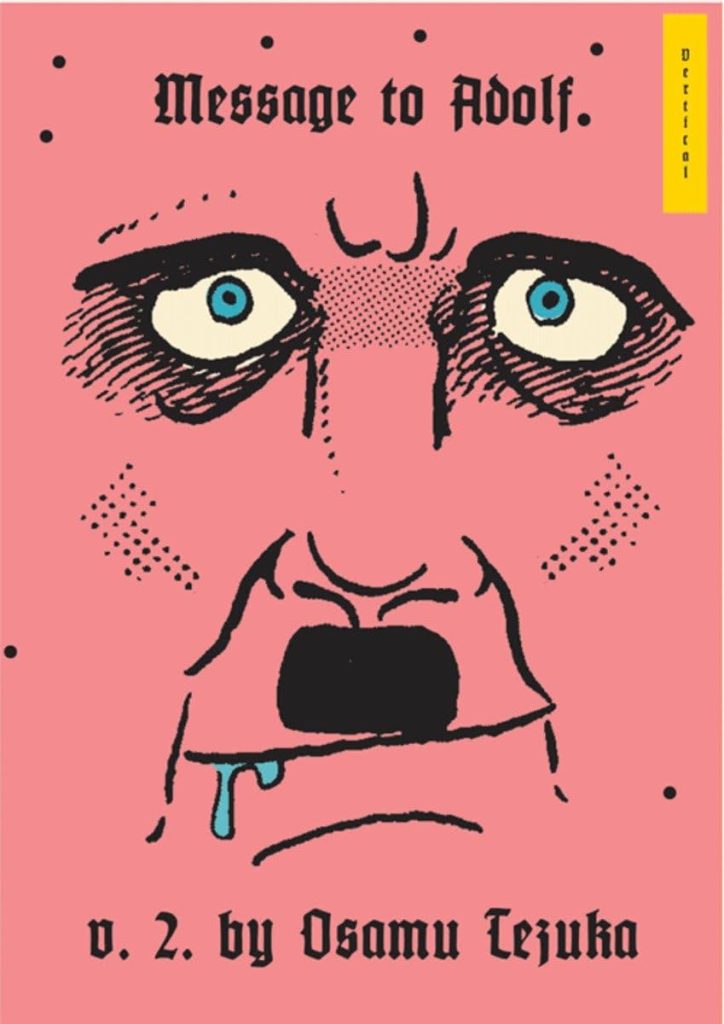
Message to Adolf features three men named Adolf during World War II. Adolf Hitler runs Nazi Germany with its expansionist aims and appalling anti-Jewish ideology, and while there are moments approaching caricature, Osamu Tezuka resists making him a figure of ridicule, largely sticking to history as disturbingly recorded. Adolf Kamil is the son of German Jewish refugees who’ve settled in Japan, where he befriended Adolf Kaufmann, the son of a German consul based in Kobe and his Japanese wife. Volume 1 followed them from 1936 to 1940.
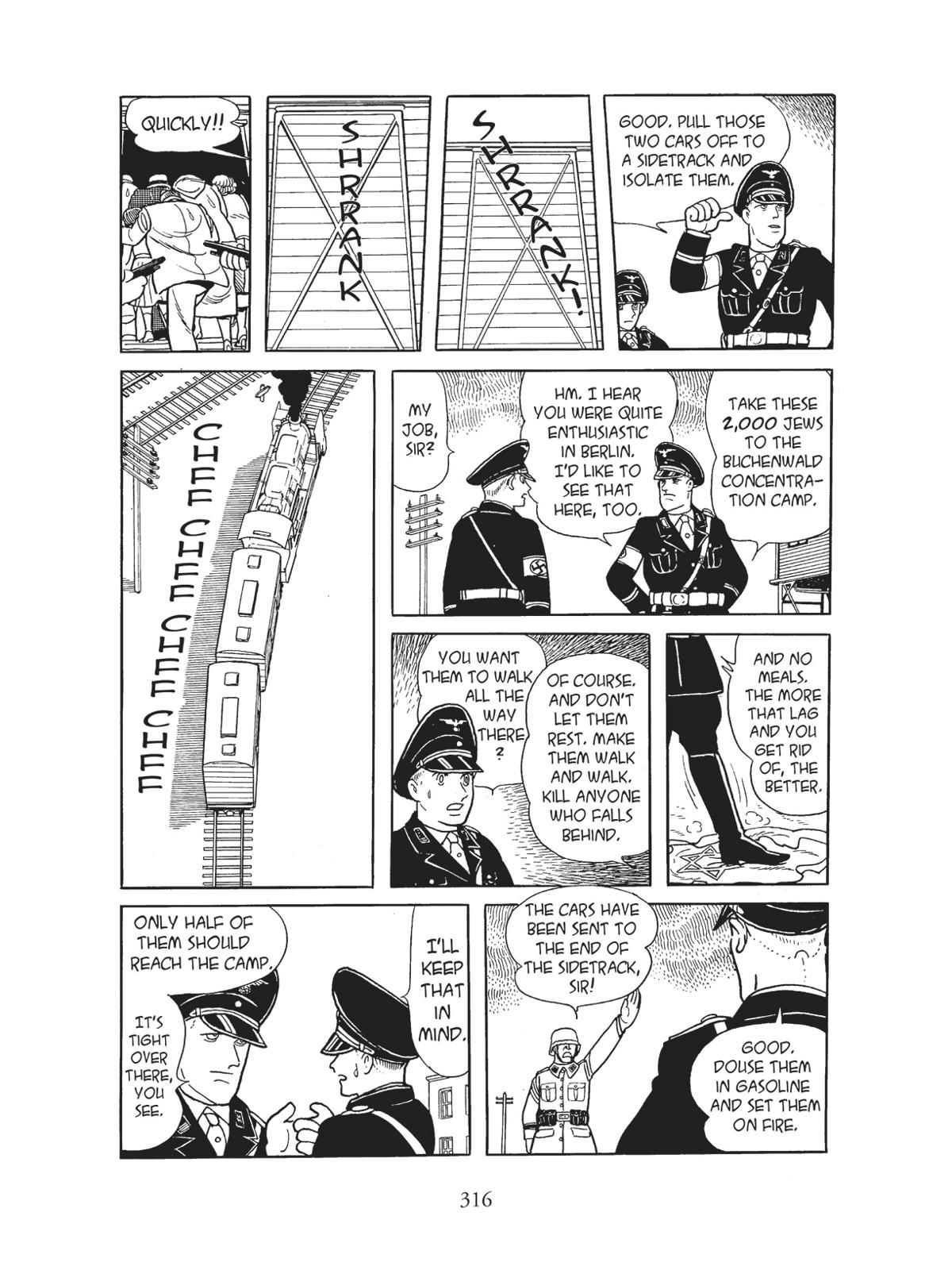
Kaufmann is notable for being the only character of many whose personality transforms over the course of the story. Even accounting for his having been manipulated and indoctrinated, Kaufmann’s journey is that of innocent and friendly child to a true monster who places ideology even above the happiness of the mother he loves. Volume 1 ended with him crossing a line placing him beyond redemption, and Tezuka begins this concluding volume with his consideration of what he’s done.
Two matters make this second half slightly weaker than the first, although they’re relatively trivial in the context of the masterful way Tezuka moves his cast from one dramatic situation to the next. Propelling all action sequences is people hunting for a document revealing Jewish blood in Hitler’s ancestry, and therefore political dynamite and best diverted to someone who can publicise it in a hurry. In order to perpetuate the drama, Tezuka stalls this aspect again and again, although eventually comes up with a clear and definitive reason why it remains hidden. More minor is a sequence of Kaufmann personifying a succession of Nazi atrocities, where moving from one to the next so rapidly induces diminishing returns.
Other than that, the drama is beautifully constructed, the art is impeccable and there’s the innate instinct of master storyteller able to weave his characters into real world events. These extend beyond World War II to the formation of the Israeli state, while a final settling of accounts eventually takes place in 1973. It’s a harrowing sequence where Tezuka underlines his theme of war ultimately being futile, and how an all-consuming desire for revenge reduces people to animals.
This volume combines the earlier paperback editions, beginning halfway through The Half-Aryan, continuing with Days of Infamy and finishing with 1945 and All That Remains. This is a pleasing hardcover presentation, but there’s also something to be said for the paperbacks including a timeline of global events. In either format what you’re getting is a 1200 page drama that’s mystifyingly under-rated outside Japan, when it ought to be ranked among the greatest of graphic novels.