Review by Ian Keogh
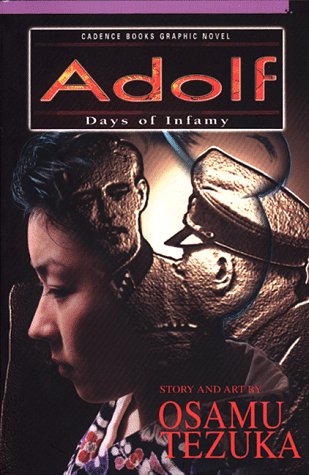
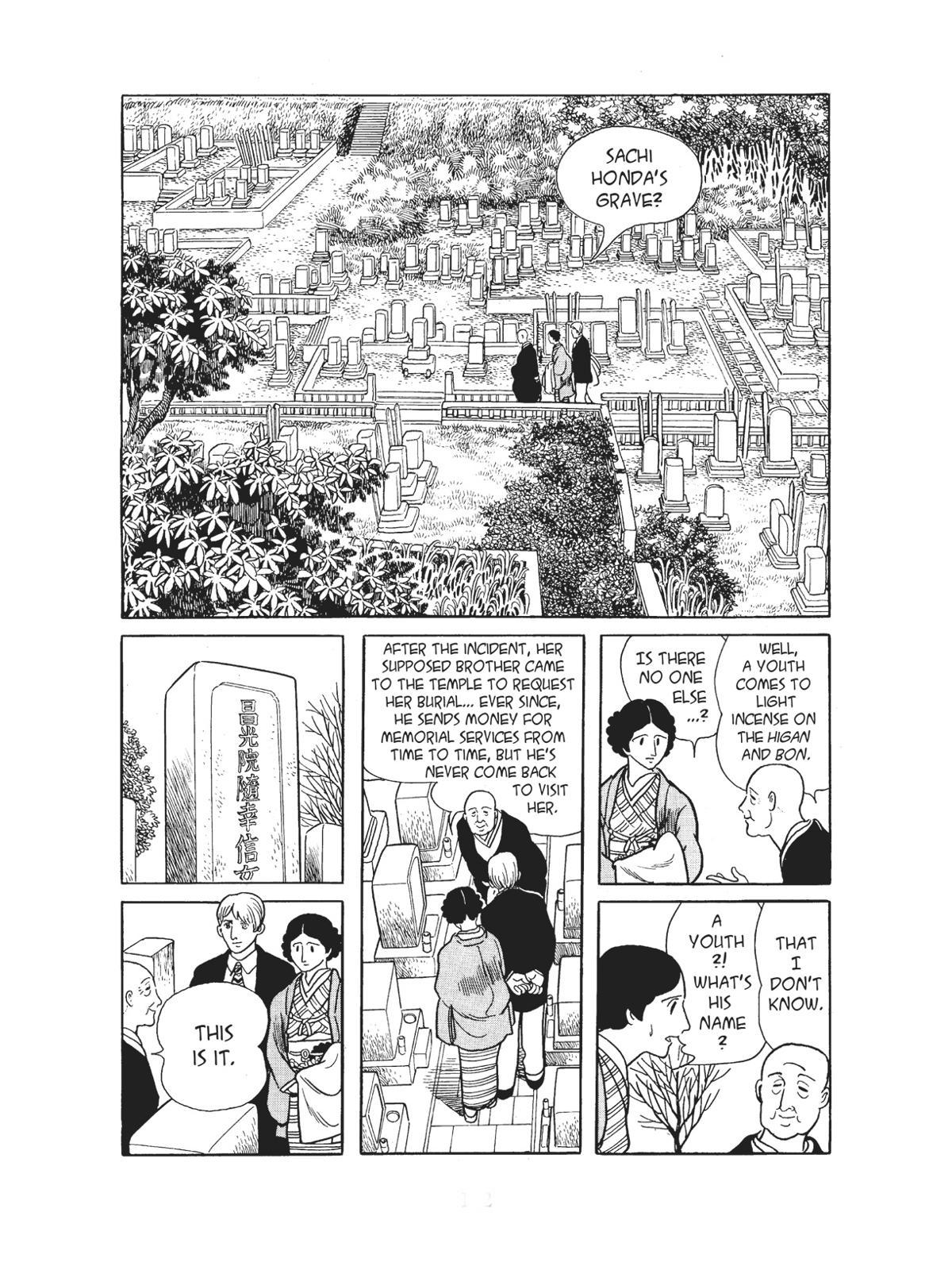
After a prelude introducing a new character, Days of Infamy opens in 1941 with the neatly drawn graveyard of the sample art where Adolf Kamil meets a Japanese spy for Russia. His background is credible enough as established with a brutal father, but Osamu Tezuka constructs an even stronger reason for hating the system of his homeland. Kamil meeting him ties into a murder seen in an earlier volume, and he dominates the first half of the book.
It’s been four volumes since Tezuka introduced the documentation proving Adolf Hitler had Jewish ancestors, and while it’s prompted hunts, chases and deaths it’s never been placed anywhere near anyone who can publicise it, which has been a narrative weakness. Tezuka, though, finally comes up with a viable reason why it remains hidden.
For all the action and horror, Adolf is the complete drama for also featuring moments of comedy, a little exaggerated over a few firefighting pages here, and ongoing romantic subplots. These are extremely well handled, with doubt, self-reflection and heavy doses of charm as accompaniments. And for once something goes right for Sohei Toge, who features in quieter scenes between the action.
By the time he began Adolf Tezuka was forty years into his career and a respected veteran who’d graduated from children’s manga to adult dramas. Always an immensely talented artist, this whole series is a virtuoso display losing nothing for the art being flopped to enable the book to be read Western style from front to back. Tezuka switches effortlessly from exaggerated cartooning to the darkness used for war scenes. The majority of pages, though, are a neat form of cartoon realism very much in the European style for not bothering with light and shade. All art services the story, and Tezuka never takes shortcuts. The establishing shot of the cemetery in the sample art could have worked with less detail, but Tezuka always goes the extra mile.
Days of Infamy’s final third leaps forward to 1944 and returns the spotlight to Adolf Kaufmann in Germany working as part of Hitler’s private staff. Now in his late teens, he’s been totally corrupted by Nazi ideology and as seen in The Half-Aryan, he already has a lot on his conscience. Tezuka inserts him as a merciless thug into actual historical events as the Nazi machine begins to collapse. It’s a procession of horrible events with Kaufmann at their heart, but also a rare mis-step for Adolf as Tezuka moves too rapidly from one scene to the next using Kaufmann as the vehicle to detail the in-fighting and decline of the Nazis. As grim as the sequence is, momentum is recovered when Kaufmann is ordered to march thousands of Jews to a concentration camp.
The final chapter is a different type of horror as personal experiences take their toll on Kaufmann, yet the needs of the story, and possibly the original serialisation, result in a less than credible rapid recovery. It seals Days of Infamy’s fate as the weakest section of a masterpiece overall, yet it’s the section that deals most fully with real events. Adolf concludes with 1945 and All That Remains, or both parts are combined in the second volume of Message to Adolf.