Review by Ian Keogh
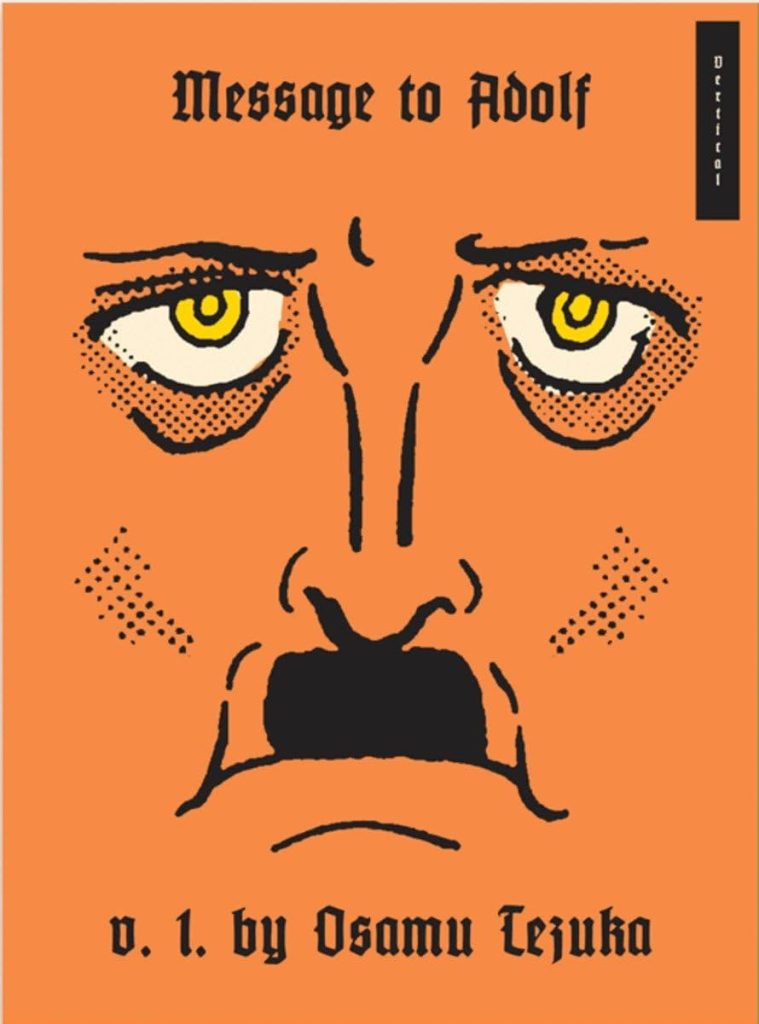
With most comic creators, no matter their overall reputation, it’s possible to point at a Dark Knight Returns, Maus or Watchmen as their singular defining work. Due to a prodigiously creative career maintaining high quality, Osamu Tezuka defies that easy categorisation, with several contenders, but no clear winner. Message to Adolf, or plain Adolf as it was in the earlier paperback translations ranks right up there as one of his masterpieces.
When wanting to tell the story of World War II Tezuka chose to personalise it by structuring it around three men named Adolf. Nazi leader Adolf Hitler’s appearances are brief, but memorable, while his namesakes are first seen as young boys in the late 1930s, both living in Kobe, Japan. Adolf Kaufmann begins the story as the son of a German official married to a Japanese wife, and ends this opening volume a very different person on graduating from a Nazi college in Vienna. When a child he’s upset at his father forbidding him to associate with Adolf Kamil, a baker’s son, but also part of a Jewish family who’ve escaped persecution in Germany to settle in Japan.
It all indicates the grand historical novel being an influence, as the experiences of a large cast sweep in and out of focus, while also telling the story of a war. To call this the comics equivalent of War and Peace is no idle comparison, and it’s surprising that this remains relatively obscure outside Japan. Despite Adolf being part of the title, involvement in World War II requires an initial set-up, and that’s via another major character Sohei Toge, whose destiny becomes entwined with secret documents proving Hitler had Jewish ancestors. He’s a standard heroic figure at first, if sometimes behaving badly, but given later depth by experiences and consequent frailties. Narratively he’s needed as it’s important the younger Adolfs are first seen as children, enabling the events that shape who they become to be introduced, so Toge’s thrilling action activities allow them to blossom relatively slowly.
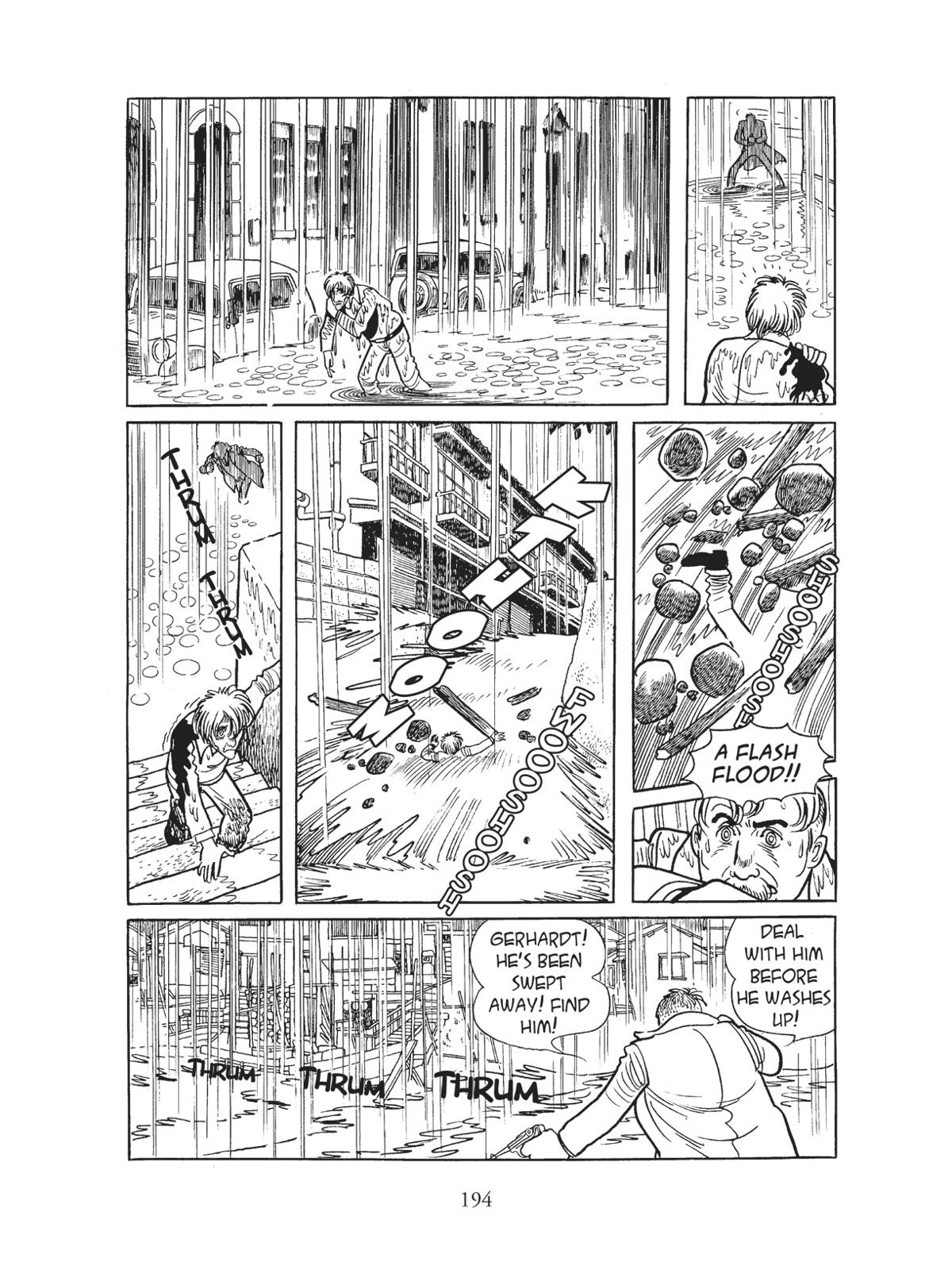
Tezuka pours his soul into the art. He’s never one for shortcuts, but even by his standards the focus on visual characterisation and attention to detail is immense. The technically gifted cartooning avoids light and shade for the most part, while phasing it in for more realistic scenes of warfare. With such a large recurring cast it’s important individuals can be differentiated, and the variety of personalities and body types is some achievement. From Mrs. Kaufmann to a series of reprehensible villains people are largely recognisable for who they are.
Tragic personal stories, a world at war and numerous secrets make for a potent drama, and Tezuka delivers on all aspects, ending with Kaufmann a completely changed character five years after we first see him.
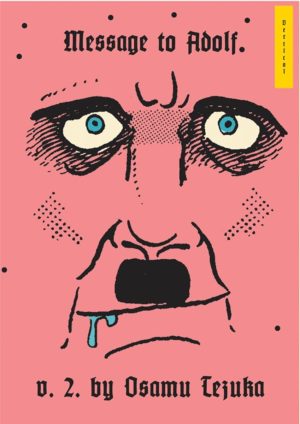
Message to Adolf V. 2 concludes matters, but this content was previously available in well designed paperbacks as Adolf: A Tale of the Twentieth Century, An Exile in Japan and half of The Half-Aryan. Follow the links for greater assessment of individual segments. With manga nowhere near as common in the USA during the 1980s, an editorial decision was taken to flip the art to enable it to be read from front to back, and this is carried over to the hardcover editions.