Review by Ian Keogh
In other projects Osamu Tezuka has made his feelings about the futility of war clear along with his hatred of it, and he opens An Exile in Japan detailing atrocities his birth nation Japan committed in China, depicting the corpses left after the slaughter of an entire village. Despite being published in the 1980s about events of the late 1930s, there are lessons to be learned, as Tezuka also shows the demonisation of citizens refusing to embrace nationalistic fervour. His portrayal of nationalist thugs is that of leering bullies over a frenetic opening chapter that’s its own perfectly formed chase movie.
Documents proving Adolf Hitler has Jewish blood are the secret propelling Tezuka’s plot, which begins here by returning journalist Sohei Toge from A Tale of the Twentieth Century back to prominence, and having him make a clever connection bringing him more fully into the orbit of the other two Adolfs. Another smart moment echoes A Christmas Carol, with a recuperating Toge receiving three visitors.
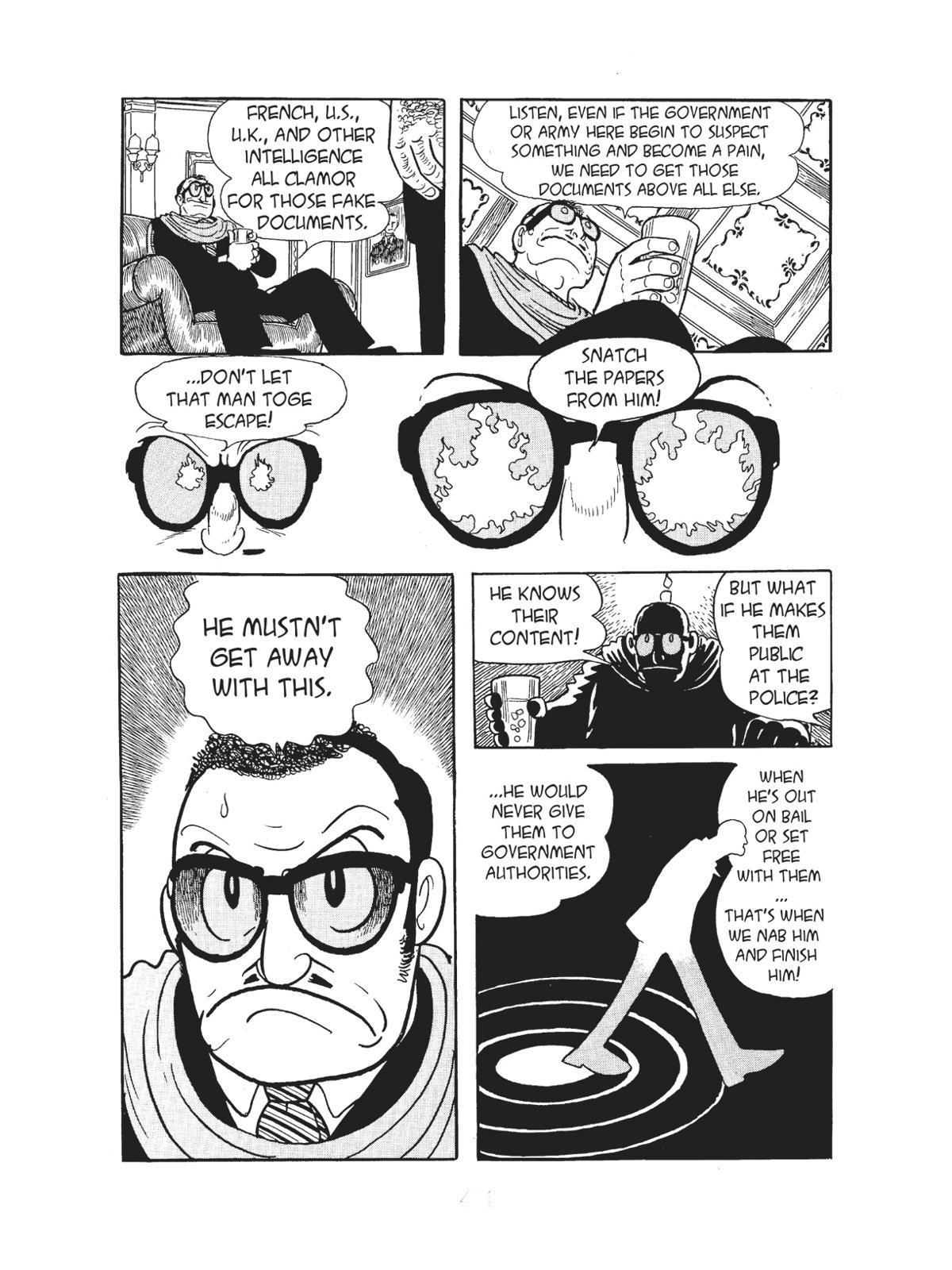
The quality of Tezuka’s cartooning gives people and surroundings a richness, and the movement is phenomenally good. There’s a barely credible level of high energy to the action moments, and a cinematic touch to way the scenes break down. The style’s not the same, but the breakdown of the sample art is reminiscent of Will Eisner.
An Exile in Japan refers to the situation that Toge finds himself, and his activities occupy the first half of the book with barely an Adolf to be seen. Eventually, though we catch up with Adolf Kaufmann in a privileged Viennese academy where the only blemish on his academic achievements is a refusal to accept the Nazi doctrine about Jews. Tezuka presents him as believably conflicted, his half-Japanese heritage marking him down as sub-human in Nazi eyes, but he only features in the single short chapter with Adolf Kamil never seen as Toge’s story again takes precedence.
It’s good judgement on Tezuka’s part as the horror of events moving into World War II serve as adequate background for what’s primarily a strong and sweeping drama about people. Their feelings and reactions are always entirely understandable, and Tobe being a man betrayed, yet loyal to his brother’s wishes is a monumental character, involved in a great thriller. It continues in The Half-Aryan.
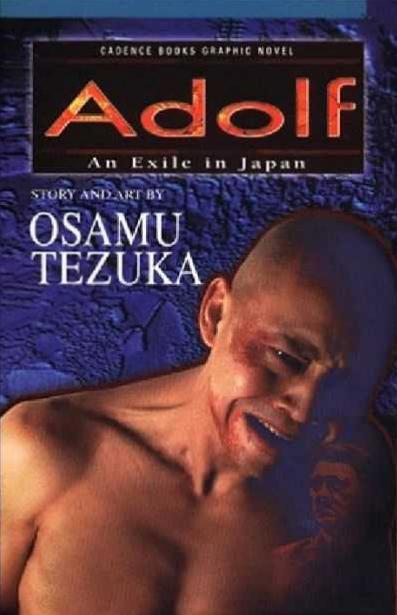
These Cadence editions with their evocative photo covers still look good, but were published before the American manga explosion, so have subsequently drawn criticism for flopping the art enabling the pages to be read from front to back. If you don’t know, it’s certainly not apparent, and it’s been retained for the 2012 hardcover collections Message to Adolf.