Review by Frank Plowright
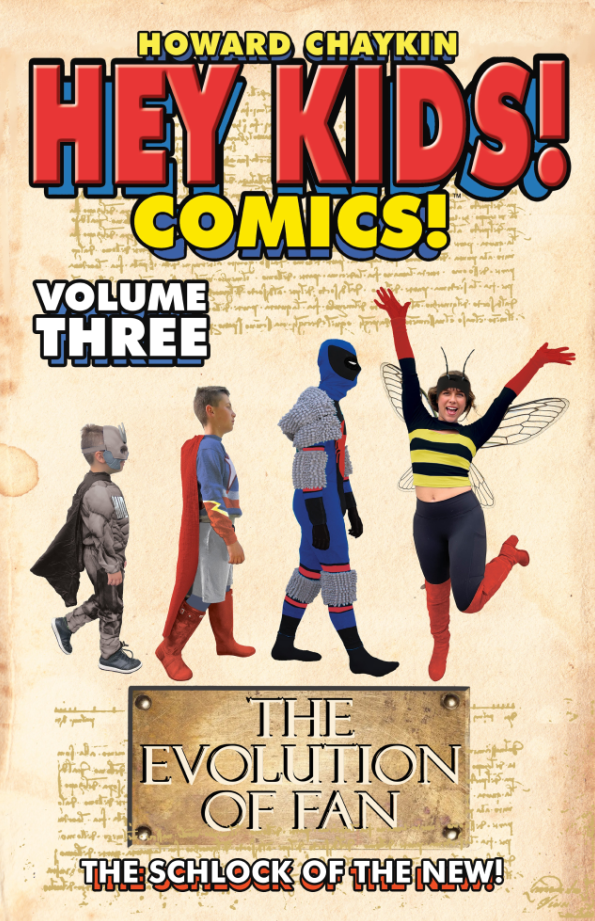
Is there mileage in a third volume of Howard Chaykin’s cynical, no punches pulled appraisal of the comics industry over the decades? The previous Prophets & Loss was strong enough on anecdotes, but lacked cohesion, yet The Schlock of the New’s cover implies fans are this time to be the focus. This isn’t just the fans of recent years, as Chaykin reminds us that Superman’s creators were essentially fans, just of the SF pulps.
Yet fans we have to be to identify the people featured with pseudonyms, as Chaykin’s anecdotal writing style is loose and impressionistic, dancing around a vast cast, flitting from one to next not joining the dots for readers who don’t know their comics history. Will Eisner’s early 1940s comic studio is featured, followed by Eisner’s court statement about plagiarising Superman, but the latter lacks resonance without the background knowledge. The effect is the comics equivalent of the lounge comedian – joke, rimshot, joke. As in previous volumes, Chaykin’s very strong on showing how rife anti-semitism was in an industry largely created by Jews, and there’s no sparing the sensibilities of those who might be offended by the language of the times.
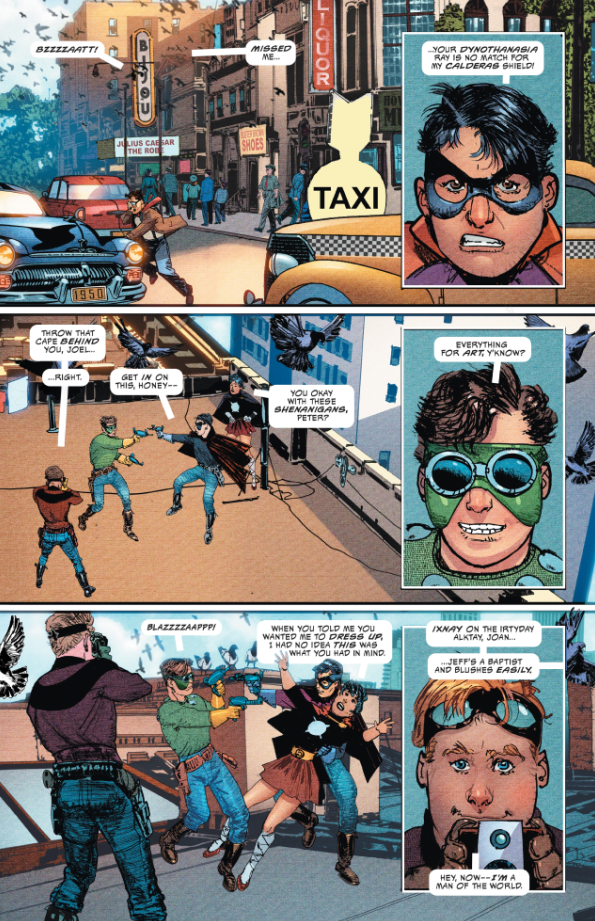
The sketchy writing style is contrasted by the tight digital illustration. Chaykin’s smart enough not to draw exact likenesses of the people he’s satirising, but creates recognisable people who remain identifiable as they age. As before, the people are accompanied by pastiche comic covers, some of which parody covers Chaykin actually drew back in the day, and a New York infested with pigeons.
Chaykin runs through from the 1930s to the 1990s, but the emphasis on how fans shaped comics over the decades takes until the 1980s to manifest, before which subjects like the post-war slump in superhero comics, the rise of Marvel and the topic of returning art to artists are covered. If you get the references there’s some joyful moments as Chaykin pulls back the curtain, revealing, for instance, how dumbfounded professionals were at the unbelievable success of Teenage Mutant Ninja Turtles. His alterego Noah Gitlin features prominently again, toward the end in a couple of score-settling scripts emphasising how he was right. Unless you see or remember the incidents differently, of course, in which case they transmit as astonishingly petty, and given the timescales involved actually rather sad.
Shorter strips ending the book feature anecdotes that wouldn’t otherwise fit, and more personal to Chaykin, who handles all the art other than a page by Fred Hembeck, with some scripts credited to “Thomas. K”. They include Chaykin’s honest thoughts on his Star Wars comics, which amounts to his now considering the work embarrassing. An essential insight into Chaykin’s personality is that being his justification for charging more to sign them.
Ultimately, Chaykin is preaching to the choir, which may alienate the chorus. If you’re in the choir, though, it’s fun.