
Review by Karl Verhoven
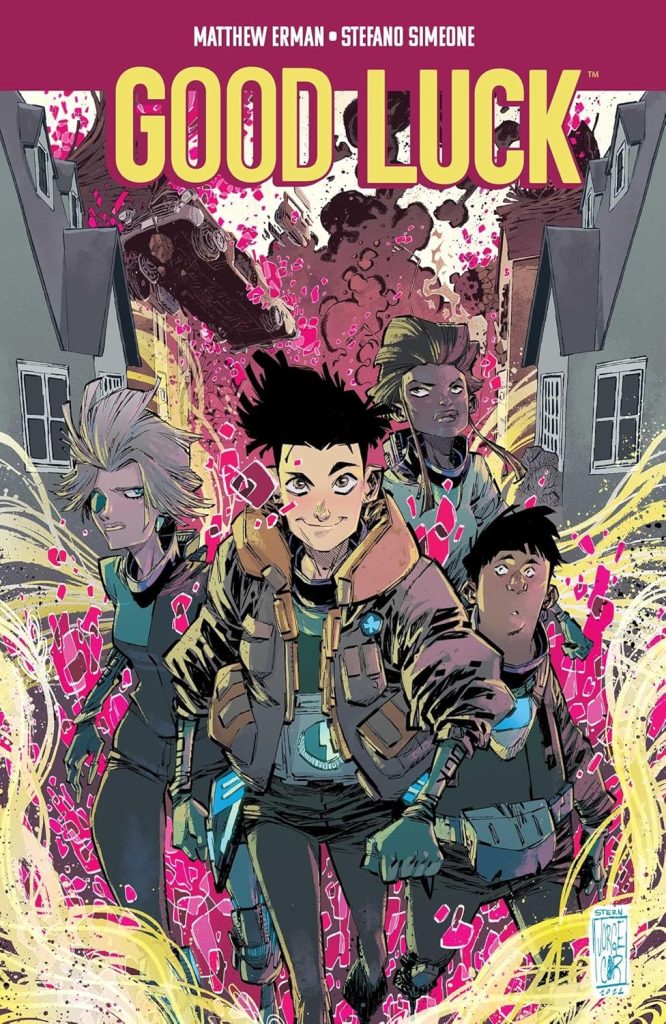
It’s been thirty years since the gods of luck first manifested on Earth and life changed irrevocably. Luck is now quantifiable, and it seems as if Artemis Barlow is the unluckiest guy on the planet, living in Las Vegas, the world’s unluckiest city. However, that’s not the entire story. Put him in a kismet suit at the Department of Luck and Probability and there’s a possibility things could change. He’s one of the Unfortunates.
His new colleague Joey Testpilot may claim confusion, but he’s well ahead of most readers. Ideas here need a lot of explaining, which really hampers the opening chapter, and it still doesn’t entirely work. There’s so much explanation it requires strength of will to force through it, and it’s not helped by Matthew Erman wanting to show off as a writer rather than just get the job done as clearly as possible. “The cold of the universe expands outwards away from them”, we’re told, “yet we we’ve taught them how to navigate the maze of life… of unluck. How to eke toward that mighty dull average”. Doesn’t make sense? Well there’s plenty more where that came from. How about “Suffering is existence! Bad luck is endless! And the only release is the void”. Whoo, and indeed, hoo.
At first there’s a slight sense this is all satirical, that Erman’s supplying a pastiche, but the longer Good Luck continues in the same vein, all hope of that evaporates. It’s a story where any convenient thing can happen because, you know, luck’s now quantifiable.
Good Luck flatters to deceive, though, as Stefano Simeone takes this cosmic slop and technobabble and makes it look far more interesting than it is. He draws digitally, and in places overworks the colours, but creates a suitable other-worldly environment where fragmenting buildings and people in holographic helmets almost make sense. Random blocks of colour floating through the air and strange, flat robotic cats enhance the weirdness.
Ulitmately, though, it’s in service of a story manifestly style above content and lacking a focus.