Review by Frank Plowright
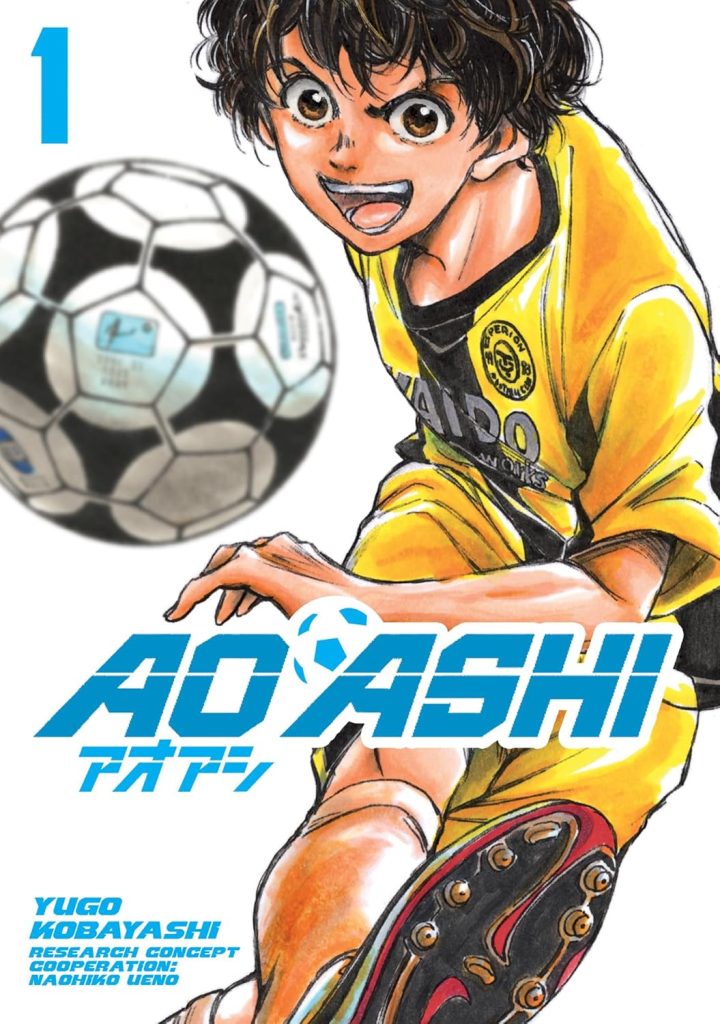
Aoi Ashito is the star of his school football team, to the extent that all his team-mates have to do is pass him the ball and let him score, but when an opponent points this out during a tournament game, Ashito’s response is to headbutt him. Ashito is blessed with not only formidable technical skills, but an astute tactical brain, and if only he could control his temper he’d be some football player. However, the manager of a Tokyo youth team has been watching and sees enough potential to invite him to a tryout session.
Starting with a primary character overflowing with personality, Yugo Kobayashi builds a consistently engaging football-based soap opera starting Ashito on the journey up the scale of a professional footballer. Presumably that journey will eventually encompass Ashito making the first team and beyond, but even at the bulk of combining three Japanese paperbacks that destination’s a long way off at this stage.
There’s an early disclaimer that Kobayashi hasn’t based the coaching structure on any existing programme, but what he conceives has a reality about it, convincing that a major club’s youth programme could be run as he shows it. Almost as important as Ashito is Fukuda Tatsuya, a former international prodigy who had to retire young and now coaches, and much of the first third concerns an exceptionally well plotted tryout, explaining what the coaches are looking for in players. Everything about the sessions is well conceived.
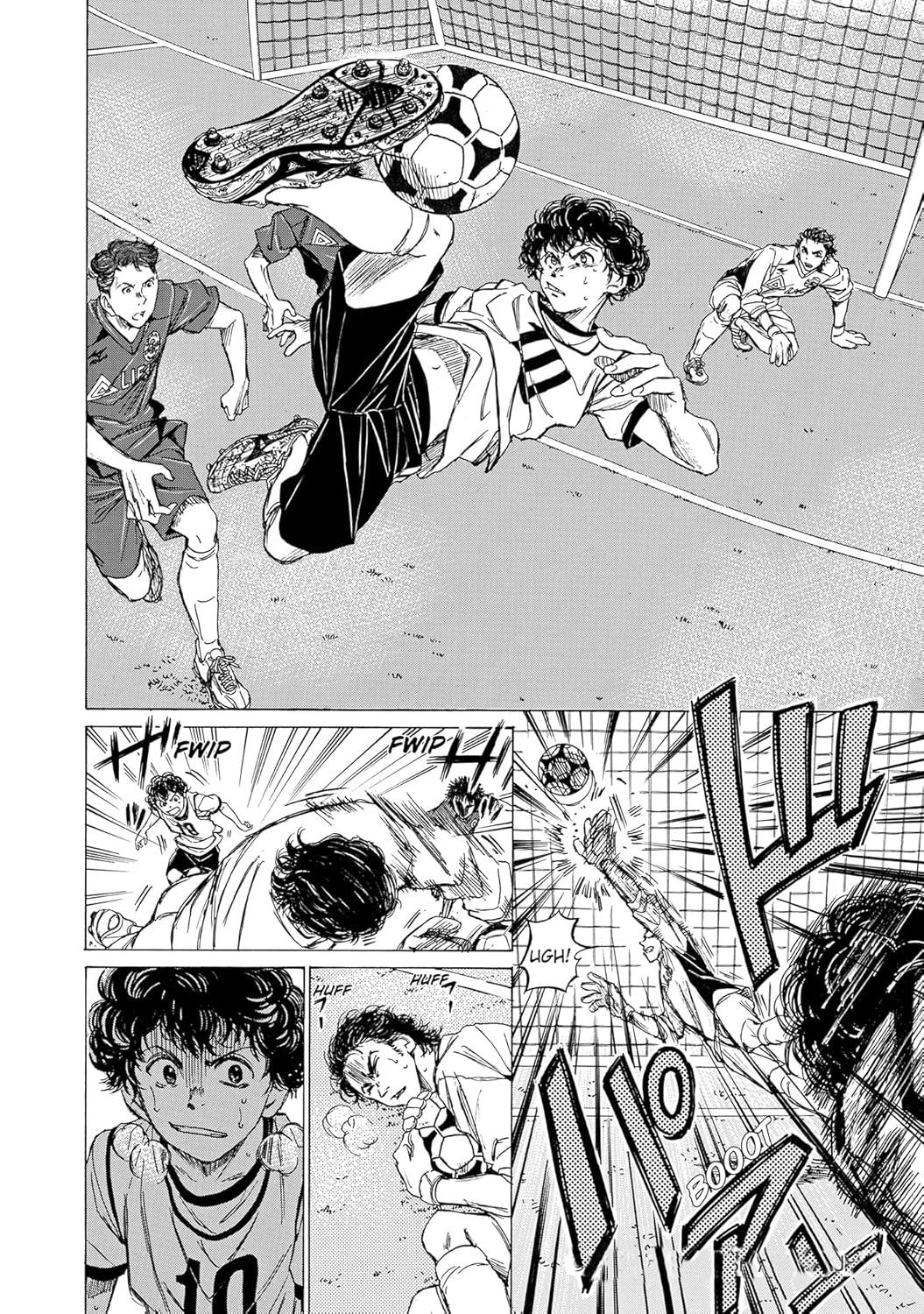
Ashito being distinctive with curly hair works artistically and he also resembles Billy Dane from iconic British football strip Billy’s Boots. The few major characters are accompanied by a large ensemble cast of bit players who can also be distinguished, but only vary rarely does Kobayashi attempt to draw a convincing football match. He knows how, as he does on occasion, but for the most part opts for a succession of sensationalised individual illustrations with speed lines and a ball warped out of shape. It’s excitement supplied at the cost of realism, and as such possibly well judged for a teenage audience, but at times there’s too much taking about football rather than showing it.
All the talking, though, ensures every bit of emotion can be wrung out of a scene. It’s all very cinematic as Kobayashi swipes techniques from action features, closing in on grimacing faces or running through reactions, but it can be extended too far to the point of being padding. However the soap opera techniques that may drag with Ashito on the pitch are more effective during scenes away from the game. The skill is exemplified by the misdirection used as Ashito awaits news of whether his trial has been successful, followed by a strong scene as he reads a letter.
Toward the end the Tokyo club’s first team are presented in suitably iconic fashion, after which people we’ve seen before in the background are given proper introductions as they’ll presumably be important going forward. Combining three volumes provides a meaty big chunk of Ashito’s first steps on a long journey, and as they end any football loving kid should have been caught up in the way it’s been told.