Review by Karl Verhoven
Many of us know the terms cryptocurrency, non-fungible tokens, and bitcoin, yet how many of us truly understand what they are? Kevin Bridges has a comedy routine on that theme, and the suspicion is that many investors are unaware of their implications. Is Daniel Villa Monteiro’s fictional extrapolation the answer?
At eighteen Alice has inherited a sizeable sum of money from her grandmother. Her father, an insurance salesman, feels she needs to invest it. It’s March 2020 and covid has filtered into reality. With little knowledge, but plenty of resentment over her father’s overbearing attitude, Alice plunges into bitcoin.
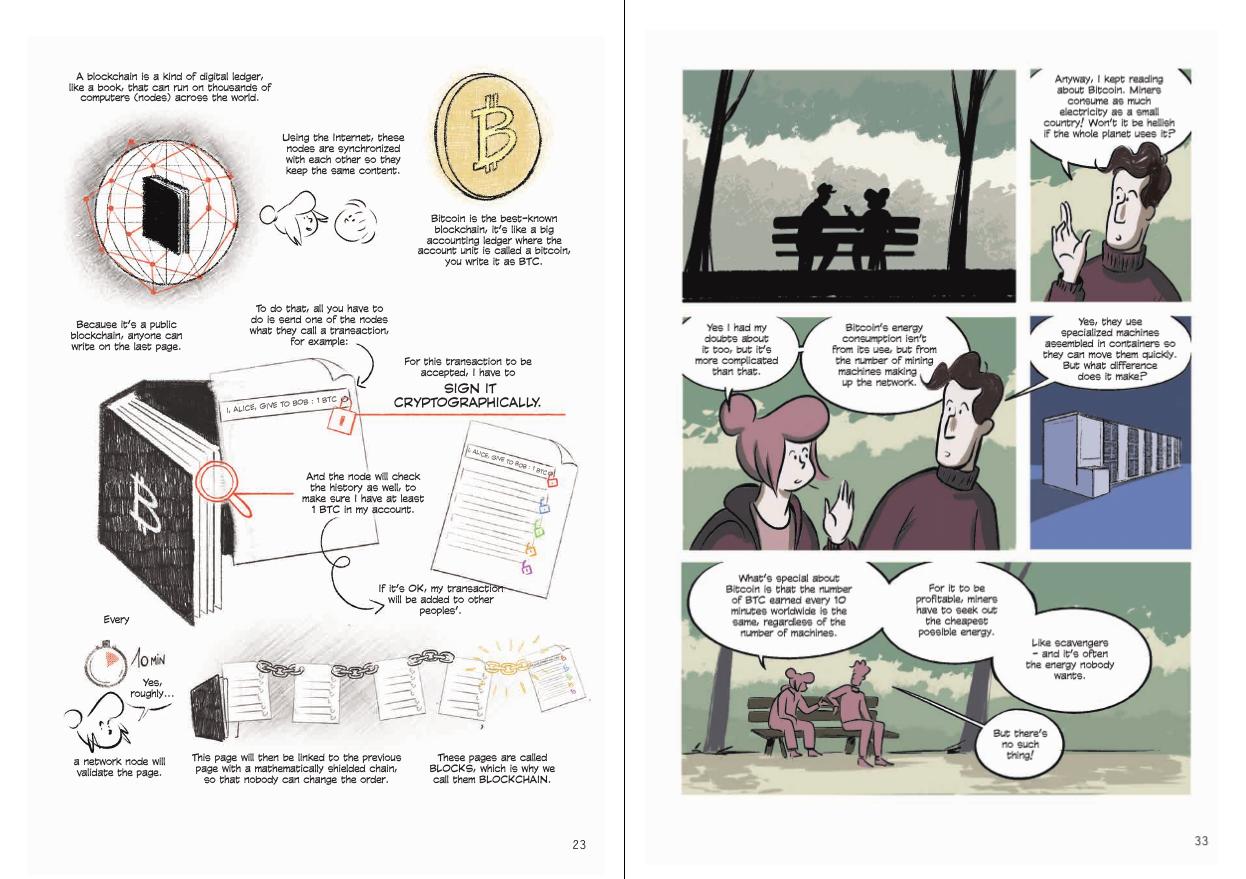
Monteiro’s reasoning for embedding his explanations in a fictional scenario is sound. Many people don’t understand the concepts because it also involves understanding the interconnectivity of the digital era, and without grasping that, there’s no comprehending cryptocurrency. Personalising the experience softens some aspects of the learning, but not others, as it still requires plenty of complex symbolic illustration from Nicolas Balas and additional explanations from Alice. These are along the straightforward lines of “A NFT is a Non-Fungible Token. It’s minted with a smart contract that links ownership of a unique token, containing information, with an address”. You may still wonder about the economic term ‘fungible’, which refers to interchangeable units of economic value, at its simplest ten pound coins equating to a ten pound note. Monteiro doesn’t explain this.
What he does explain is lucid, if perhaps dull if you don’t really want to know, but at no point do the explanations ever reach a state of simplicity, and that, surely should be the point. Metaphors are rarely used, the dramas around Alice’s life phase in and out and she spends more time as another explanatory tool. Her most effective personal moment is realising bitcoin values can fluctuate in the same way as share prices, and the upset it causes.
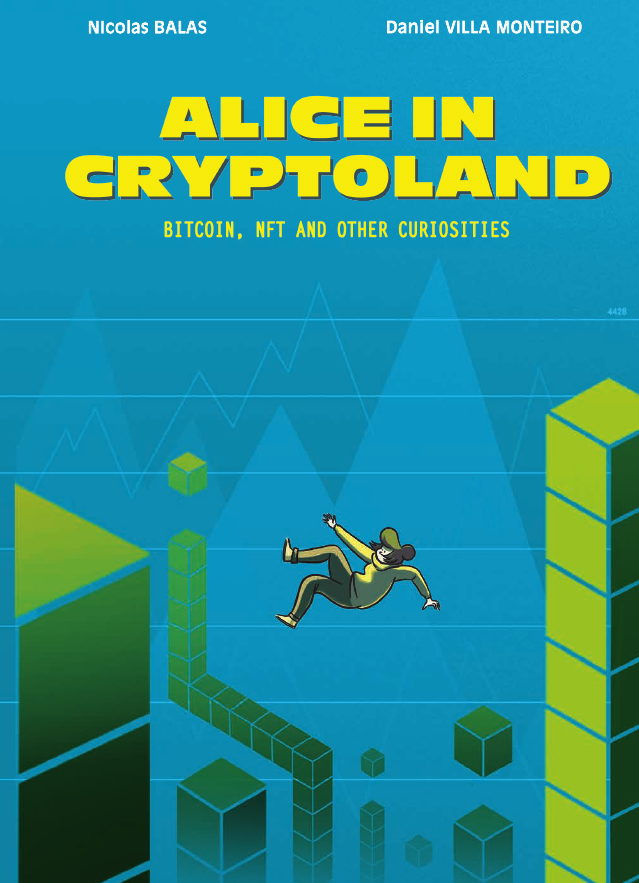
Balas provides art that’s functional, but without ever surpassing that designation. When it comes to explanations that’s good, yet more decorative art would also make Alice in Cryptoland a more attractive proposition overall.
There are places where the proselytising seems to override common sense. We’re told over two billion people have no access to a bank account or live in areas experiencing double digit inflation, but wouldn’t the reality for a significant percentage also be a lack of access to tools enabling bitcoin? Another awkward moment is the presentation of El Salvadorian leader Nayib Bukele as enlightened, when his dealings with the USA in 2025 have made many profoundly uncomfortable. And it’s only at the end that possible negative effects of a self-regulating currency are discussed. That includes a viable metaphor among plenty of economic explanation.
Ultimately, Alice in Cryptoland is rather the curate’s egg, certainly well intentioned, but not entirely successful as drama or explanation.