Review by Karl Verhoven
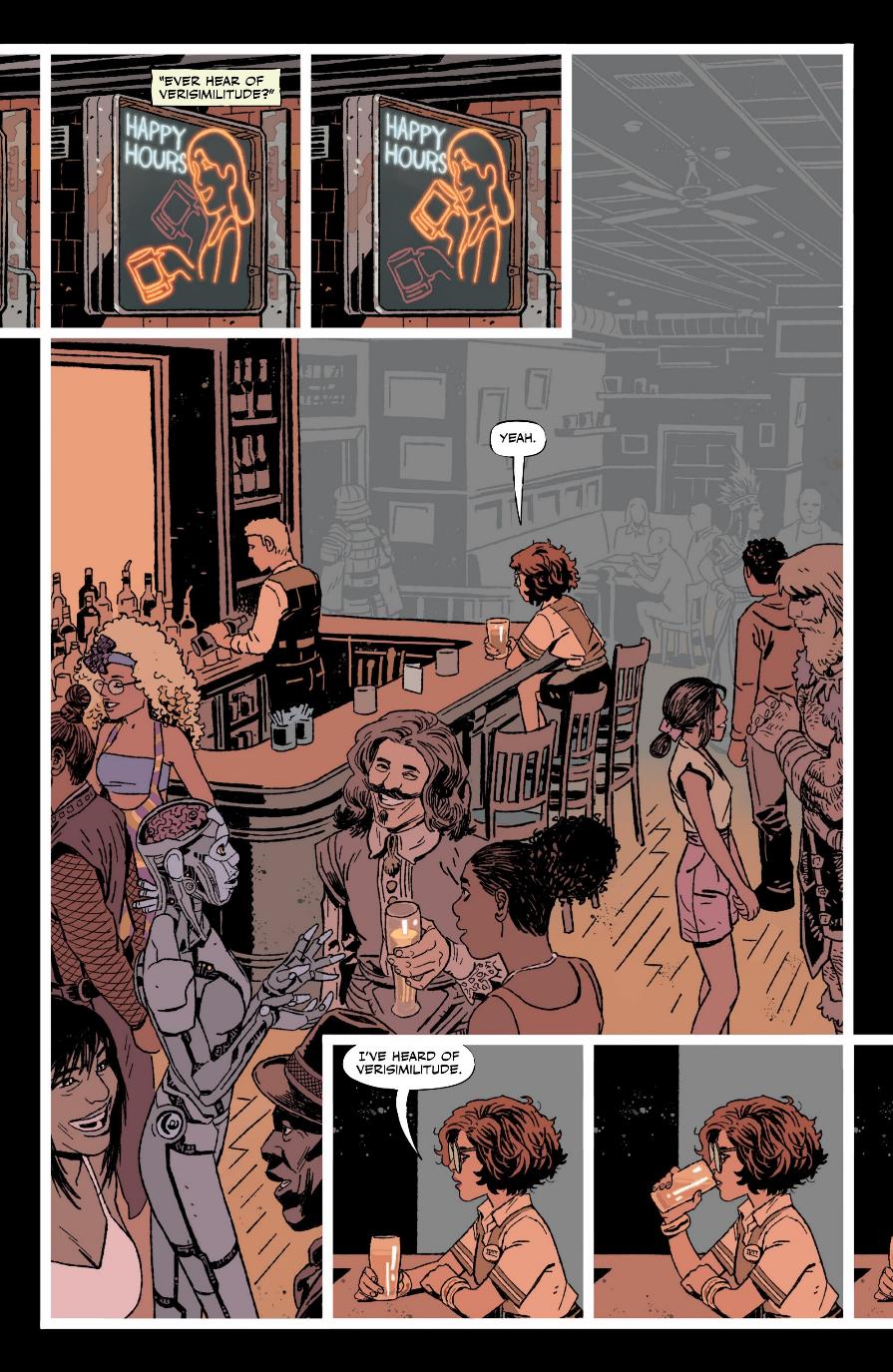
Deniz Camp has a clever opening to Assorted Crisis Events, suggesting time is somehow attempting to end the world, when it fact Ashley lives at a location often used for film productions. He then trumps it by revealing time is breaking down after all. “Most call it the Crisis”, Ashley explains. “You can get stuck in the worst moment in your life forever, get killed in your own apartment by your evil other dimensional doppelganger or take a wrong turn into prehistory on your morning commute”. For Ashley, not being recognised when she turns up at the office is an occupational hazard.
Camp imbues Ashley’s life with an appealing sense of absurdity, compounded by Eric Zawadksi’s ability to merge the everyday with the fantastic for an opening chapter that circles around on itself and is near enough perfect. It’s clever, it captivates, it’s well drawn and funny, and Ashley’s life is treated as a never-ending film.
Ashley, though, is only the introduction to a world where pretty well anything can happen, and the following chapters relate the experiences of others, compared to whom her experiences are relatively straightforward. The tragic family life of Jesús and the horrors of his job in an abattoir are relentless and overwhelming, counterparts of every inhabitant in a town turn up as refugees from another dimension, and Mike’s life is experienced like a stone skimming over water, with constant gaps.
Zawadski’s art is eye-catching, inventively conveying assorted horrors, with each chapter requiring a different approach. It can be challenging, especially as different experiences run simultaneously, separated by Jordie Bellaire’s effectively chosen colour. A minimalist approach is taken to the colour, with traditional full colour only rarely applied to Zawadski’s neat illustration. The combination supplies Assorted Crisis Events with its own distinctive visual identity.
As grim as the abattoir visit is, the most intense emotional horror is saved for the final chapter in which Anna at thirteen sees her parents arguing and her father hitting her mother. As an isolated incident it would be traumatic enough, but she becomes stuck in a sixty second time loop and relives it countless times before time adjusts. It leaves Anna broken, and as her experience occurs before the fragmentation of time is widely accepted she’s without any reliable form of salvation, written off as a fantasist. In a solidly drawn book, this is Zawadski’s most memorable work, the spiralling art reflecting Anna’s spiralling mind.
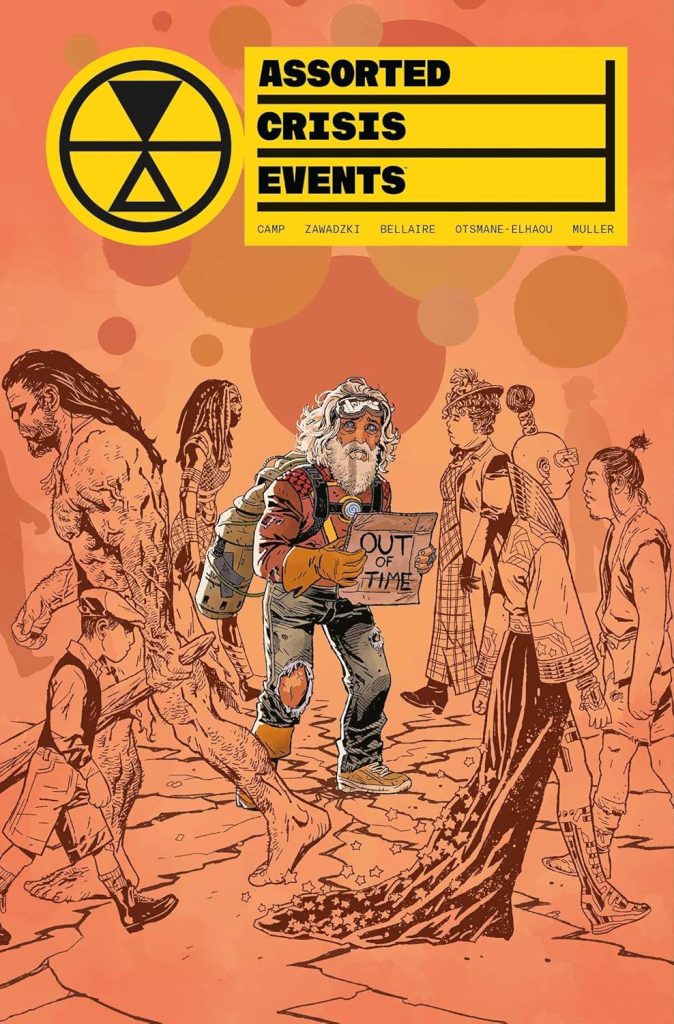
A recurring lost character, seen on the cover, indicates Camp has a larger plan in mind, but as five standalone tales, this is creative SF-based horror with a human heart.