Review by Ian Keogh
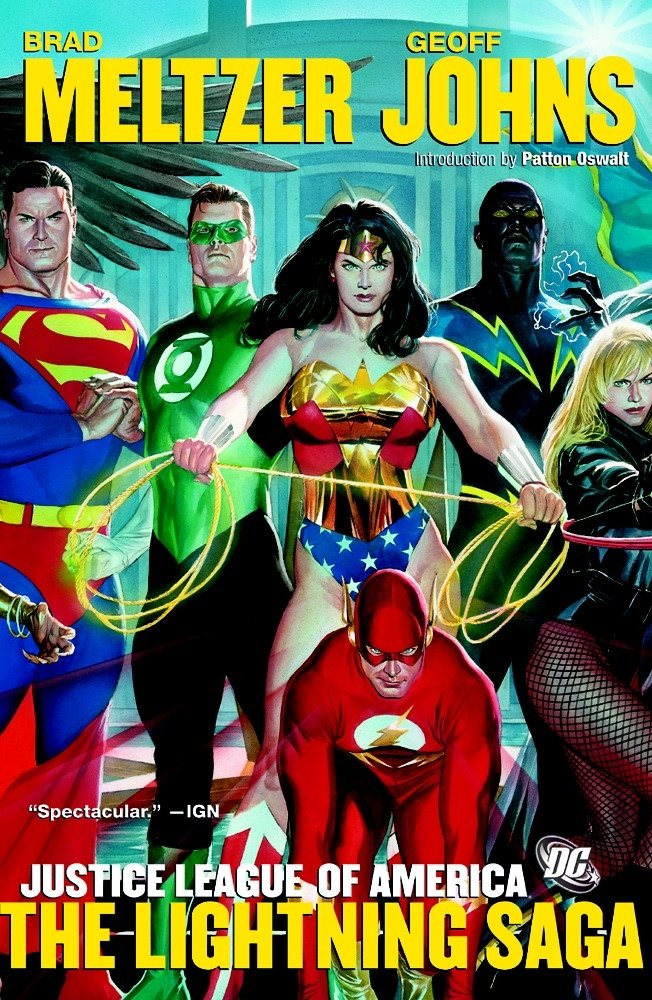
By this second volume collecting Brad Meltzer’s Justice League work it’s already very apparent he respects the past traditions, and he reinforces that here opening by renewing their team-ups with the Justice Society. In 2007, though, the JSA had their own title, so alternate chapters are written by Geoff Johns.
The teams are brought together to solve the mystery of why seven members of the Legion of Super-Heroes from the future are in the 21st century, but with fractured memories. They’re gathered, and rather than just being adjuncts to what’s going on with the Justice League they’re given their own sequence, while members of the Justice Society air their problems also. It might have worked when the comics were contemporary, but now there are too many dangling conversations. Likewise, time has diluted the Legion’s mission, which in 2007 was a well-plotted surprise, but dependent on contemporary continuity.
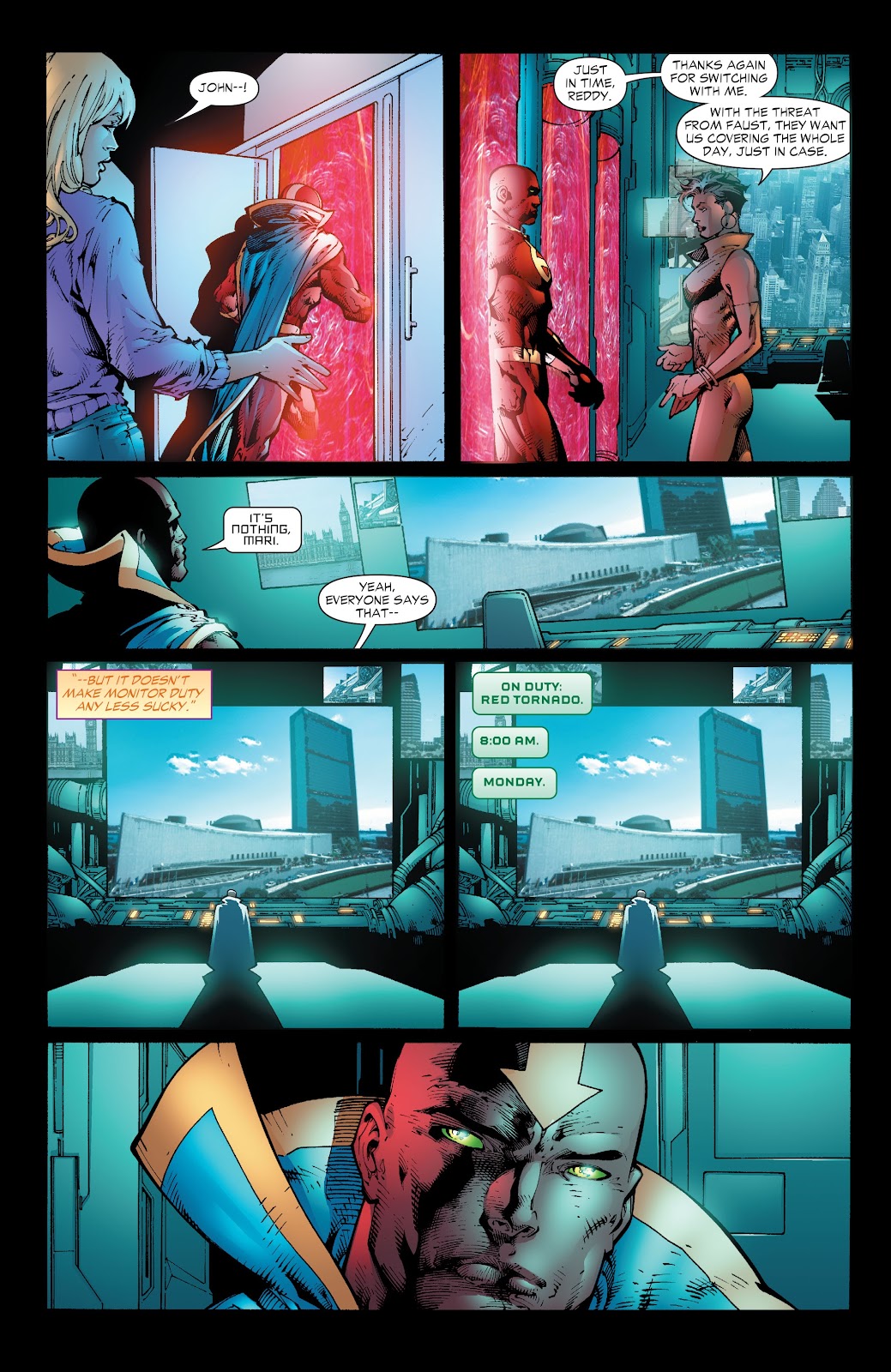
With Meltzer drawing so much on the old Justice League, artistic consistency should be noted, and it’s now astounding that just two artists pencilled almost all of their first 180 issues. Here we have six artists over seven issues, and the style is all over the place. The elegance of Gene Ha is applied to the Eisner Award-winning tale of Red Arrow and Vixen trapped, while Shane Davis tries to emulate Ed Benes, but can’t manage it, leaving many of the figures distorted. Benes (sample page) draws two issues in his line-heavy style and Fernando Pasarin impresses with clear storytelling and attractive layouts on a single chapter.
The book’s closing tale actually precedes most of the remainder, and indeed works better as a prologue to The Tornado’s Path, which is its placing in the hardcover Justice League by Brad Meltzer Deluxe Edition. The start is a nuanced consideration of moments set around old stories, a clever idea for revisiting the days when action was all and characterisation didn’t matter, revealing uncertainties about even founding the Justice League. However, the longer it continues and the more moments from the past are visited, the more self-indulgent it becomes, and the whole theme is certainly alienating to any reader without more than a passing knowledge of the Justice League’s history. There’s also some surprisingly awkward art from some very big names drawing a few pages each, but it works well as a prologue for establishing the bond between Batman, Superman and Wonder Woman.
By the end of this volume Meltzer takes his leave, having put together a new Justice League and left them with enough problems for next writer Dwayne McDuffie to take forward (start with The Injustice League). It’s what would be considered lesser characters that interest him the most, and Hawkgirl, Red Arrow, Red Tornado and Vixen emerge as his focus. Meltzer’s at his best with intimacy, and the two character studies forming his final issues are the strongest. When he’s writing the widescreen epic he over-complicates, but the human emotion is credible throughout.