Review by Ian Keogh
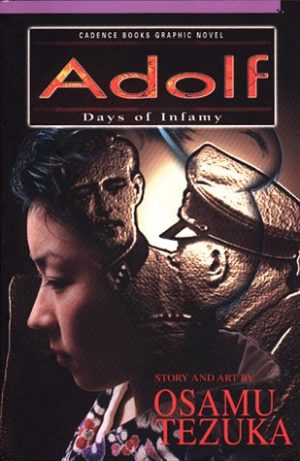
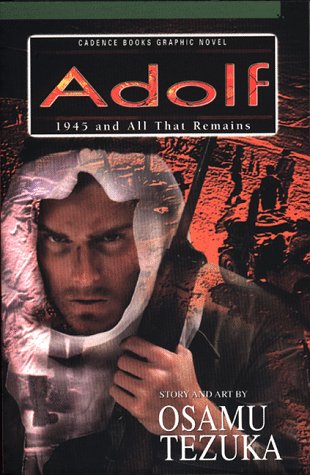
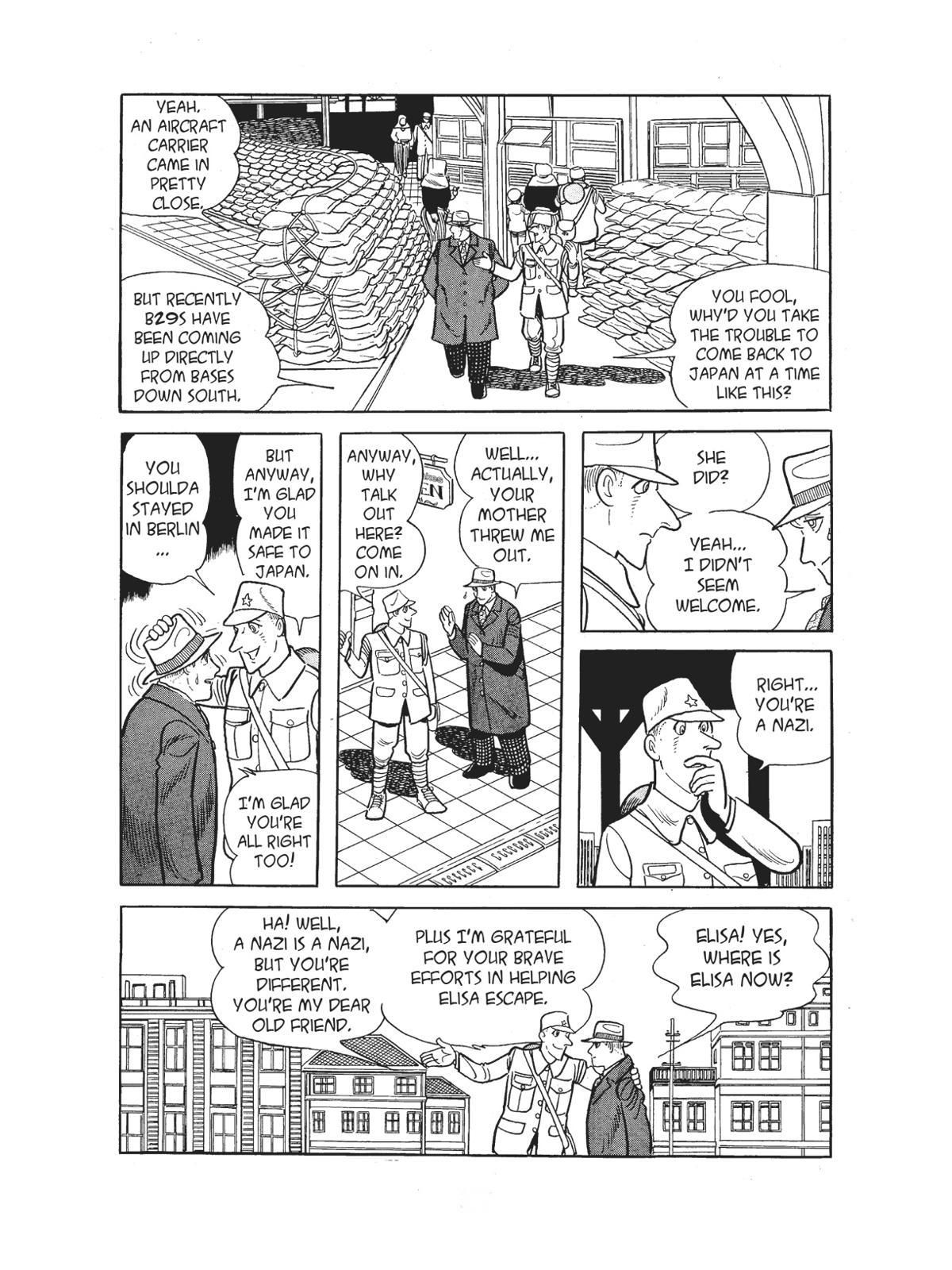
When Adolf Kaufmann left Kobe in 1940 in his early teens, his best friend was Jewish and he resented being sent to a Nazi military academy in Austria. When he returns in early 1945 he’s a firm believer in Nazi ideology, has worked in close contact with Adolf Hitler and has committed atrocities. He’s back home on a mission to find stolen documentation proving Hitler had Jewish ancestry, potentially political dynamite even as World War II drew to a close in Europe. We’ve already seen in Days of Infamy his mother has married the man Kaufmann is to target.
Kaufmann’s journey to the monster he’s become has been the heart of Adolf, and despite all the appalling deeds he’s participated in, on seeing him reunited with the mother he loves Osamu Tezuka manages to induce some sympathy for the young boy he once was. Kaufmann’s arrogance, though, rapidly dispels that mood even before an excruciatingly awkward reunion with childhood friend Adolf Kamil, who’s welcoming at first.
Throughout Adolf Tezuka has lightened the mood by including a few comedy sequences or something comforting, but as both his story and World War II come to an end there’s no alleviating a downwardly spiralling mood. Hitler’s given a final scene, ranting delusions within his protective bunker before Tezuka’s choice of death is a form of justice. Tezuka shows little sentimentality as the final wartime drama plays out against a backdrop of US bombs falling on Japan, a brutal and random end for several cast members. Even in the midst of that, though, there’s clever plotting, particularly the reversal of a house being searched. What’s in effect an extended epilogue chapter set in 1948 and 1973 plays out a final drama in Israel. If there’s any doubt left about what Tezuka believes war and what a lust for revenge drives people to, he underlines his feelings here. The actual epilogue brings the story full circle by reintroducing Sohei Toge as the narrator.
Tezuka’s vision is that of the classic expansive novel using war to prompt the drama in people’s lives, while still covering major incidents, and his storytelling instincts are absolutely on the ball. In a couple of places scenes change too quickly, but over five volumes and 1200 pages Adolf is continually captivating, beautifully drawn and a testament to what comics can achieve. It ought to be known among the gold standard graphic novels that immediately come to mind as the best that comics offer, yet puzzlingly, it isn’t.
This volume completes Message to Adolf Volume 2 if the bulkier hardcover format is preferred.