Review by Frank Plowright
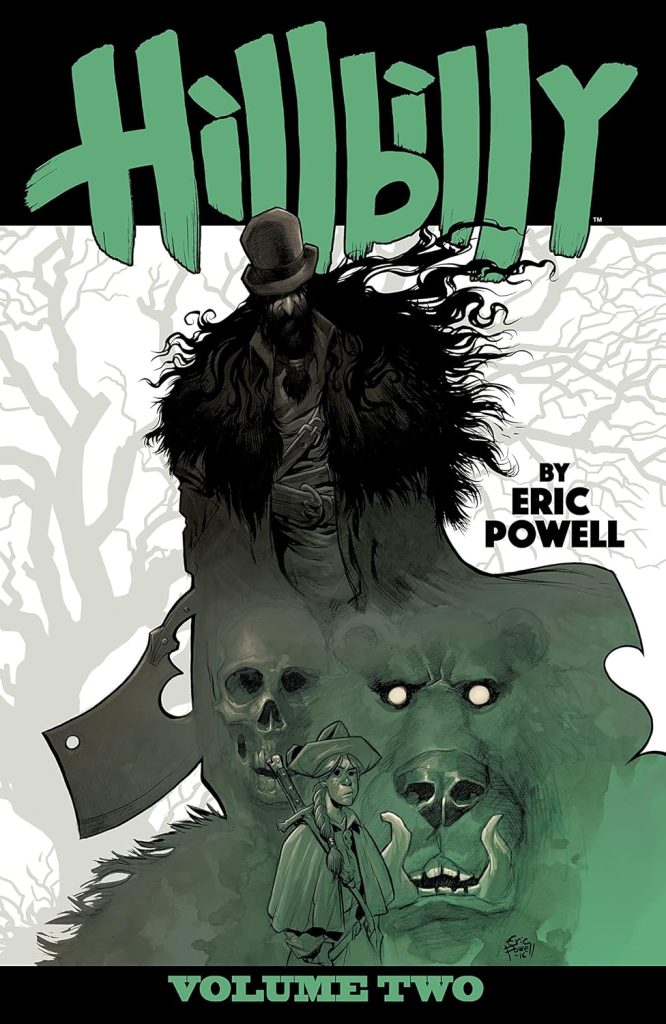
Eric Powell’s title might conjure up a solitary resident occupying an isolated rural patch of the American south, and that much would be true. However, as readers of Volume One are aware, this is also a delve into American folklore and a land where the supernatural is but a marshy step away. Rondel the Hillbilly possesses a cleaver from the Devil’s kitchen, a mighty tool when it comes to setting about the denizens of darkness who plague those not as well protected, and invaluable for his witch-killing mission.
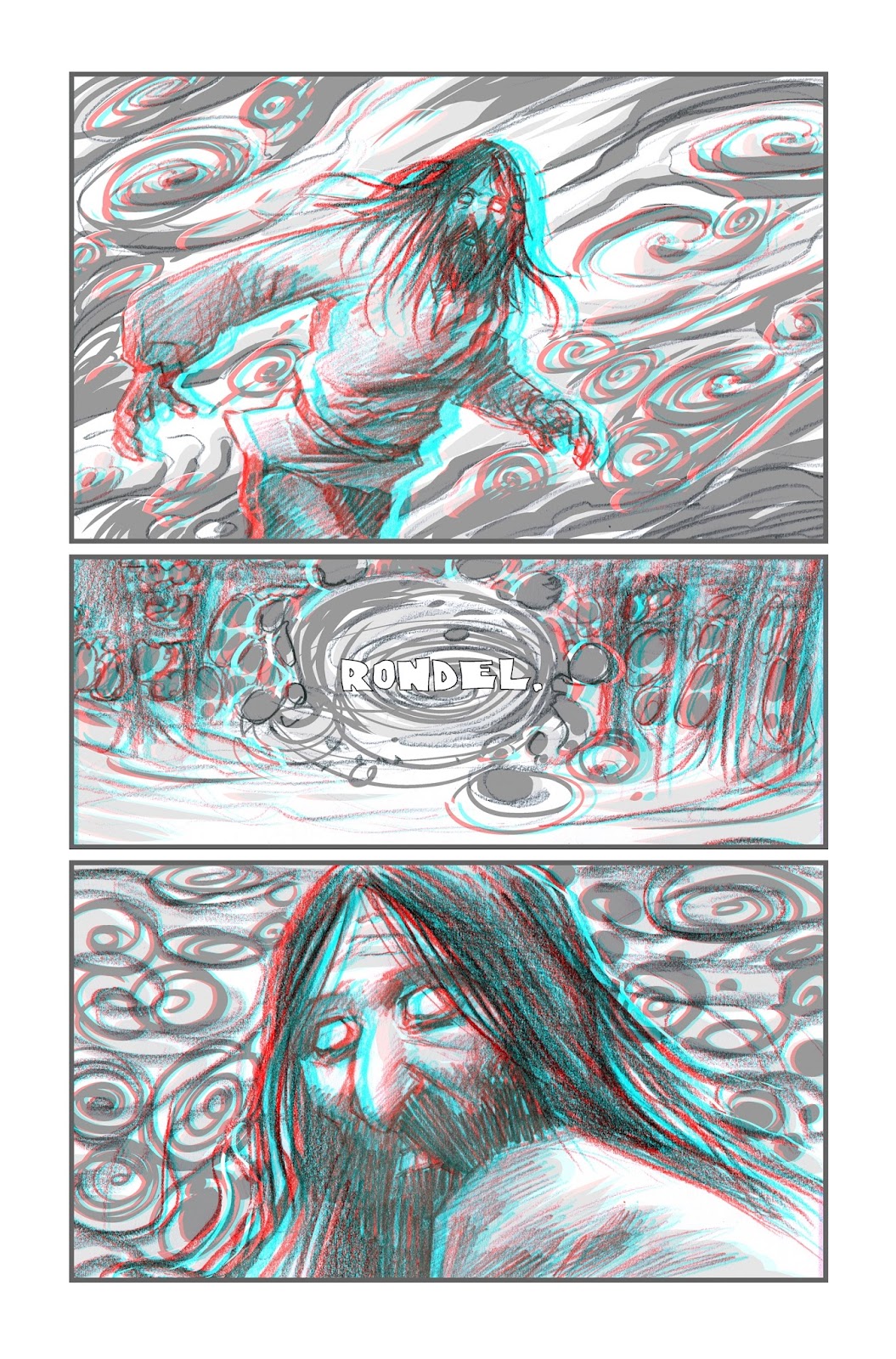
We begin with two tales of the tormenting tailypo, a creature that prizes its tail above all things, disturbingly designed by Powell as a naked goblin with a tail. Powell’s imaginative designs feature throughout, including a monster giving new meaning to the mobile home by having a small residence on its back. Whjle Powell’s art is always exemplary within his polished lumpy style, he also surprises here, particularly with the way a hallucinogenic scene is rendered. The form book would suggest a miasma of colour and twisted shapes, but Powell instead scales back as per the sample art, instead presenting the Hillbilly as if a blurred 3-D image imposed on black and white backgrounds. It’s impressively creative and continues for the entire episode.
As before, Powell dots about the Hillbilly’s life, with no certainty that anything related is his present, and among the disclosures this time is the Hilbilly’s first meeting with the talking bear that accompanies him for a long while. In this instance Powell’s discursive approach also encompasses the story within a story, which is actually of greater importance than the framing sequence.
It’s quite the surprise to see Simone Di Meo’s art feature on the final story, yet while a difference in style is apparent, it underlines how using the same muted colours can reduce that difference. It’s a morality tale combining the Hillbilly’s complex and archaic speech patterns with a mission doomed to failure. Before that, though, there’s the intrigue of the penultimate tale and one James Stoneturner. There’s greater spiritual mysticism than has previously been the case in Hillbilly, and it’s frustratingly continued in Volume Three.