Review by Frank Plowright
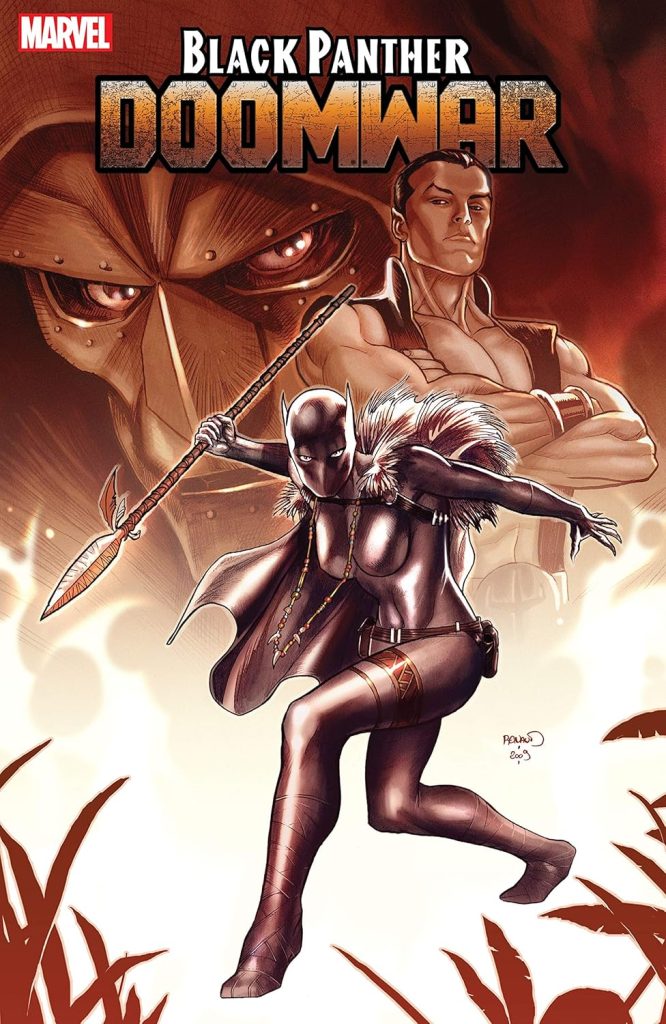
Black Panther: Doomwar combines what were previously three separate graphic novels written by Jonathan Maberry and tracing a complete story arc for Shuri, sister of T’Challa the Black Panther. It’s a role she’s taken on herself due to his being incapacitated after being restored from the dead, and the totemic power also makes her regent of Wakanda, the world’s most technologically advanced nation.
What was originally gathered in Power is the build-up as Wakanda comes under attack, but by whom requires considerable investigation, and eventually points to Atlantis and Namor. Maberry reveals Doctor Doom is keeping an eye on events, and his plans play out in what was first collected as Doomwar, involving the Black Panther cast and numerous others from the Marvel universe. The cast is scaled back for Shuri’s spotlight dealing with her anger issues from Klaws of the Panther.
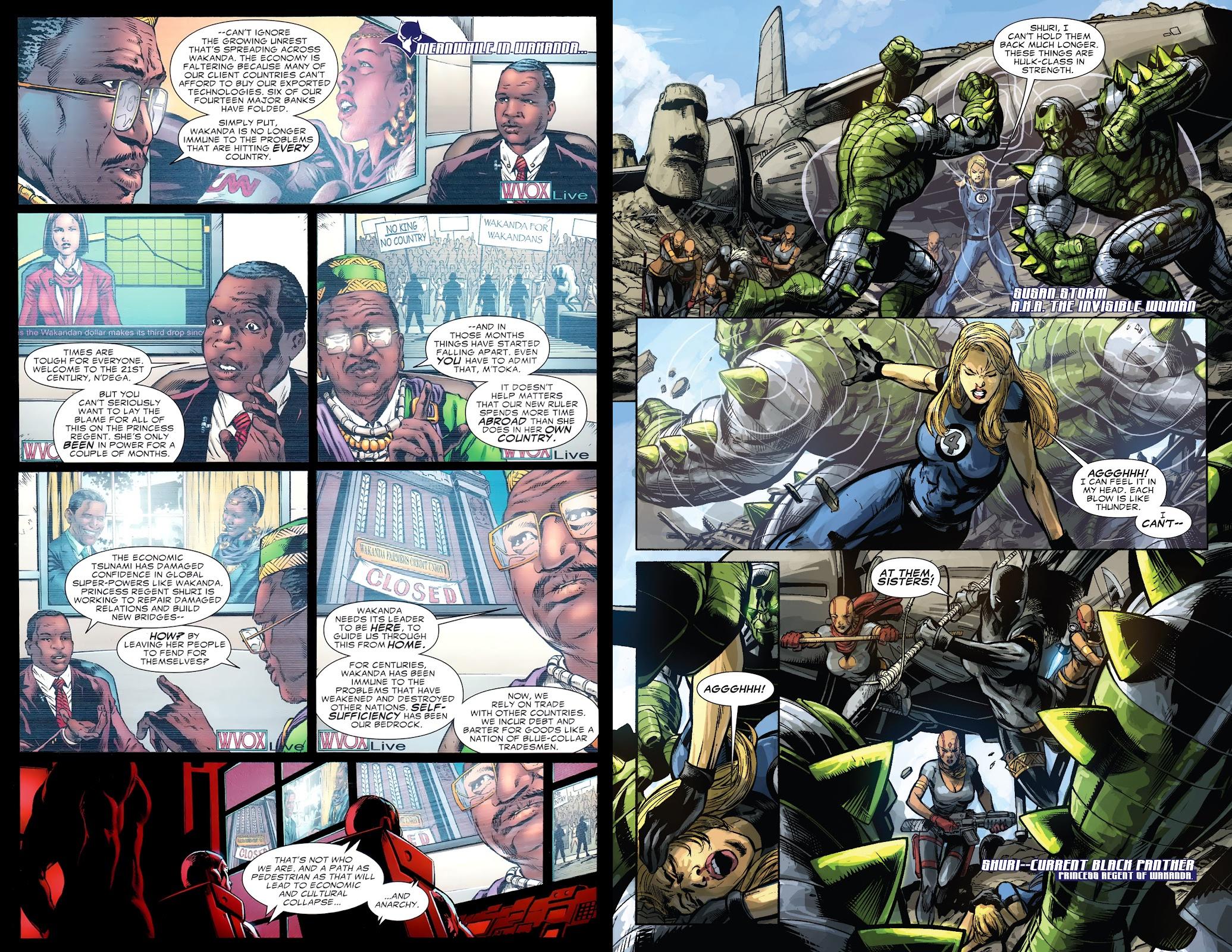
Maberry knows his characters and ensures their motivations all adhere to their personalities, and a good number of clever ideas infuse all parts of this trilogy, but the pacing is rough. Maberry’s plots are worked out in intricate detail, and there’s a complexity to what occurs, meaning nothing can be taken at face value, most prominently in the opening six chapters. The result is a lot of time spent in procedural activities explaining exactly how point B was reached from point A in panels featuring bulging word-balloons, when it’s not greatly necessary to know, for instance, how precisely combined technology breaks down. There’s a greater relevance to political discussions early on, but they’re still over-emphasised as seen on Will Conrad’s sample art.
Conrad is a better artist than the sample indicates, the best seen in Doomwar actually, combining graceful and imaginative action with strong power and personalities. Scott Eaton on the second part is also good, if not quite as inventive with the layouts as Conrad, although he has his moments, but the art falls to pieces at the end with Gianluca Gugliotta and Pepe Larraz. Their pages are basic, lacking imagination and featuring some grossly distorted figures.
Combining the three stories indicates just how much Maberry is playing with the Marvel stock. Guest stars feature at every point. Namor is particularly well used, as are Doom and Storm, but too many others seem to be present for the sheer pleasure of Maberry being able to open the toybox and pull out anything he wants. While the threats he builds certainly require allies, they further slow the pace.
The ideas carry Doomwar a long way, and if you have the patience for Maberry’s style of writing there’s much to enjoy, but the prevailing feeling is that a compacted and faster paced ten chapters instead of sixteen would have resulted in a more universal pleasure.