Review by Solomon Yeoh
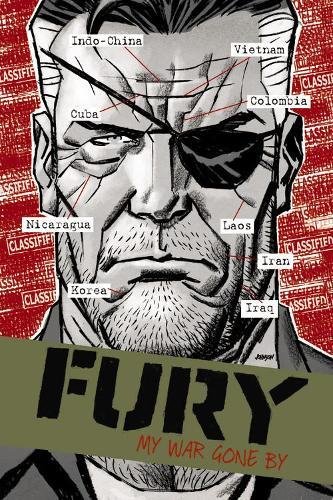
Fury: My War Gone By is acclaimed writer Garth Ennis’ striking reproach of U.S. Foreign Policy throughout the Cold War. Told in a vignette-like structure, Ennis guides the reader through almost fifty years of American military history, never shying away from the Realpolitik that motivated these wars and systematically tearing down the myths of idealism that plague the Cold War period. The Nick Fury in this story is not the S.H.I.E.L.D. superspy of the mainline Marvel universe but rather a seasoned C.I.A operative. Utilising Fury, Ennis tells four succinct war tales, each detailing the great failures of the American military machine.
When Ennis strays away from the battlefield, his analysis of U.S. politics is just as scathing. Senator Pug McCluskey and the glamourous Shirley Defabio populate the sections taking place far from the front lines, detailing the ugly reality of war in the name of self-service and profit.
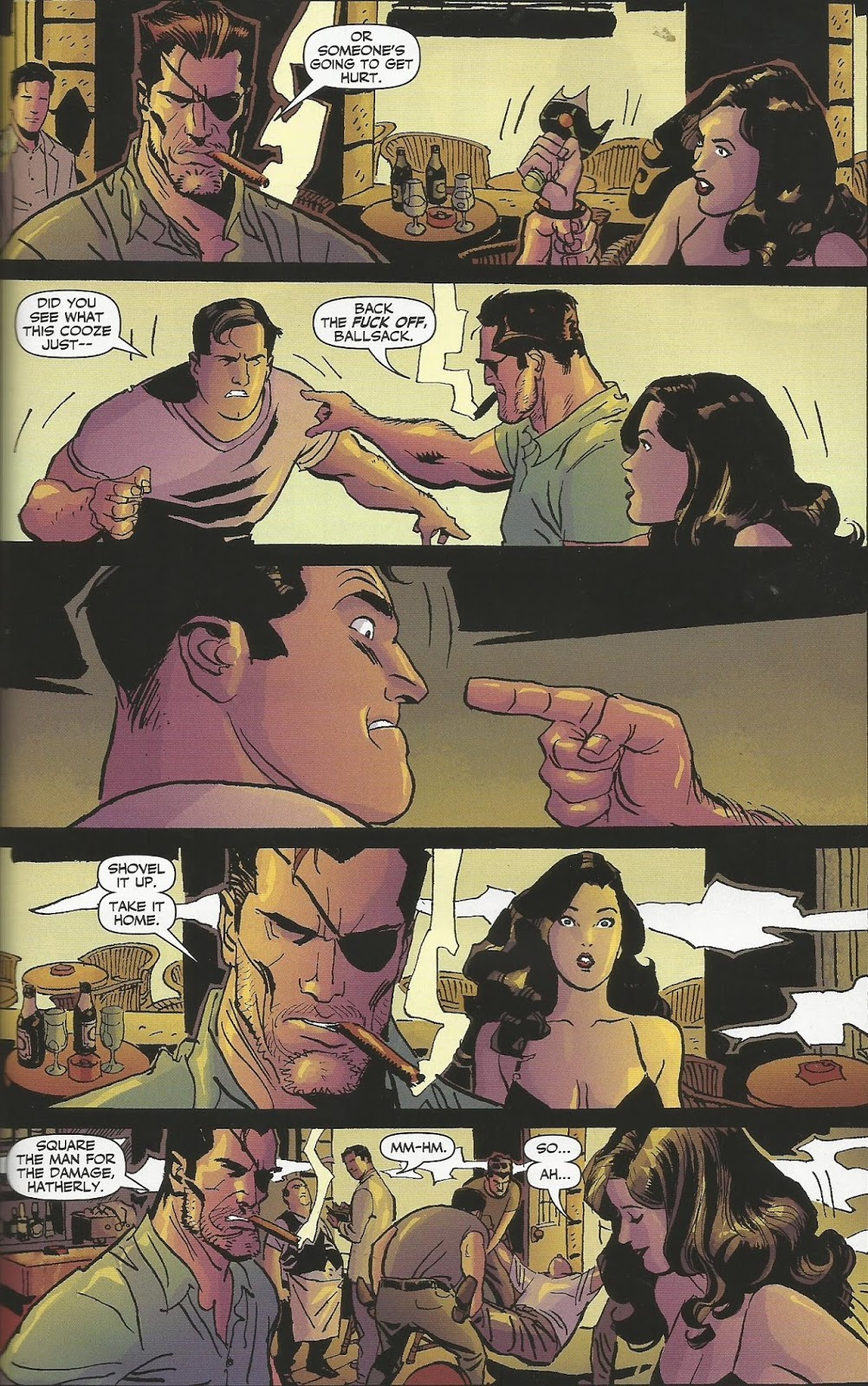
Goran Parlov’s pencils accompany Ennis’ scripts with clearly illustrated panels and brilliant character design. He draws the passing of time with grace and attention, highlighting certain features to create a truly elegant decline. His employment of the widescreen panel design accentuates the bombast of the heat of battle whilst simultaneously allowing for focus in the quieter moments. Colourist Lee Loughridge continues his fruitful partnership with Parlov, turning in vibrant colours punctuated by real grit and gore.
Ennis rounds out his thirteen chapter series with a sombre epilogue, tying off loose ends and character arcs. Perhaps the weakest of the series, it nevertheless succeeds in creating an atmosphere of grief and reflection, representing Ennis at his most mature and patient. It is with great satisfaction that readers watch the seeds he plants in the beginning bloom into fruition.
From Vietnam to Cuba to Nicaragua, Fury travels the globe, advancing U.S. interests and trampling indigenous inhabitants, becoming a symbol of U.S. overreach; a drunkard, hellbent on violence. Ennis obliterates the idealistic USA, instead portraying the state as the purveyor of war and capitalism, an amoral shell of what many consider the “land of the free”.
Before this oversized hardcover presentation the story was available in two paperbacks beginning with Vol. 1.