Review by Frank Plowright
X-Men crossovers can be intimidating, rambling beasts lacking cohesion and to be approached with caution by the uninitiated, so how does Messiah Complex stand up in this reissued Milestone edition?
In 2007 it was the first major mutant crossover since House of M, which ended with only a few hundred mutants retaining their powers, and so marked a major turning point in the struggles between mutants and humanity. Mutants must either remain hidden or restricted to a few locations patrolled by Sentinels, and no new mutants have been born since.
The full horror of what the possibility of a mutant birth brings out in extremists is shown in a shocking opening chapter involving multiple newborns being murdered, but one among them that’s a mutant is abducted, seemingly by Mr. Sinister.
As crossovers go, Messiah Complex is pleasingly straightforward. Any previous continuity is explained simply, there’s some great art, and events flow well from chapter to chapter. It’s almost as if the writers discussed things beforehand rather than one just handing over to the next. Crossing between four different titles, there’s a difference in writing tone as well as art, with Ed Brubaker on the starting sequence more matter of fact than the jocular dialogue supplied by Peter David.
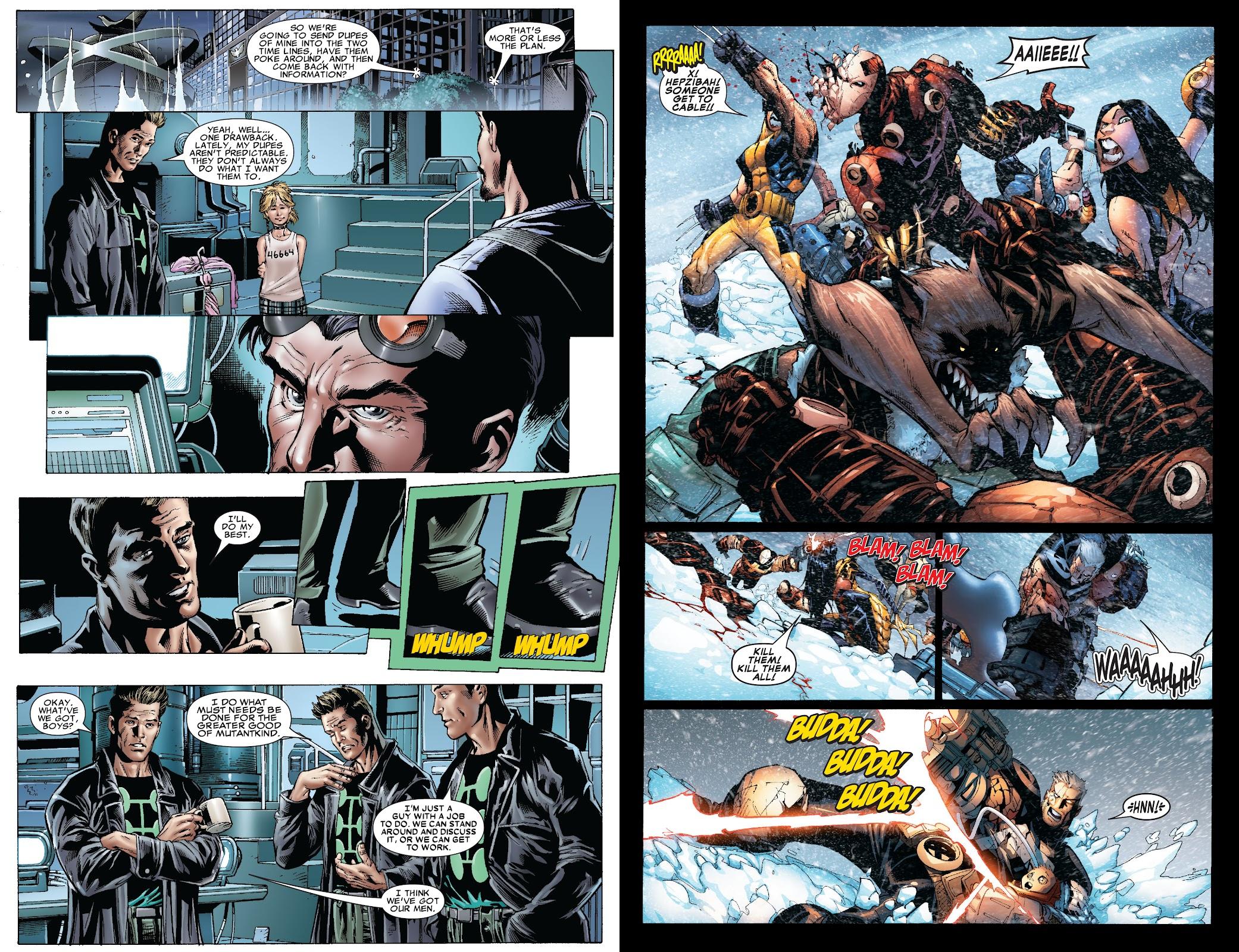
No attempt is made to ensure artistic consistency from chapter to chapter, and yet despite being a continued story it’s absorbing enough that the switch from the broadly realistic art of Scot Eaton (sample art left) to the out and out cartooning of Humberto Ramos (sample art right) isn’t the unpleasant shock it might otherwise be. Billy Tan supplies more detail and background than in Rise and Fall of the Shi’ar Empire, but Chris Bachalo is unusually busy, requiring the colour to add definition.
Time and again well planned surprises drop and well plotted menaces manifest. The X-Men want to maintain a focus, yet keep having unexpected threats crop up from major players among their villains, and never mind a Sentinel attack, nor a wild card running loose feeding on mutants. Also good is just how many characters find centre stage at one point or another, and again, not only the heavy hitters, while there’s even room for a few discussions on principle between Professor X and those he’s fallen out with.
Once the dust has settled there are semi-permanent consequences for several mutants, Jamie Madrox and Layla Miller from X-Factor in particular when their visit to the future goes grimly wrong. Even the cliché of a crossover not being validated unless someone dies is relatively well handled, and will come as a surprise. Any keen X-Men fan dipping into Messiah Complex may now know the broader points of the tale, but it’s still worth reading after all this time for the sheer energy and inspiration on show.