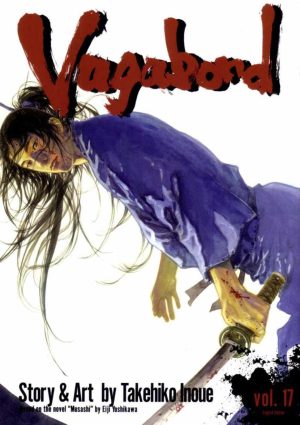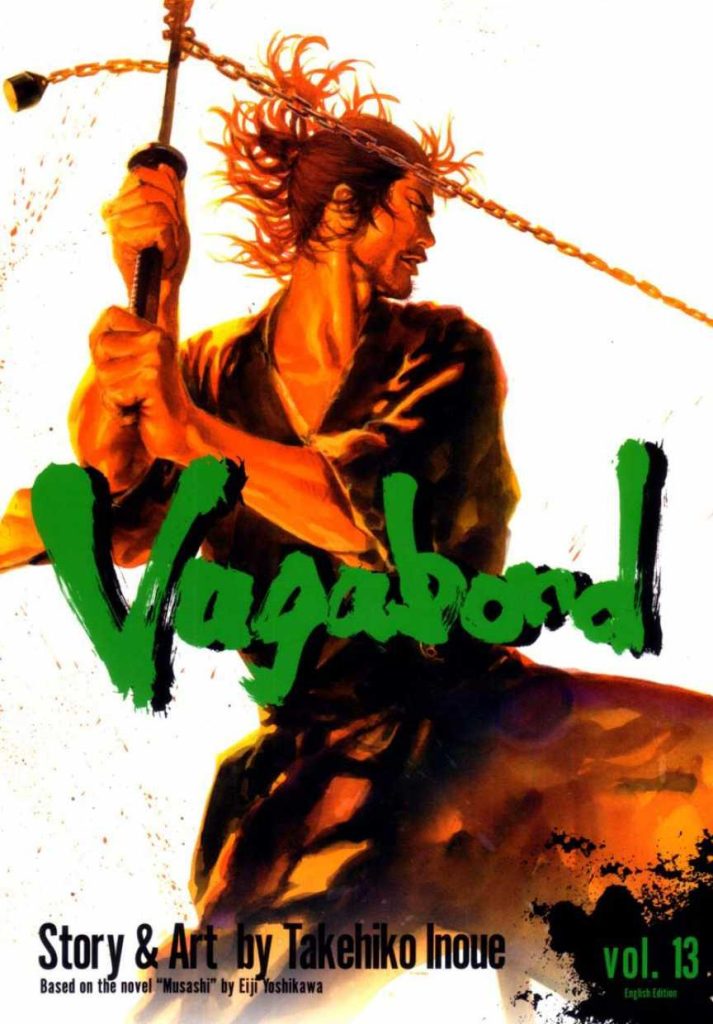
Review by Karl Verhoven
Miyamoto Musashi has been looking for a legendary fighter named Shishido Baiken and found him at the end of Vol. 12, only it wasn’t the person he was expecting. The opening chapter here explains how that’s the case, and the tragic story of how old enemy Tsujikaze Kōhei took on the identity.
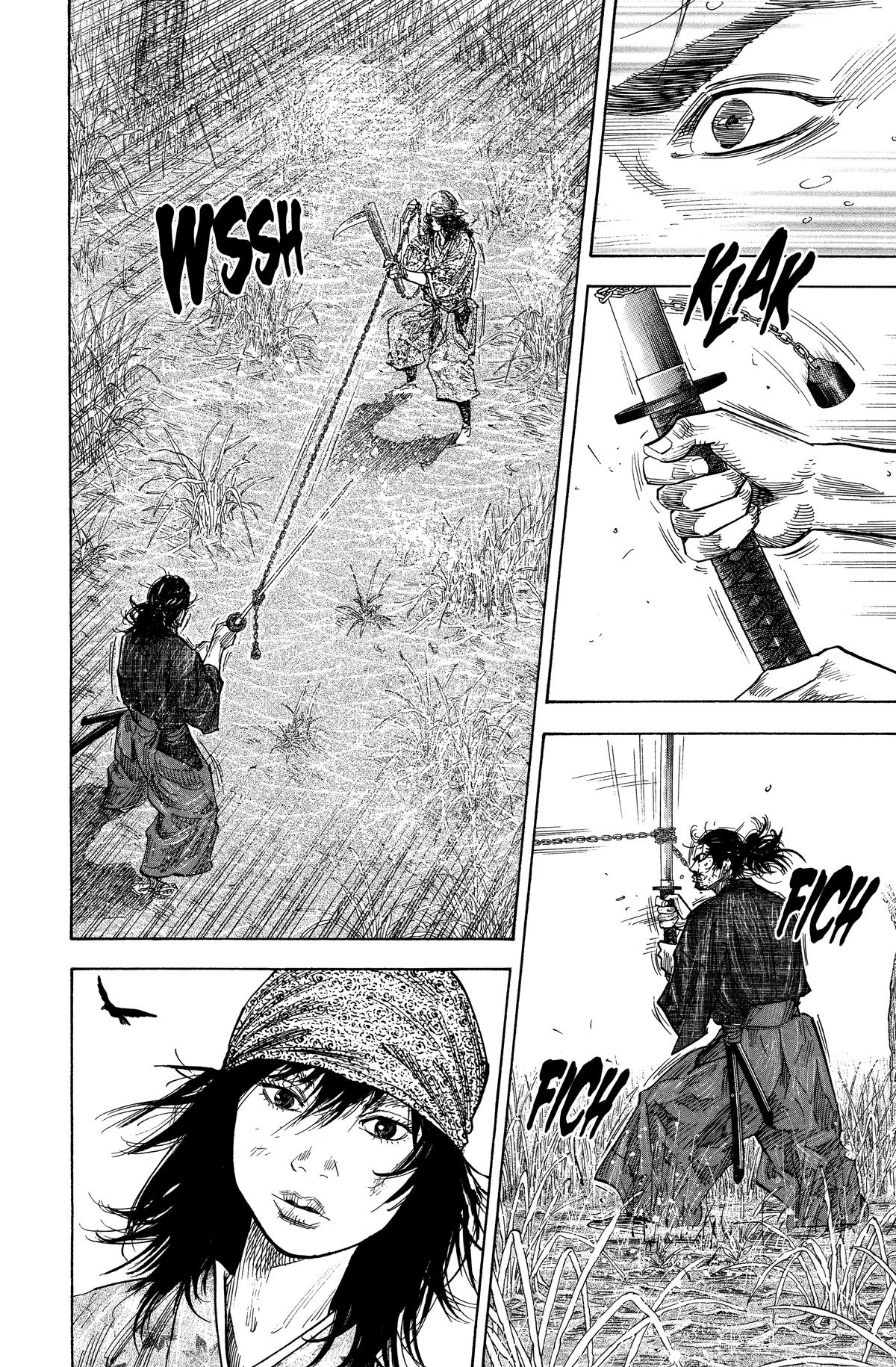
It resonates as a conflict because Takehiko Inoue includes someone else, immensely capable yet also a victim whose options are reducing. The opening half of Vol. 13 is an astonishingly well drawn fight with an impending sense of tragedy hanging over it due to Kōhei’s inability to control his inner rage. “The God of Death named Tsujikaze Kōhei had been awakened from within” suggests Inoue, considering what “Baiken” has learned about control is merely a veneer that can dissipate, resulting in Inoue drawing his facial features differently. Instead of a sword, Musashi is facing first a blade on a chain, which when controlled by a master can be used in several ways, both at a distance and close-up, and then an iron weight attached to a chain.
As with battles in earlier volumes, Inoue cranks up the tension by having the combatants assessing each other beforehand, searching for weaknesses, and when the clash arrives it’s daringly and shockingly brief with an astonishing post-battle sequence. Key to the emotional pull throughout is Rindo, the young daughter of the original Baiken who’s since developed an attachment to Kōhei as he raises her father’s reputation. Inoue never lets us forget Rindo’s presence.
The book ends with two chapters detailing Kōhei’s past and how he became the man seen earlier in the series. It’s a complex psychological thriller convincingly explaining why Kōhei places no value on life, least of all his own.
Vol. 14 picks up elsewhere, leaving circumstances in Vagabond’s present day somewhat inconclusive, and for an individual volume that’s disappointing, but Inoue revisits these events later in the series to provide a conclusion of sorts.
It’s another masterful volume, also combined with the following two in the larger sized fifth VizBig edition.