Review by Karl Verhoven
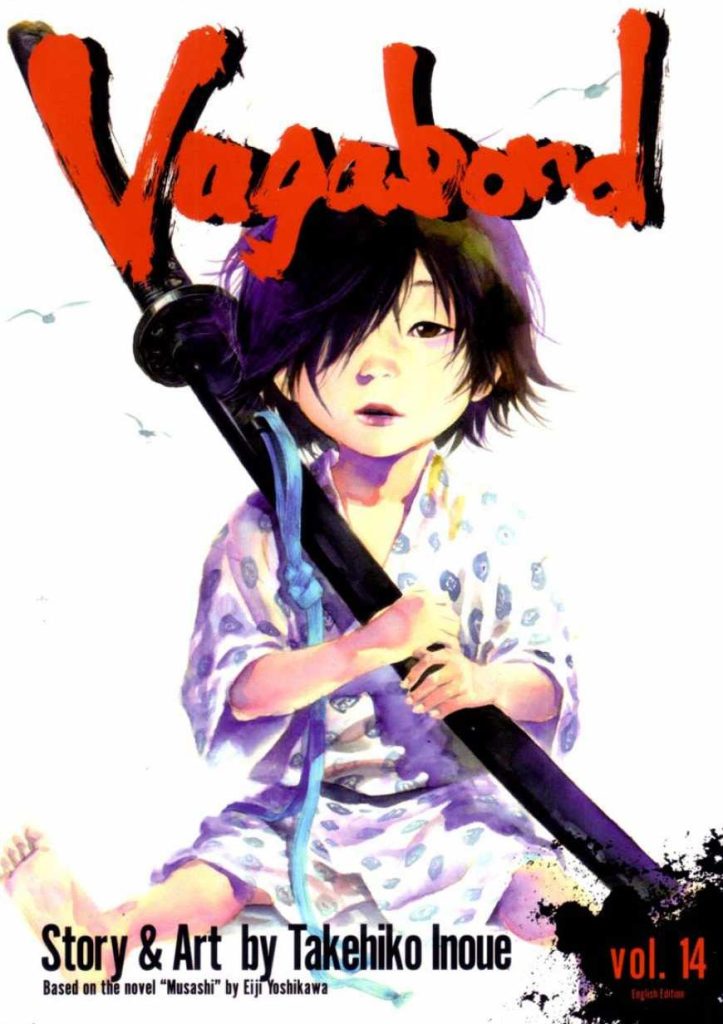
Vol. 13 supplied a monumental battle, one Miyamoto Musashi survived, but which ended with a lack of clarity about other participants. There’s no explanation here either, with Takehiko Inoue switching scenes entirely to what at first we don’t realise is twenty years before Musashi’s present day to focus on the suicidal Kanemaki Jisai living as a tormented hermit on the seashore. He was once a swordsman of stature, and his redemption is a request that he now look after the newborn son of his former student. “When was the last time I held someone with these hands”, Kanemaki considers, then asking “Have I ever done such a thing?” It’s a fine way of establishing the regrets of a life dedicated to swordsmanship. The baby is accompanied by an extraordinarily long sword.
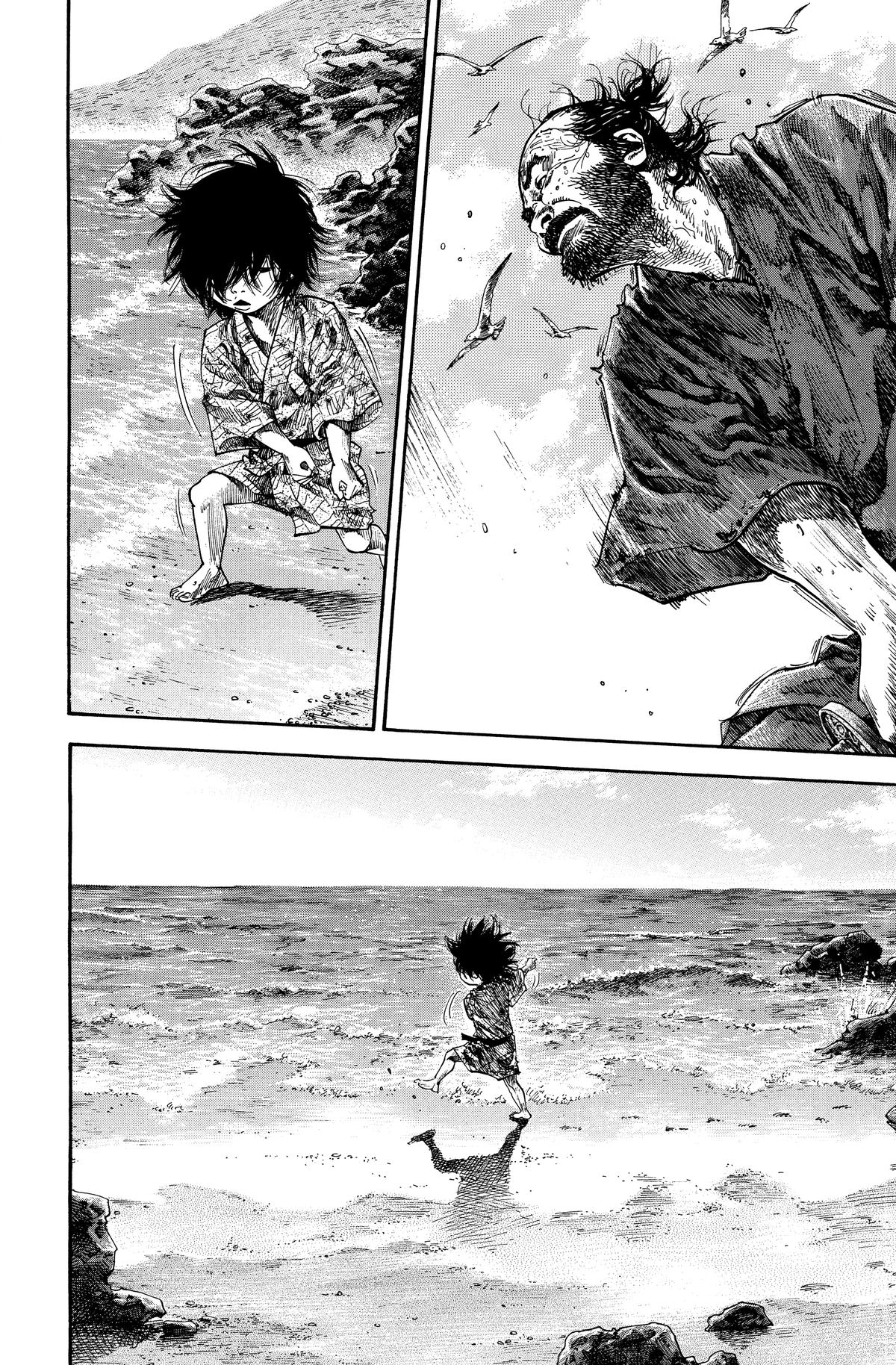
Despite moving away completely from previous events, Kanemaki’s uncertainty at circumstances he’s completely unprepared for is coupled with a well-meaning dedication, and it soon captivates. Inoue spends time with Kanemaki and Kojirō during the latter’s infancy with plenty of symbolic illustration as Kanemaki thrashes at the waves with a sword, unaware of how closely the child is watching. However, despite their bond, it’s years after adopting the child that someone else informs Kanemaki of Kojirō being deaf.
It takes a while to realise what an issue the sword is. Kanemaki has nothing, so the sheathed sword is the only plaything the child has. It forms a bond, while Kanemaki isn’t sure of much, but is adamant the life of a swordsman isn’t any viable future.
Over the final two chapters Kojirō is almost a teenager, and Inoue begins exploring the problems of the local villagers. Quite how this is ever going to tie in with Musashi’s quest is anyone’s guess, but there’s a certainty that Inoue wouldn’t be devoting an entire volume to a new character if they didn’t have great relevance. Inoue’s transmission of human emotion is masterful throughout the series, and here he takes someone unable to communicate verbally, yet ensures we can understand them completely.
The plot seems to be heading in a direction making one fear for Kanemaki’s future, and that will be played out in Vol. 15. Alternatively, buy the larger sized fifth VizBig edition in which both volumes are combined.