Review by Karl Verhoven
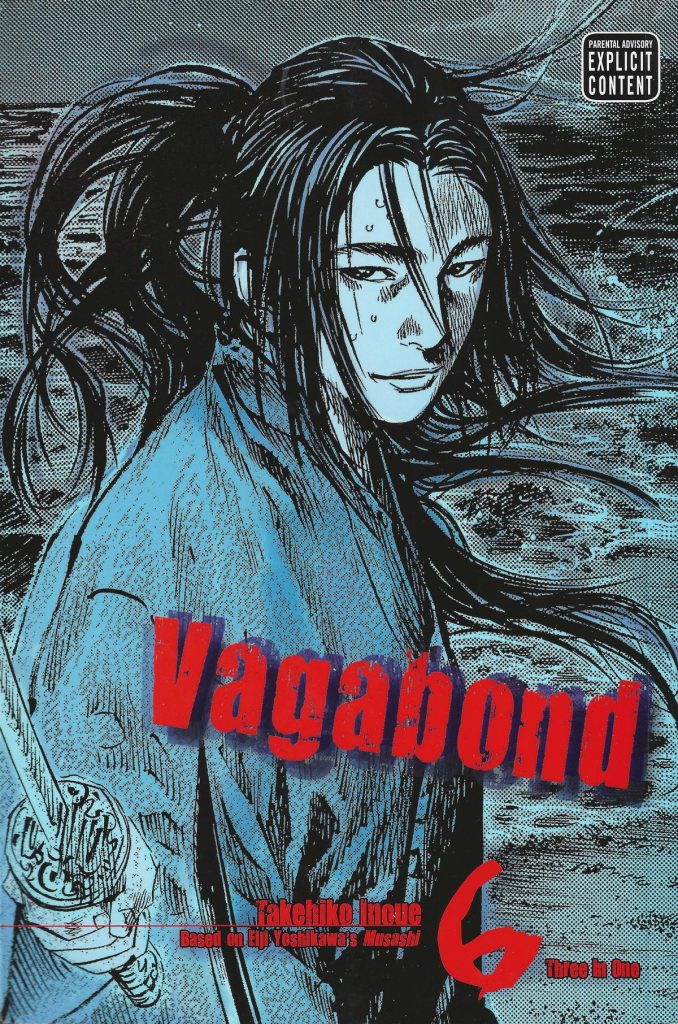
This VizBig edition is notable for combining three volumes in which the series star barely appears. 17th century samurai Miyamoto Musashi is eventually seen, albeit briefly and only in a flashback immediately before the events starting Vagabond. Instead, and continuing from VizBig Edition 5, this collection continues to focus on Kojirō, who’s deaf, and so disadvantaged, but nevertheless a prodigious swordsman at a ridiculously young age.
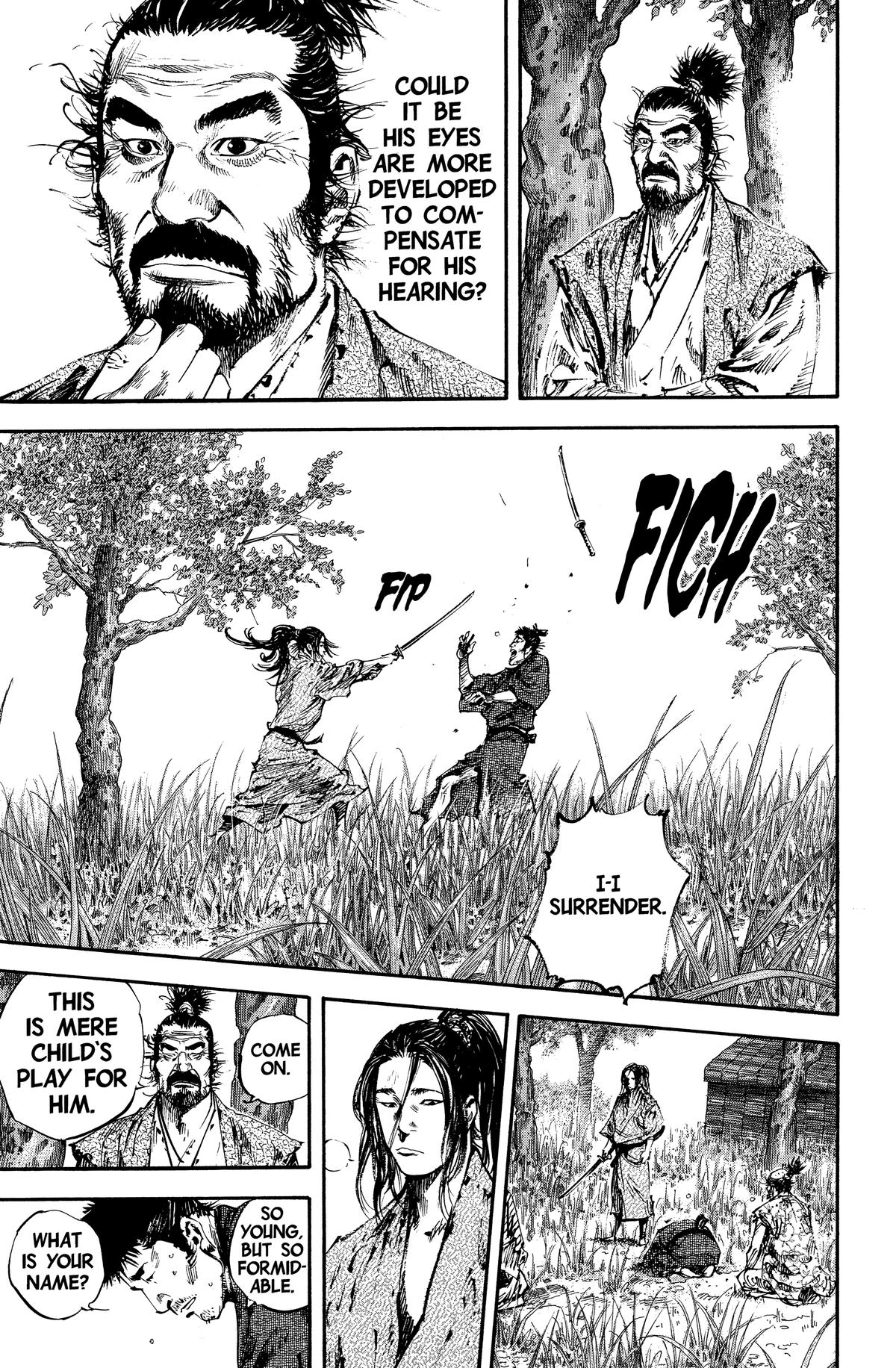
Combining what was previously Vagabond 16, Vagabond 17 and Vagabond 18 in a new larger format, we see Kojirō from his early to later teens, with the key sequence being his taking on five swordsmen heading to war. Having grown in isolation, it’s the first time Kojirō has tested himself against seasoned opponents, and Takehiko Inoue delivers both the action and accompanying contemplation with his usual elegance. Actually, that’s to damn him with faint praise. Considering the quantity of swordfights the series has already seen it’s amazing that Inoue is able to differentiate them, yet he does. Kojirō himself remains relatively enigmatic, but we listen in to the thoughts of those he faces, and most importantly of Itō Ittōsai seen on the sample art speculating about Kojirō’s skill.
He’s a seasoned swordsman, a former pupil of Kanemaki Jisai, the man who raised Kojirō after renouncing the sword. Ittōsai recognises the aggressive spirit within Kojirō. “Did you think you’d raise him to be a housecar?” is a rhetorical taunt. Despite being unable to communicate, Kojirō recognises a kindred spirit and chooses to leave with this new teacher.
As ever, the art is masterful, not just the expressive portraits and well-choreographed action, but the constant re-affirmation of nature. Waves crashing against the beach are used as visual metaphor, while another beautifully drawn chapter is set in a forest during a rainstorm. It’s with such chapters that the larger format of the VizBig Editions really pays off, notwithstanding their being the format via which the series is now kept in print.
By the end of this volume we’re just short of the halfway point of what’s been published in Japan, and despite the minimal presence of the title star we’re still being served compelling drama drawn stunningly.