Review by Frank Plowright
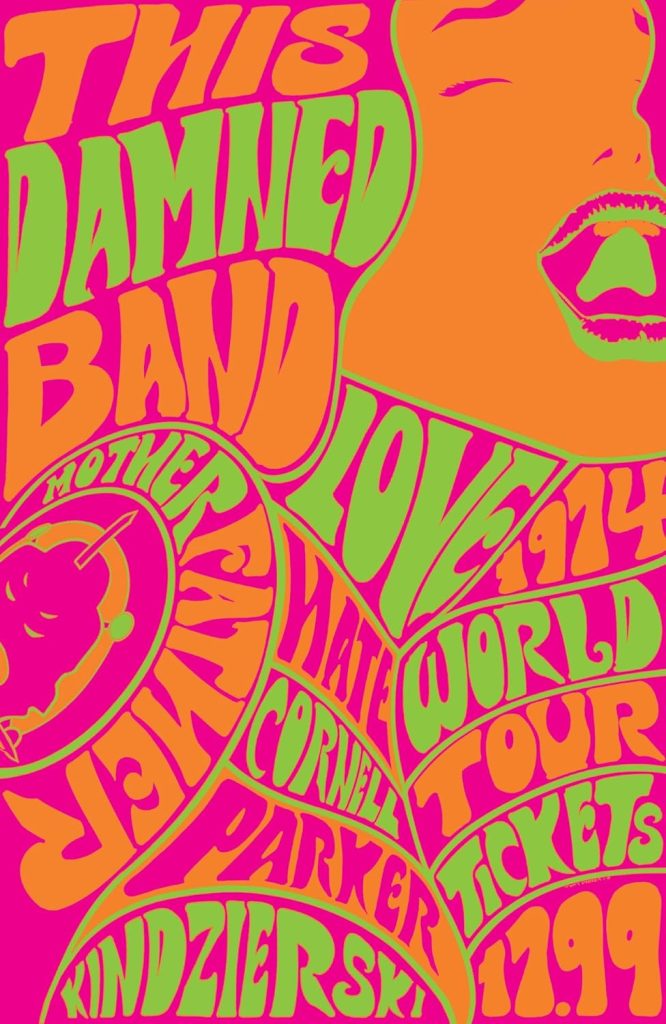
In 1974 the five-man MotherFather are the biggest rock band on the planet and on a world tour that accommodates breaks for them to record a new album in France. They typify both the fractured dynamics of the era’s real bands and the dissolute lives of excess in all areas, and are accompanied by a film crew to record the tour. As with Spinal Tap, the film crew set up to capture the sights, sounds and smells of a hard working rock band on the road, but got so much more.
Such were the riches affording a lifestyle of unfettered debauched indulgence that major 1970s rock bands are almost beyond satire. Paul Cornell is able to lift from what’s documented about some bands, with the closest equivalents to MotherFather being Led Zeppelin, some of whose members interested themselves in the occult and who were managed by a feared monster of a man. The conceit of the film crew allows a distinction between on-camera and unguarded moments, with one band member playing up to an image they consider ridiculous, another consciously shunning it while running up massive debts with drug dealers and still another barely occupying planet Earth. However, Cornell adds depth to the project by also featuring those who ride in the band’s orbit.
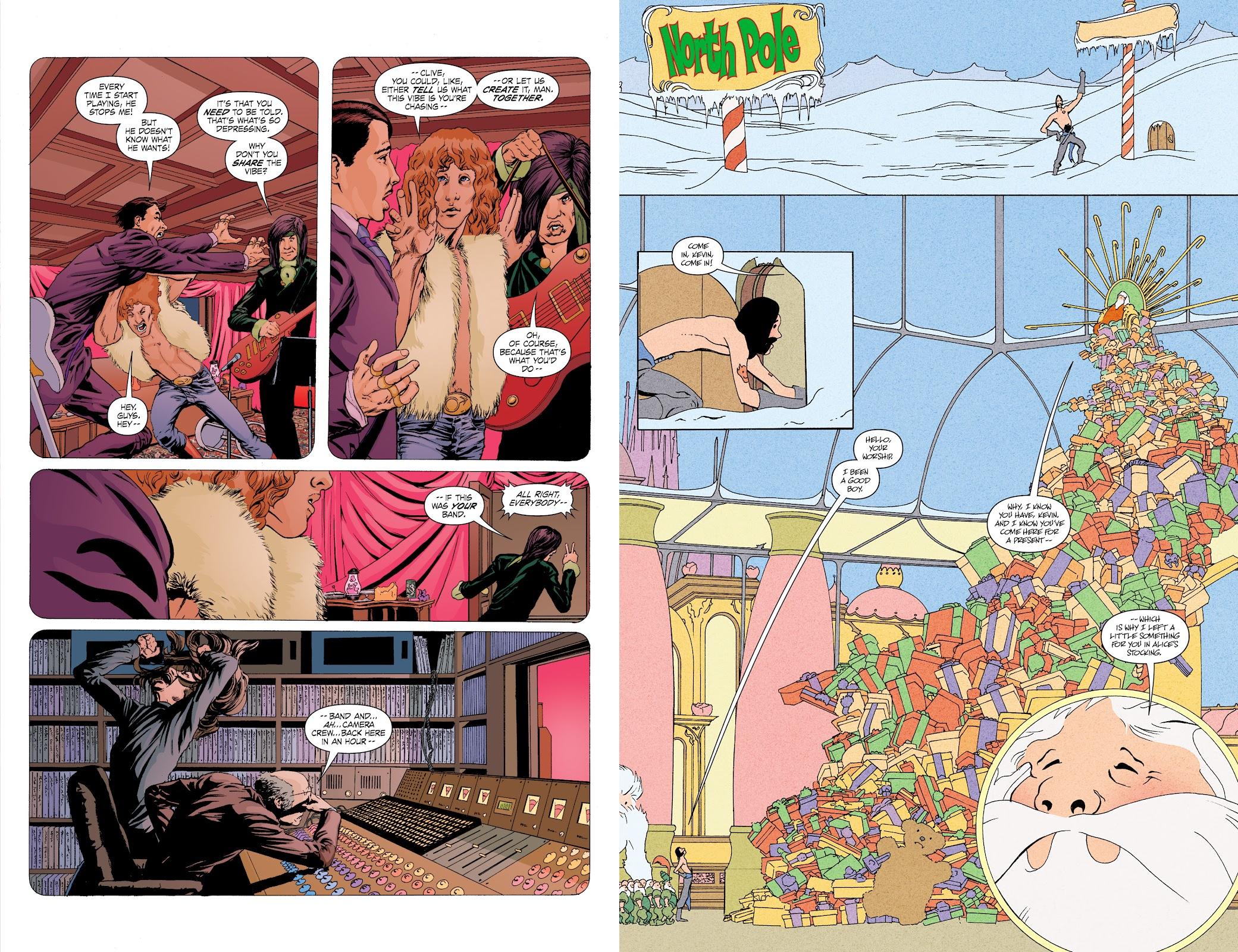
It would seem Tony Parker’s used considerable visual reference, which leads to the cast being too often posed, but he’s a very adaptable artist employing a graphic realism for most of the book, yet a highlight is the simplicity of the world as seen by a tripping guitarist. Parker’s character designs are notable as amalgamations of 1970s stars, lead singer Justin Parish, for instance, combining elements of Roger Daltrey and Robert Plant, but he’s at his peak in supplying the visceral thrill of a good gig.
For all the clever nods and homages Cornell includes, he also uses them to extend the plot too far. A key sequence is a satanic figure appearing in the band’s post-gig dressing room, but everyone being too stoned to appreciate the reality. Thereafter disappearances and tragedies occur, but for all the references to the band’s unsavoury habits This Damned Band drags through repetition from midway until a final chapter delivering everything we wanted to see two chapters earlier.
Cornell’s back of the book extras are expertly contrived to appeal to music fans, from quoting the Alexis Korner review of the first MotherFather album to a copy of Pete Frame’s legendary rock family trees showing the 1960s careers of band members prior to MotherFather. These include the gloriously named Pawpers and Big Sonny Jack Brown’s Deep Water Blues Band. This Damned Band is good, but not as good as it might have been serving up less for more in four chapters.