Review by Ian Keogh
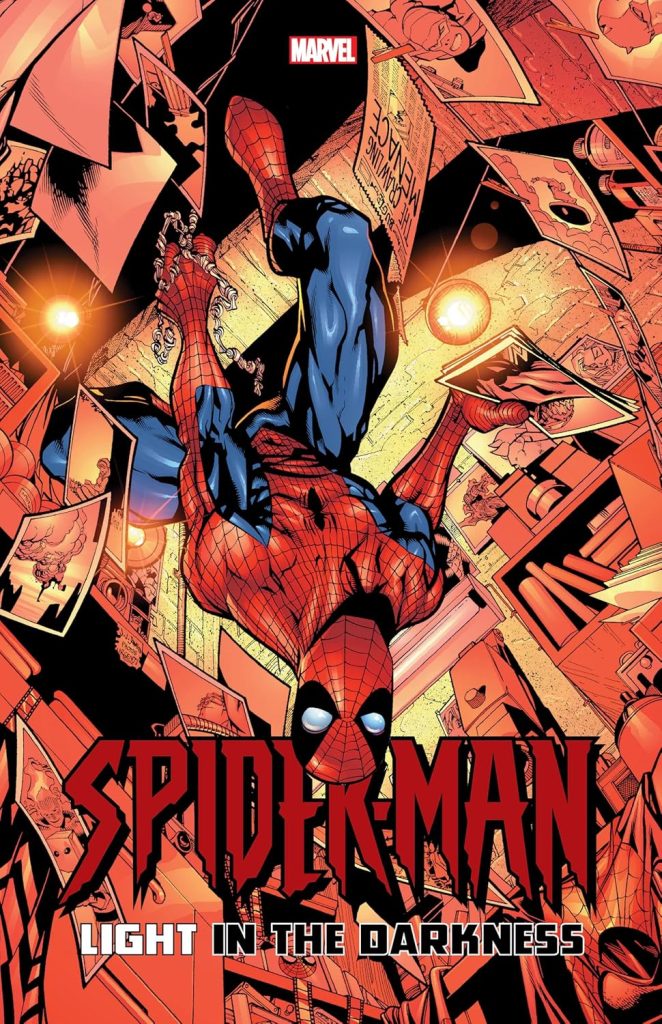
In 1999 Marvel launched Peter Parker: Spider-Man. Initially written by Howard Mackie, many fine stories were later produced by Paul Jenkins. The very brief review is that Mackie’s contributions are average at best, but Jenkins’ work frequently shines, especially with Mark Buckingham on art. The previous transfer of this material to paperback collections was haphazard, but in 2019 Marvel issued Light in the Darkness. It at least has the coherency of presenting fourteen consecutive issues and an annual, but includes manifestly poorer stories by other writers.
Not that the earliest material by Jenkins always shines. There’s a nice look at Sandman and ‘A Day in the Life’ sets a marker for one-off stories without villains at which Jenkins would later excel. However, two chapters occupied by ridiculous villain Typeface are as poor as anything here, with a good ending nowhere near enough in the way of redemption.
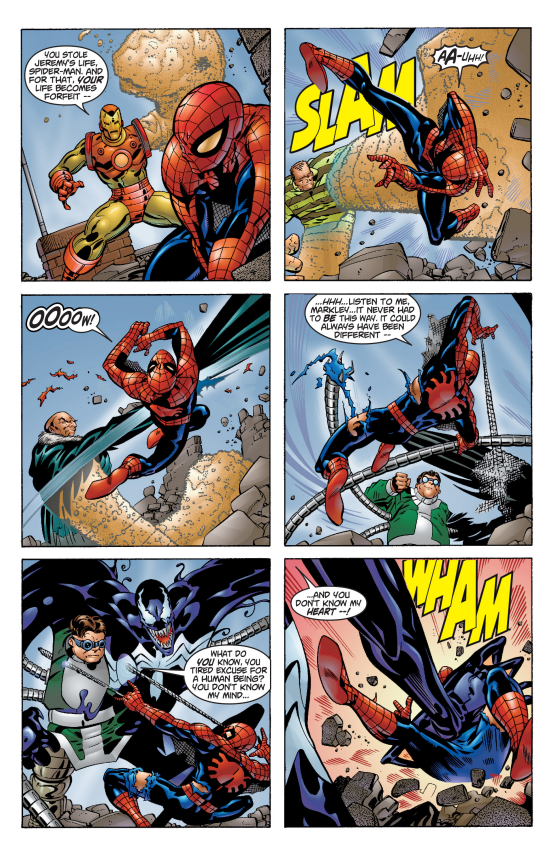
Art from John Romita Jr. makes Mackie’s overwrought ‘Darkness Calling’ seem better than it is in setting up the psychological torment of Spider-Man subsequently battling the Green Goblin, which is supplied by Jenkins and Buckingham. It’s atmospherically drawn torture, with thunderclaps and lightning as Norman Osborn tries to drag a captive Spider-Man down to his level. It succeeds in being extremely disturbing, both as an insight into Osborn’s lunacy and the possibility that Spider-Man might succumb.
The remaining material supplied by Jenkins and Buckingham previously saw print as Peter Parker: Spider-Man – One Small Break, and it’s a fine selection beautifully drawn as both creators hit form. Jenkins showcases imagination, variety and a fine set of narrative captions for Spider-Man’s thoughts, while Buckingham’s visual creativity increases, with his art for the current incarnation of old villain Professor Mendel Stromm outstanding. New villain Fusion seems to wear out his welcome very early by being able to imitate the powers of innumerable heroes and so immensely outclassing Spider-Man, but Jenkins builds to a good revelation. The final story lacks Spider-Man entirely, but is an admirably warming look at Peter as a child attending baseball games with his Uncle Ben.
Never previously available in paperback is Spider-Man facing a form of energy vampire intent on stealing his memories. It’s drawn by Charlie Adlard still trying to find his style, so very different from his later work on The Walking Dead. Jenkins is great at finding out what makes classic Spider-Man villains tick, but his own creations often lack believable motivation, and that’s the case here. We never know who the villain is, or really why they’re doing what they do, and that’s because this is a single chapter from a crossover story. At least its the finale, but there’s little to recommend it.
Not everything by Jenkins and Buckingham here is pure gold, but some is, and more is very good. What we really want is a comprehensive collection of their later work on Spider-Man.