
Review by Win Wiacek
Dazzler originated in a doomed-from-the-start cross-media deal wherein comics companies attempted to break out of their “ghetto” into the real money world. In 1979 Disco specialists Casablanca Records began a project to create a TV based character who would release records but set in an animated Marvel universe. When the deal was cancelled, Marvel big boss Jim Shooter decreed the Dazzler would see print in her own title.
Dazzler sagely premiered in top-selling title Uncanny X-Men, included in this hardcover collection along with a Spider-Man team-up and the first thirteen issues of her own title, but not her nipped-in-the-bud flirtation with the Fantastic Four’s Johnny Storm. It all kicks off with an informative introduction by sometime scribe Danny Fingeroth.
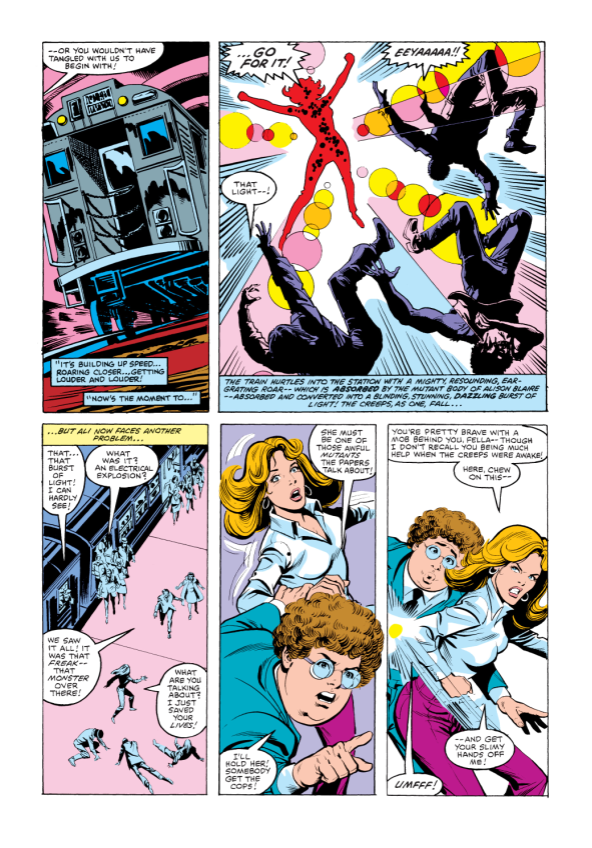
Chris Claremont and John Byrne in their prime are responsible for introducing Dazzler alongside Kitty Pryde as the insidious Hellfire Club capture the X-Men. The assistance of “disco diva” Dazzler – AKA Alison Blaire, a wannabee musician who converts sound to devastating light effects, prevents the capture of more X-Men. Suitably introduced into the Marvel milieu, Dazzler promptly encored in Amazing Spider-Man as Marv Wolfman and Keith Pollard set her against old arachnid adversary Lightmaster.
Her first actual issue is credited conceptually to Alice Donenfeld, John Romita Jr., Shooter, Stan Lee, Al Milgrom, Roger Stern and Tom DeFalco with DeFalco, Romita Jr., Alfredo Alcala, and Walt Simonson actually delivering the pages of an epic premier. We see a promising law student who drops college studies to pursue a frivolous, worthless life on stage. At least Grandma Bella still supports her, confident that one day Dazzler will be a star.
A promising start where Dazzler earns the enmity of evil sorceress Amora the Enchantress, the series quickly reverts to hoary company traditions regarding comics read by girls. These tapped into and blended older male-assumed tropes of females seeking independence and careers whilst also seeking love and a settled home life. And lots of shots of women in underwear, dressing and undressing or getting into and out of baths and showers.
Under writers Tom DeFalco and Fingeroth the ups and downs of building her career are constantly exacerbated by obnoxious Lancelot Steele; a sexist macho jerk/stage manager/field rep, and Alison’s growing fondness for her doctor Paul Janson is giving her pause. She meets other heroes and stock villains in functional pages drawn by Frank Springer.
Although very much of its troubled times, this collection also sees the beginnings of the transformative shift in attitudes that resulted in women becoming less ornamental, no longer decorative and always the authors of their own fates.
The entire content along with a further eight issues (but still not the Fantastic Four guest appearance) was previously available in black and white as Essential Dazzler. The run continues in Volume 2.


