
Review by Ian Keogh
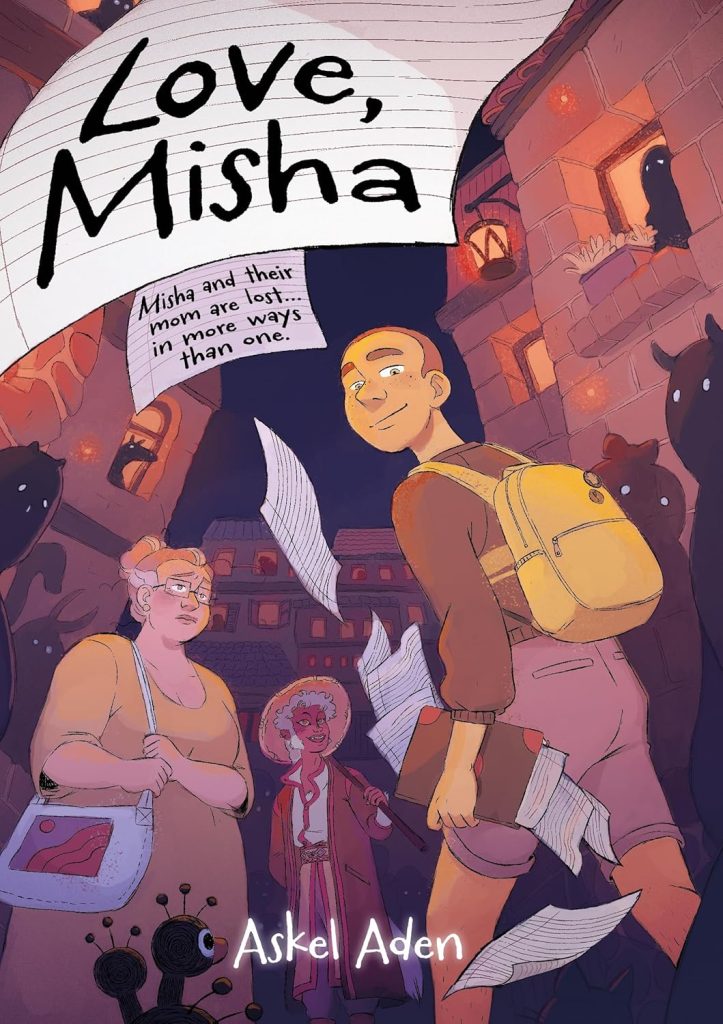
As Love, Misha begins we’re introduced to a non-binary teen about to go on holiday with their mother. It’s supposed to be a trip of reconciliation and understanding, but Misha dreads it. It becomes a strangely spiritual journey in more ways than one, as revealed by the cover, although you’ve got to look carefully, as attention has deliberately been drawn away from some aspects.
Audrey, Misha’s mother, has always been selfish in following her own inclinations, leaving Misha to be raised by their aunt. Absences have been long and frequent, and although it’s suppressed, there’s plenty of resentment on Misha’s part. Their aunt suggests writing letters instead of talking to their mother may overcome some difficulties, and from that creator Askel Aden derives the title. However, writing letters doesn’t seem to be practical advice when a wrong turn leaves Audrey and Misha in the spirit world. It can be a dangerous place for humans, but they’re fortunate in attracting the friendly attention of Odun.
Aden is obviously a big fan of Studio Ghibli animation, but not many could transfer the mood, mystery and tempered danger of those movies as well. Misha is as lost as the lead character in many of those films, but equally good-hearted and well intentioned, their own situation perhaps making them more understanding about differences in others. They’re more accepting of Odun, who’s reluctant to disclose some information, whereas Audrey is far less trusting despite the chance of exposing the pair to greater danger.
Everything is drawn beautifully, colour expressively used in a limited fashion to create atmosphere and uncertain surroundings, and although strangeness is infinitely available in the spirit realm, it’s sparingly drawn for greater effect when it manifests. Aden obviously enjoys creating towns and costumes, but the artistic wonder of Love, Misha becomes the constantly changing rural scenery. It’s there as part of the parallel journey being taken, about people trying to find their way home in the physical and allegorical sense.
Love, Misha is one of those stories where on the face of it very little seems to be happening, but the undercurrents run deep. Misha and their mother are forced to rely on known quantities as the only absolutes, which is themselves, and there’s a subtle switch from Misha’s memories of the past to Audrey’s, offering a more rounded portrait of someone who’s at first presented as selfish and lacking understanding. For a long time the device of the letters seems an empty process, giving a small insight into Misha’s uncertainties without being enough to merit the title, but Aden has good reason for the inclusion, and they play a part in a fundamental revelation.
A long journey of comprehension for both Misha and Audrey inevitably leads to a reckoning playing out in unexpected and extremely well staged circumstances, which is the final and most important moment where it’s still possible for Aden to put a foot wrong. There is a redemptive ending, but not the one expected, which is a great touch. It leaves Love, Misha as an extraordinarily confident and accomplished first graphic novel from a creator with the world at their feet.