Review by Karl Verhoven
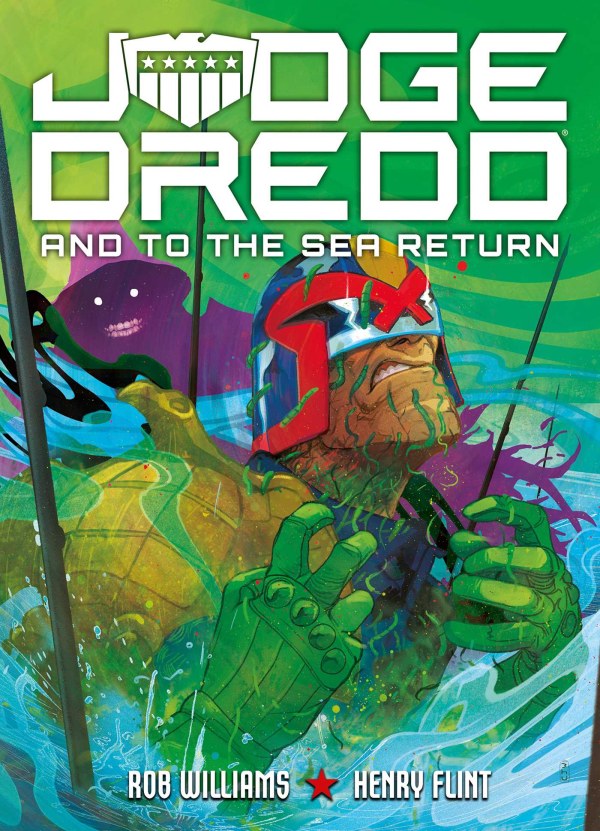
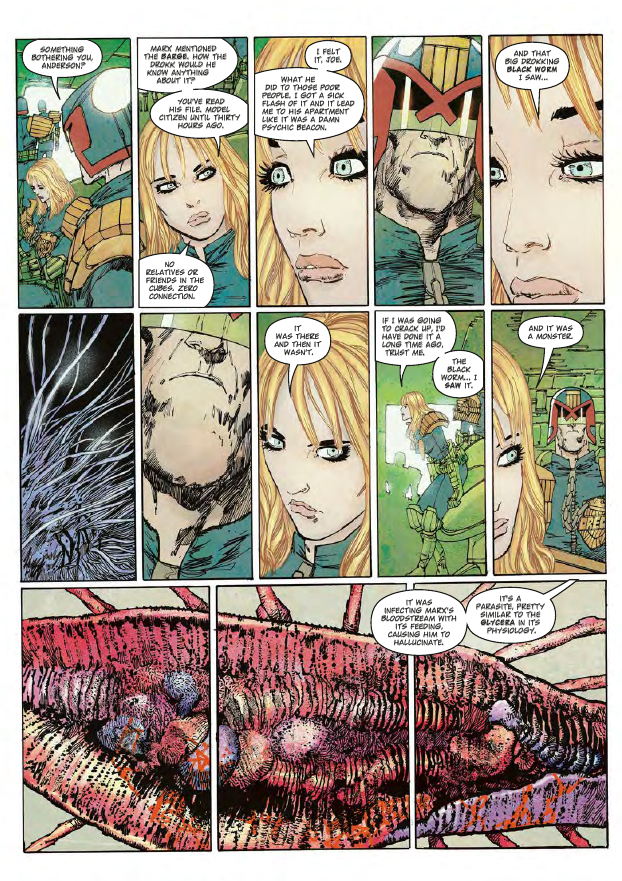
Henry Flint is such a chameleon artist, his art looking different on almost every project. This time, on the title story his depth of detail and layouts resemble those of Arthur Ranson on Judge Anderson, but the figures are slightly different, although with a delicacy. The look is explained when Anderson herself turns up a few pages into the story, using her psi-talents to investigate a prison in the Black Atlantic that’s gone offline. That, though, turns out to be a minor worry when a centuries old threat emerges.
Judge Dredd doesn’t often feature in horror stories, but what Rob Williams and especially Flint deliver with the title story is good old supernatural devilry. “We came from the old world to the new to spread the good word” Anderson is told, “and spread it we did. Via blood”. It’s an unusual, and non human threat, one Williams uses to set the imagination squirming via repulsive, slimy, mind-controlling things.
‘Buratino Must Die’ begins with the Judges pondering what to do with two Sov spies. To be taken into account is the help they were when a mission went bad, but returning them home would mean their certain execution. Buratino is a particularly high ranking operative skilled enough to ensure the Psi-Judges can’t read him. It’s another smart script from Williams, but of a very different nature, greed blinding authority to danger. The ruling council of Judges is so fixated on the intel they might acquire that risks are taken with the almost inevitable results.
It’s well matched with the previous story, both reducing to almost zero Judges’ ability to assess their surroundings, and both giving Flint the opportunity to shine as he illustrates psychic miasma. Williams introduces the interesting idea of the Mega-City equivalent of hostile state data interference, and how Mega-City One may be ultimately responsible for the source, and references some of his old features in passing. There’s a clever parting shot from Dredd, but the story opening into so many possibilities on such a scale ultimately diminishes those possibilities and the thrills. It’s good, but not peak Williams. It is peak Flint, though, and maybe that’s enough,