Review by Frank Plowright
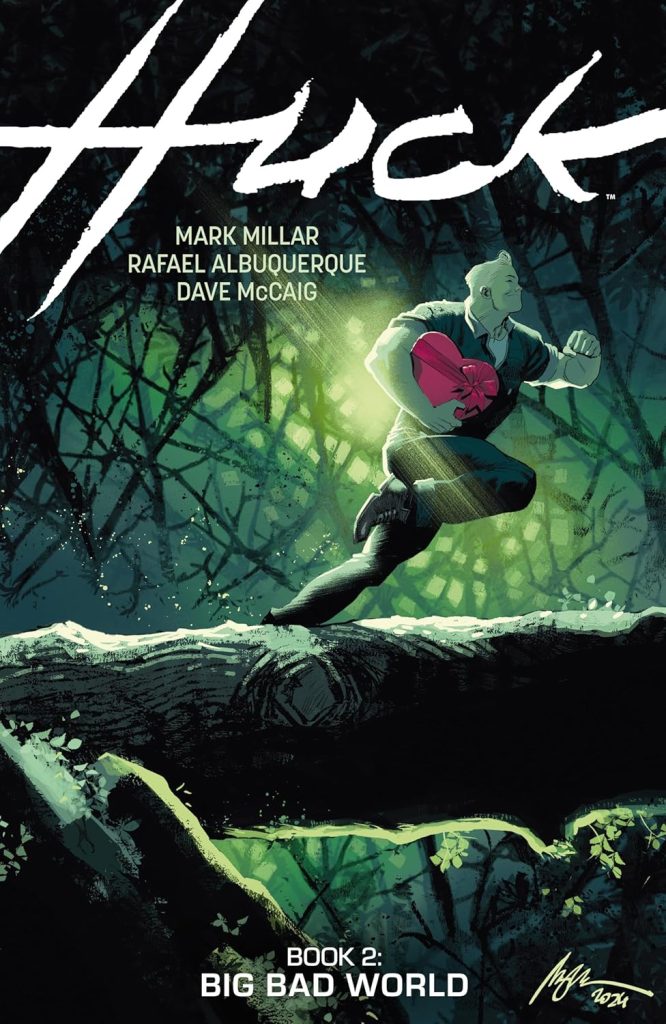
For much of Huck’s first volume Mark Millar presented him as a gentle-hearted giant with super powers genuinely only ever wanting to help people. Unfortunately for Huck, there’s always someone willing to exploit generosity, and we learned that his powers came from his mother’s unwilling involvement in experiments in Russia. All-American ended with all being right with the world, but some questions left unanswered.
As Big Bad World starts Huck and his mother Anna have returned to their quiet American rural life, but it it turns out other anonymous heroes are active around the USA, and also some anonymous villains. Huck agrees to track them down.
It’s an interesting choice on Millar’s part. The previous story was at its best when the charm of Huck’s personality in his hometown was punctuated by a heroic deed, and slipped when becoming a more conventional action story. Big Bad World works because Millar in part uses it as an intellectual exercise in conceiving ways people can elude Huck’s tracking ability. It’s also because he keeps things nice. Huck could work as the light to contrast darkness, but that’s pretty well every superhero comic since 1939, so Millar works the niceness in other ways, with extremely grateful people, Huck’s generosity in small matters and in being so obvious in setting up the rectification to tragedy. He manages that last one so well he doesn’t even need to explain at the end.
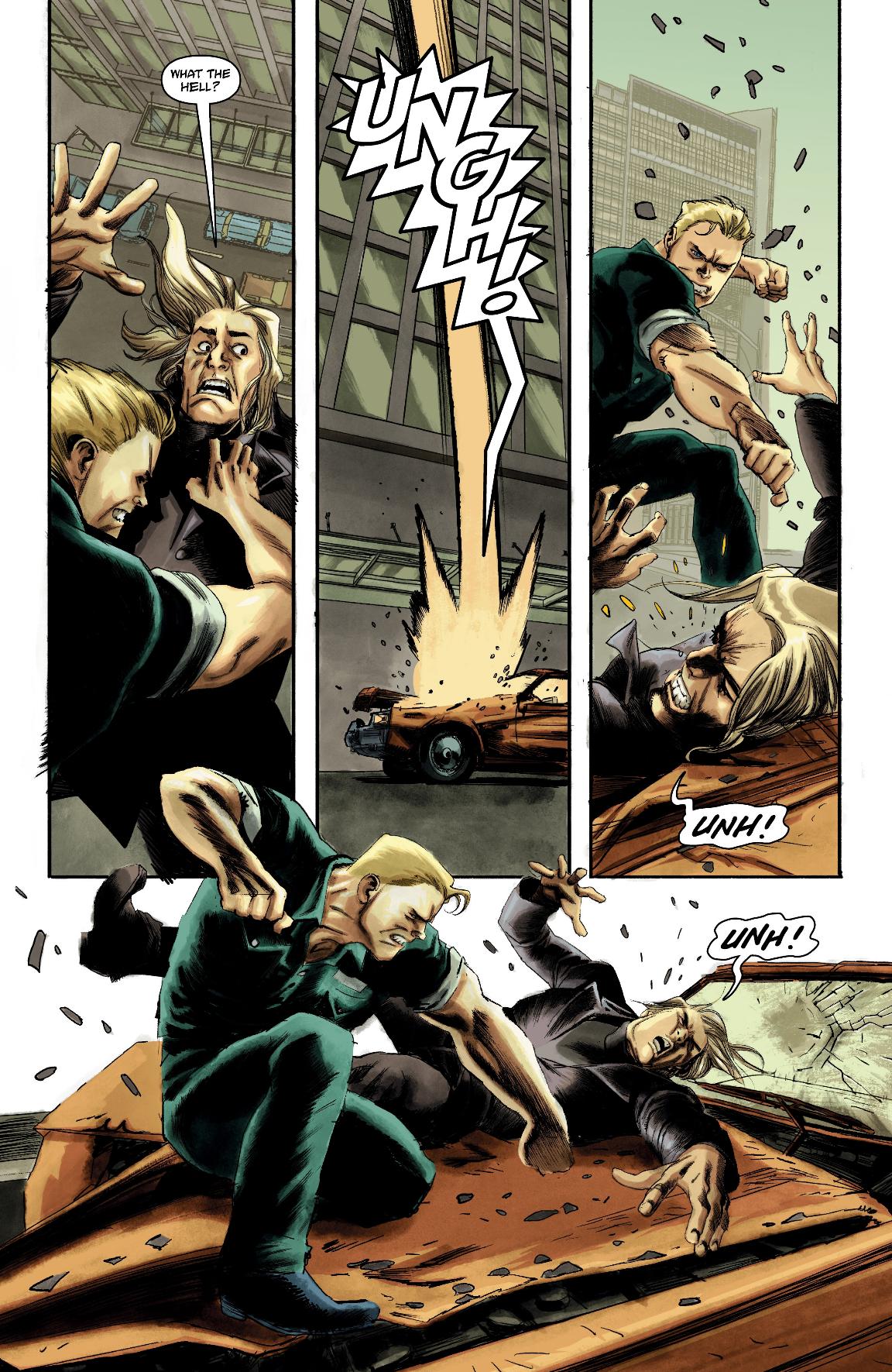
The feeling of an ordinary world is heightened by Rafael Albuquerque never glamorising people, which is a pleasant change for action comics, and his way of posing them bolsters the idea of normalcy. His efficient storytelling is exemplary, and if the cost of that is the occasional person with mad staring eyes, that’s fine.
Big Bad World is complete in itself and more satisfying than the first outing for maintaining a mood.
Just in case it matters, between the first and second volumes of Huck, Huck played a part in Big Game, but it’s of no relevance here.