Review by Woodrow Phoenix
The roll call of distinctive stylists in the North American comics industry is so filled with brilliant artists that the word ‘unique’ is utterly useless as a descriptor. And yet… how else to describe the singular drafting style of Gil Kane? ‘Original’ is a good place to start, before trying to explain all the quirks of drawings that are balletic and graceful while also energetic and dynamic, alternately squashing and stretching the human figure into planes of motion emphasized by the angles he chooses to draw them at. Kane’s figures throw off more energy standing still than many artists can manage with hundreds of speedlines. His ability to draw musculature (and the variety of costumes, cloth drapings and weapons that cover it) in an anatomically precise and yet excitingly exaggerated way made Kane one of the most in-demand cover artists at both DC and Marvel. In his time at Marvel he drew over 800 covers spanning every genre from superheroes, monsters, westerns and science fiction to literary and film adaptations. That massive output meant that although he drew interior stories for heroes such as Spider-Man and Captain Marvel, he didn’t do runs long enough to associate him with any particular Marvel character, with five issues here and six or seven issues elsewhere.
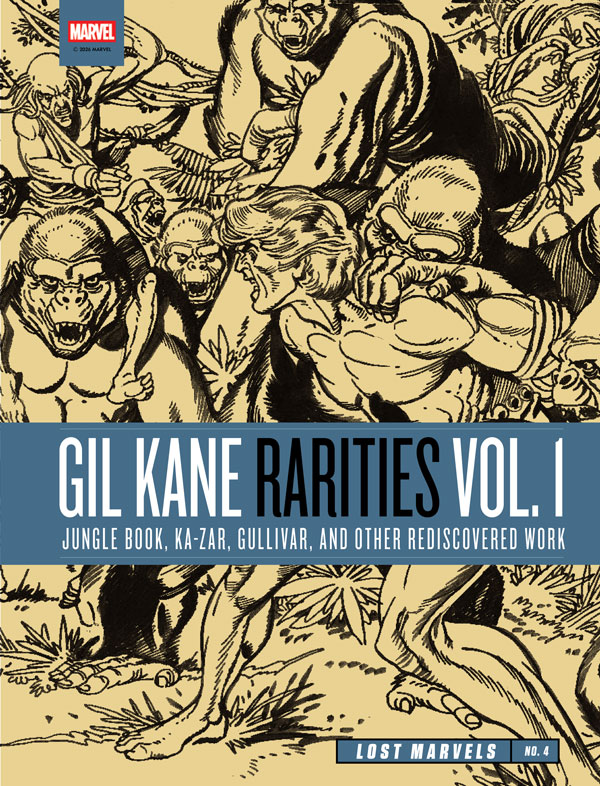
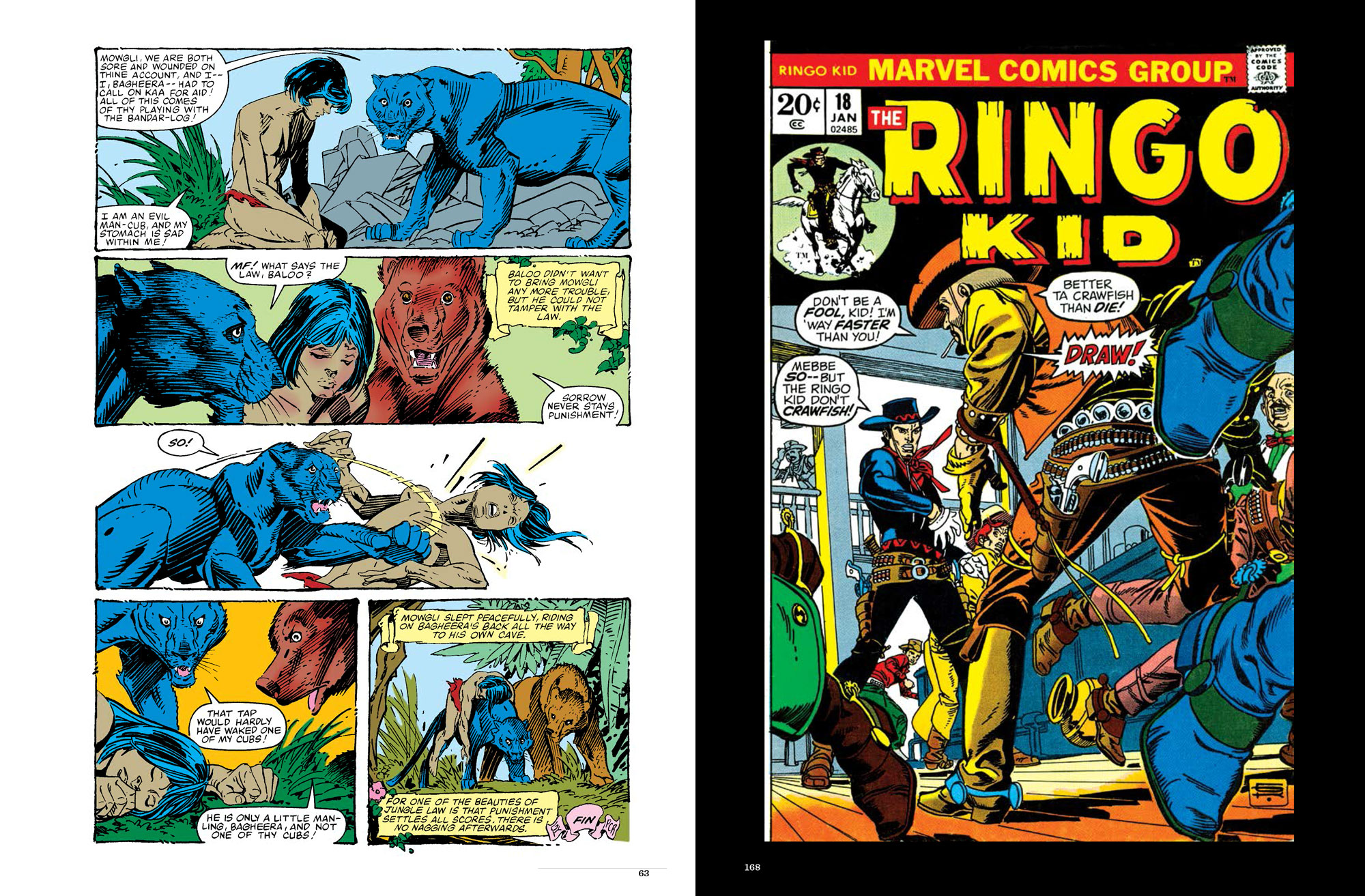
Gil Kane Rarities Vol. 1: Jungle Book, Ka-Zar, Gullivar and Other Rediscovered Work collects together a few of those scattered examples of powerfully beautiful material not previously reprinted. These are introduced by a thirteen-page ‘Inventing Gil Kane’ biography by Jon B. Cooke covering his personal life history, his interests and influences and his career in the American comics field. From Creatures on the Loose we get two stories from 1972 featuring Gullivar Jones, a John Carter-esque character transported to Mars to fight giant slugs with his sword, written by Roy Thomas. There are four stories published in Marvel Fanfare adapted from The Jungle Book by Rudyard Kipling. Kane adapted the stories about Mowgli the Wolf Boy himself. The sensitive inking by P. Craig Russell demonstrates how well Kane’s pencils accommodate a variety of inking styles from the delicacy of Russell to the intricacy of Klaus Janson or the practical styling of Frank Giacoia. Finally there are two Ka-Zar stories from Astonishing Tales written by Roy Thomas and Mike Friedrich.
These are followed by the Cover Gallery ‘from the Margins of the Marvel Universe’ showcasing 87 covers for books including nine for Ka-Zar, eight Man-Thing, five Where Monsters Dwell, two Monsters On The Prowl, two Weird Wonder Tales, two Vault of Evil, two Journey Into Mystery, plus Creatures on the Loose, Prince Namor The Sub-Mariner, and many Western comics including Red Wolf, Two-Gun Kid, Kid Colt, The Ringo Kid, Apache Kid and Wyatt Earp – ‘His guns are the law!’
All these covers together work better than individually, with their style of promising impossibly complex dangers in bombastic shout-outs and exclamation marks that was the hallmark of American comics for decades before the style of the 1990s moved to pin-ups instead. The sheer number of ways one image could promise an exciting escape from jeopardy are so entertaining that we don’t need to see the stories they represent, which is just as well given the generic, repetitive kinds of comics these were. This Lost Marvels no.4 is volume one, so perhaps more Kane material will follow. Once you’ve looked at these, you may agree another hundred covers by Gil Kane in one book are definitely worth having.