Review by Frank Plowright
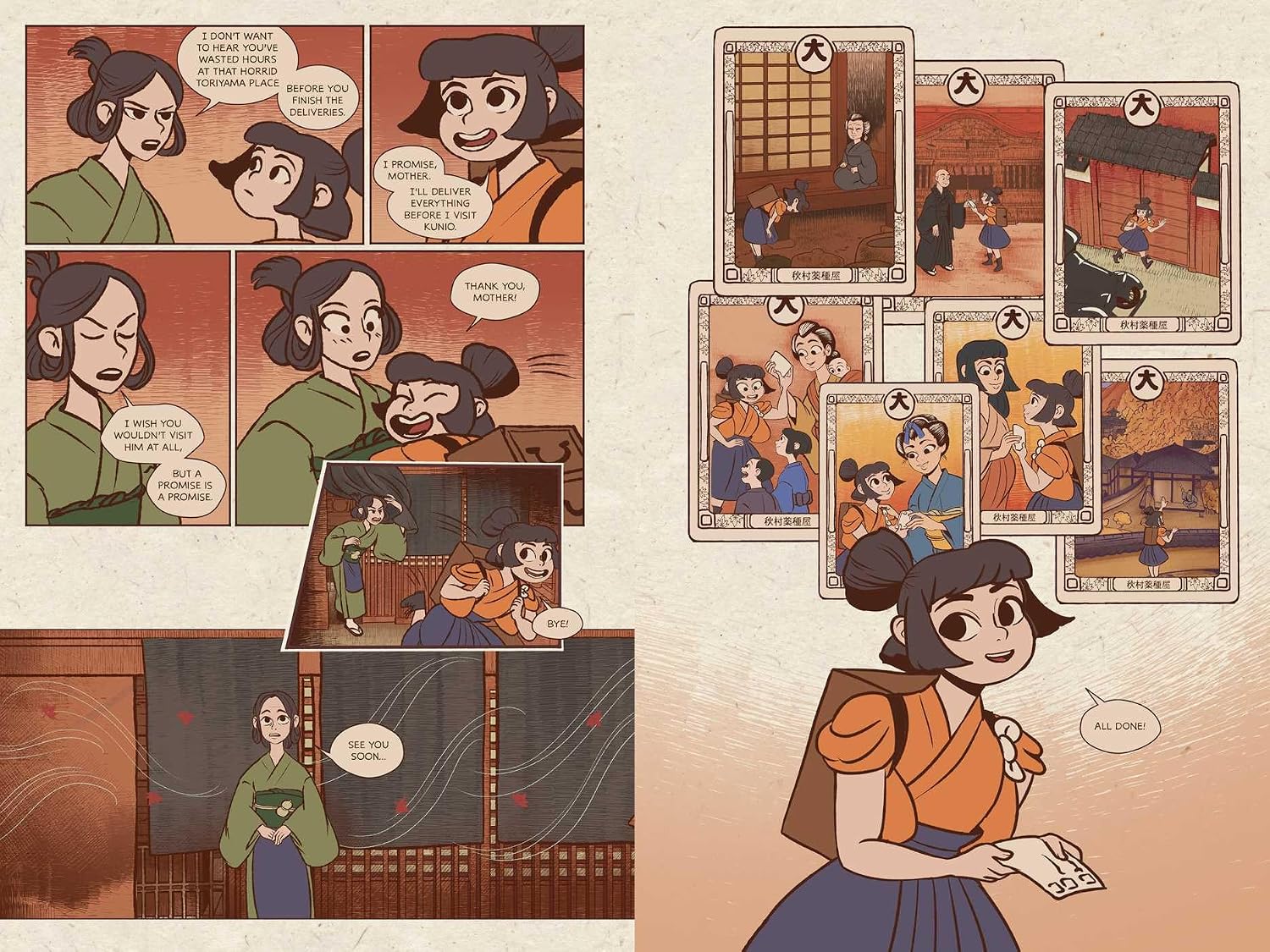
It’s the 1920s in Japan and Maple Morimura’s growing up in an exciting new world. Her family apothecary has just had a telephone fitted, and at twelve she’s befriended Kunio, only two years older than her, but already a writer. He’s only visiting the countryside, though, and will soon move back to the big city. He doesn’t believe in the assortment of Japanese spirits, yokai, and so neither does Maple. It distresses her mother, because it was yokai who taught the family their trade.
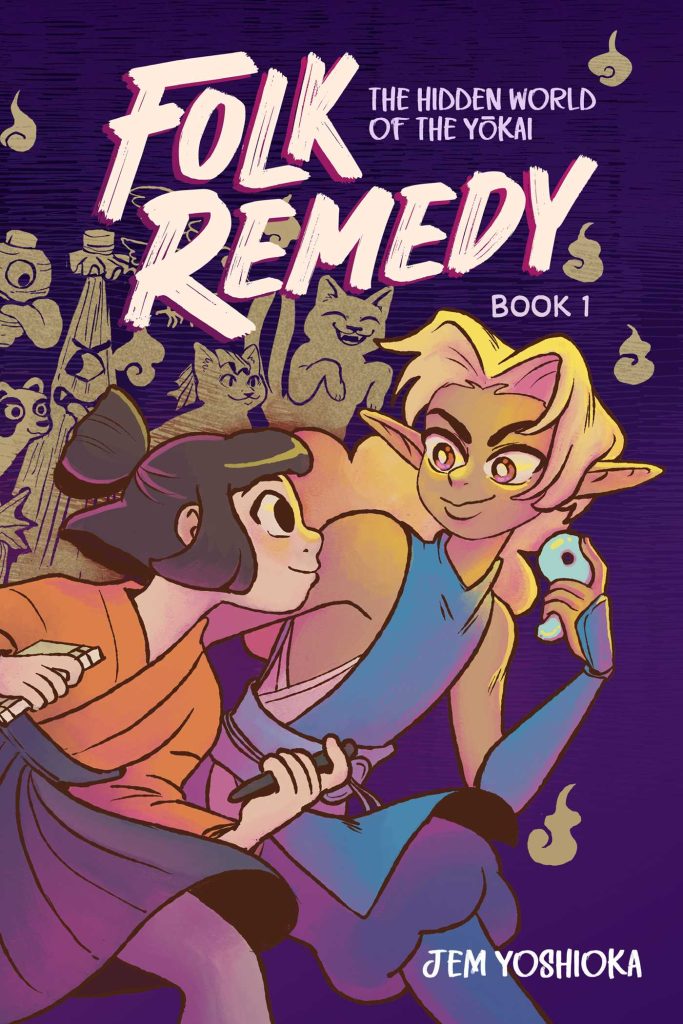
Jem Yoshioka ensures we like Maple from the start, drawing her as energetic and enthusiastic, and her enjoyment of life conveys. In Japanese folklore yokai number in the hundreds, so when they begin to appear there’s a lot from Yoshioka to choose from, and while Ember, seen on the cover, can more or less pass for human, many of her other choices are the more bizarre end of the spectrum. Visually, they contrast Maple’s normal life, not that there’s much of that beyond the book’s opening pages.
There’s a narrative problem with yokai. On the one hand they open up an abundant world of imagination, but on the other they’re an easy fallback option. If something dramatic needs to happen, there’s so often a yokai on hand to make sure it does. And if not them, there’s also tengu. Because Yoshioka’s character designs and general cartooning are so strong it carries the random nature of the plot, but it also depends far too much on head and shoulders panels when there’s greater wonder to explore.
As Maple’s journey continues she makes more friends, none of them human, and there’s a big surprise to end what is only Book One. A quest has begun, but there’s not enough substance so far.