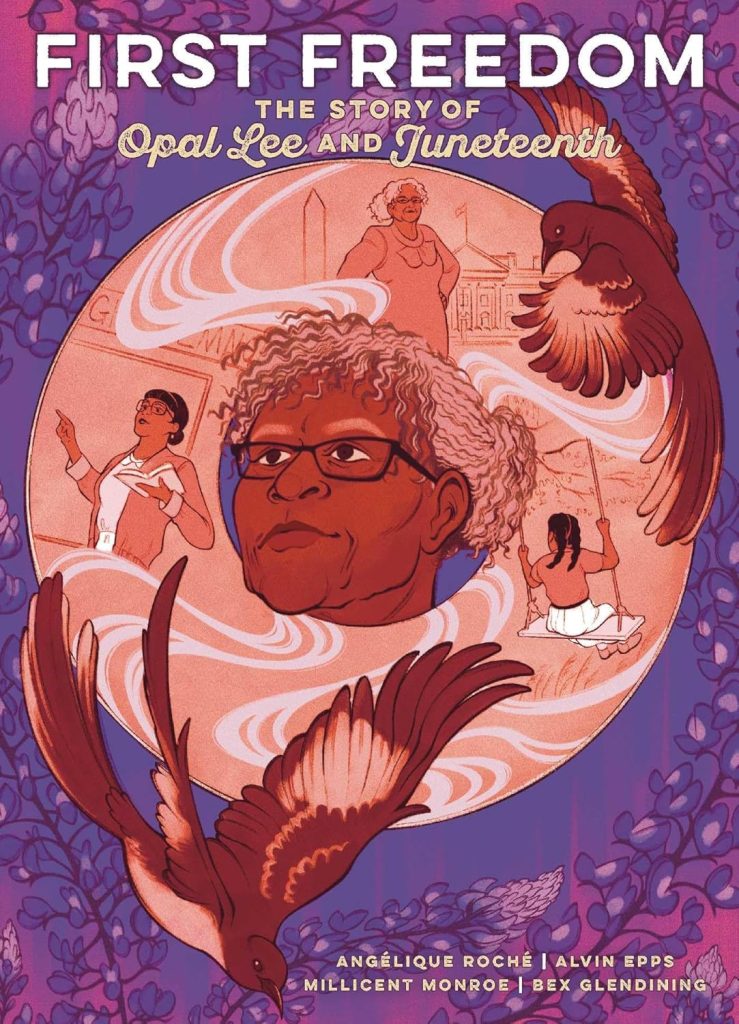
Review by Frank Plowright
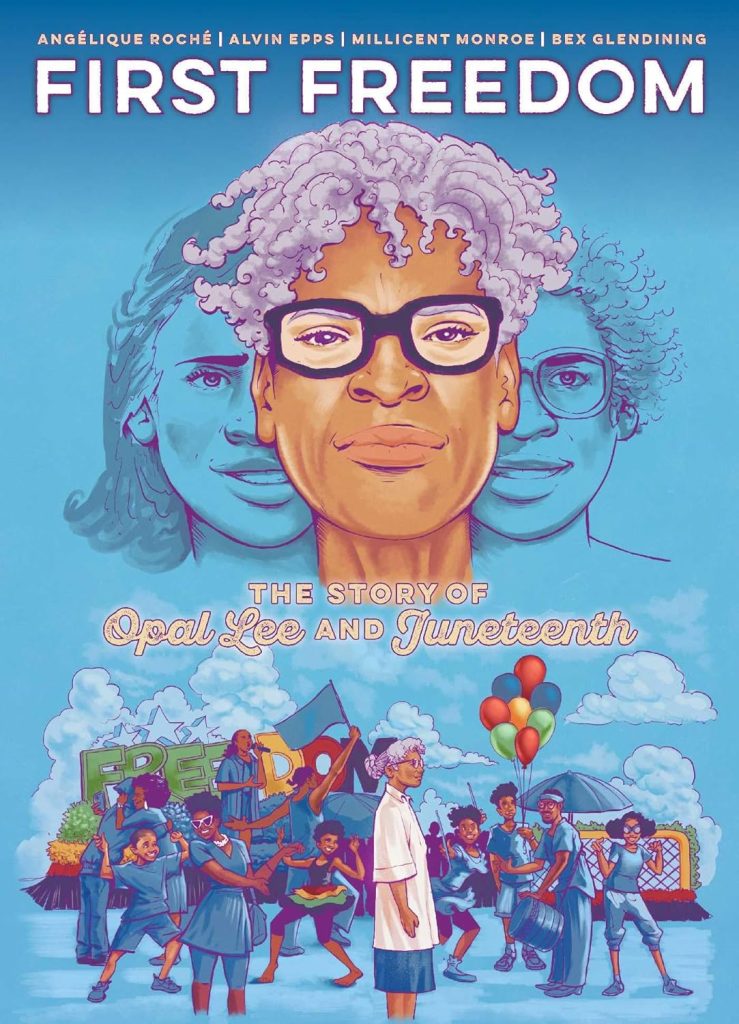
Opal Lee merits a graphic novel biography by virtue of her long campaign to have a federal holiday instituted to commemorate the end of slavery in the United States. Juneteeth was a phrase coined by African Americans to commemorate June 19th 1865 when an order was issued instructing adherence with the already in place law abolishing slavery, while Texas became the first state to recognise the holiday in 1980. In 2021 it was inaugurated as a national holiday, and more than anyone else it was down to Lee’s strength of character.
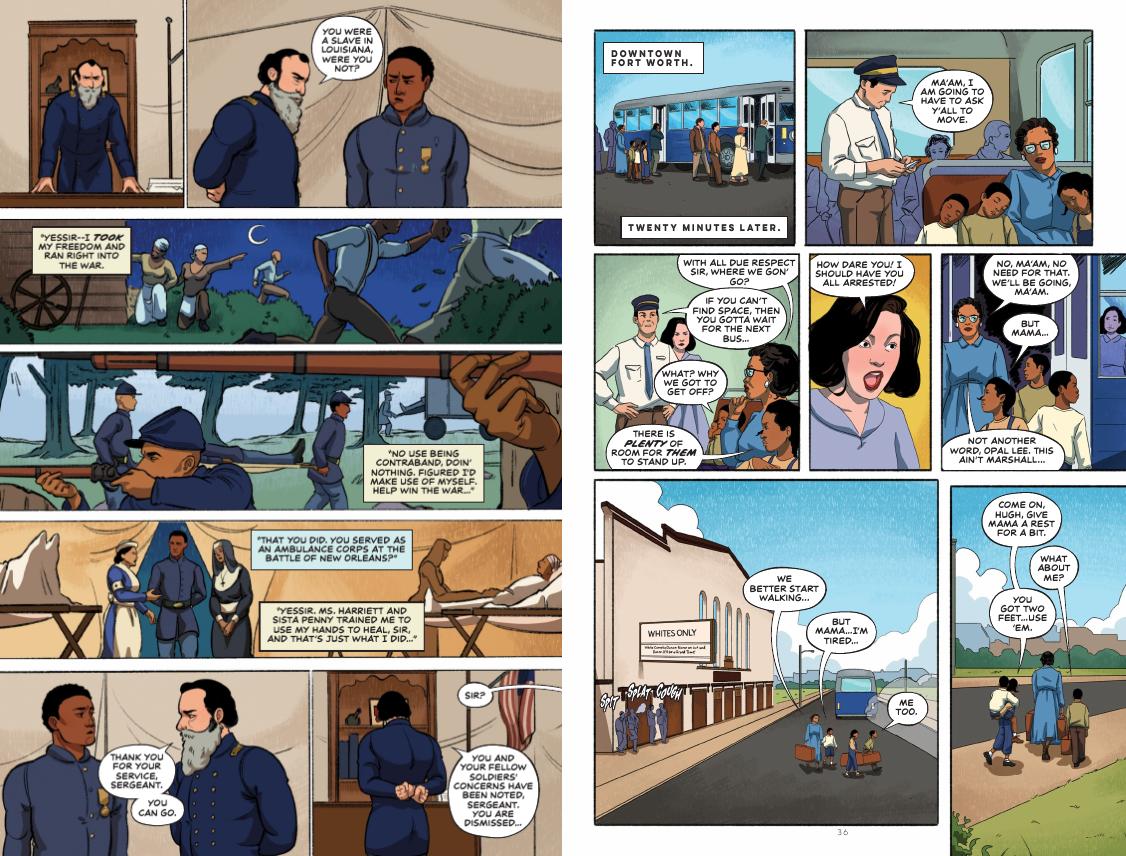
First Freedom, though, isn’t just the story of her campaign, although it quotes her extensively about it, but also about the times she grew up in and what preceded them. Angélique Roché incorporates the long post-Civil War history of the USA during which slavery might have been abolished, but there was little appetite for enforcement and the Ku Klux Klan was founded within months of the 1865 proclamation. Testimony from those affected is included alongside other relevant quotes, and racism remained rife in the Fort Worth neighbourhood where Lee grew up seventy years later.
Alvin Epps, Bex Glendening and Millicent Monroe are all credited for art without breaking down their contributions. Based on earlier work, Epps seems responsible for the left sample art and Glendining the right, but all art gives a sense of place with personalities on display.
Roché conducted interviews with Lee and spent time in her company, but doesn’t tell a linear story, although all elements of the past are connected by the primary narrative of Lee in Washington in 2021, meeting assorted people. As noted, her youth and early adulthood is blighted by racism, yet she starts a university course she funds herself despite a young family, and that type of determination characterises her life. Something stressed by Lee early in First Freedom is an egalitarian assessment of how everyone is important, and it’s seen through the way she treats people during her teaching career, shown before Lee’s activism kicks in with a desire to see Juneteenth celebrated beyond Texas.
What Lee is best known for is not decades of promoting good causes, but organising a walk from Fort Worth to Washington drawing attention to the idea of Juneteenth being a national holiday. An indication as to both her commitment and energy is that the 1440 mile walk was undertaken when Lee was 90 in 2016. She committed to walking five miles a day for a journey lasting over four months. It really pushed the agenda to the forefront, and it’s pleasing to see Republican Ron Johnson named and shamed as the sole senator to value the potential cost to the economy of a federal holiday above an annual commemoration of a meaningful day in American civil rights history.
First Freedom is an inspirational book not just for what Lee achieved, but for it happening at an age when most of the younger generations tend to write people off or patronise them. In time her prominence in assuring Juneteenth will fade while the holiday continues, but her struggles and those that preceded her should be a part of every school library.