Review by Frank Plowright
The Picture of Dorian Gray was Oscar Wilde’s only novel, a slim satire in the form of a gothic horror story about a portrait of a socialite that aged when Dorian Gray himself remained youthful as the painting took on the results of his sins and indulgences.
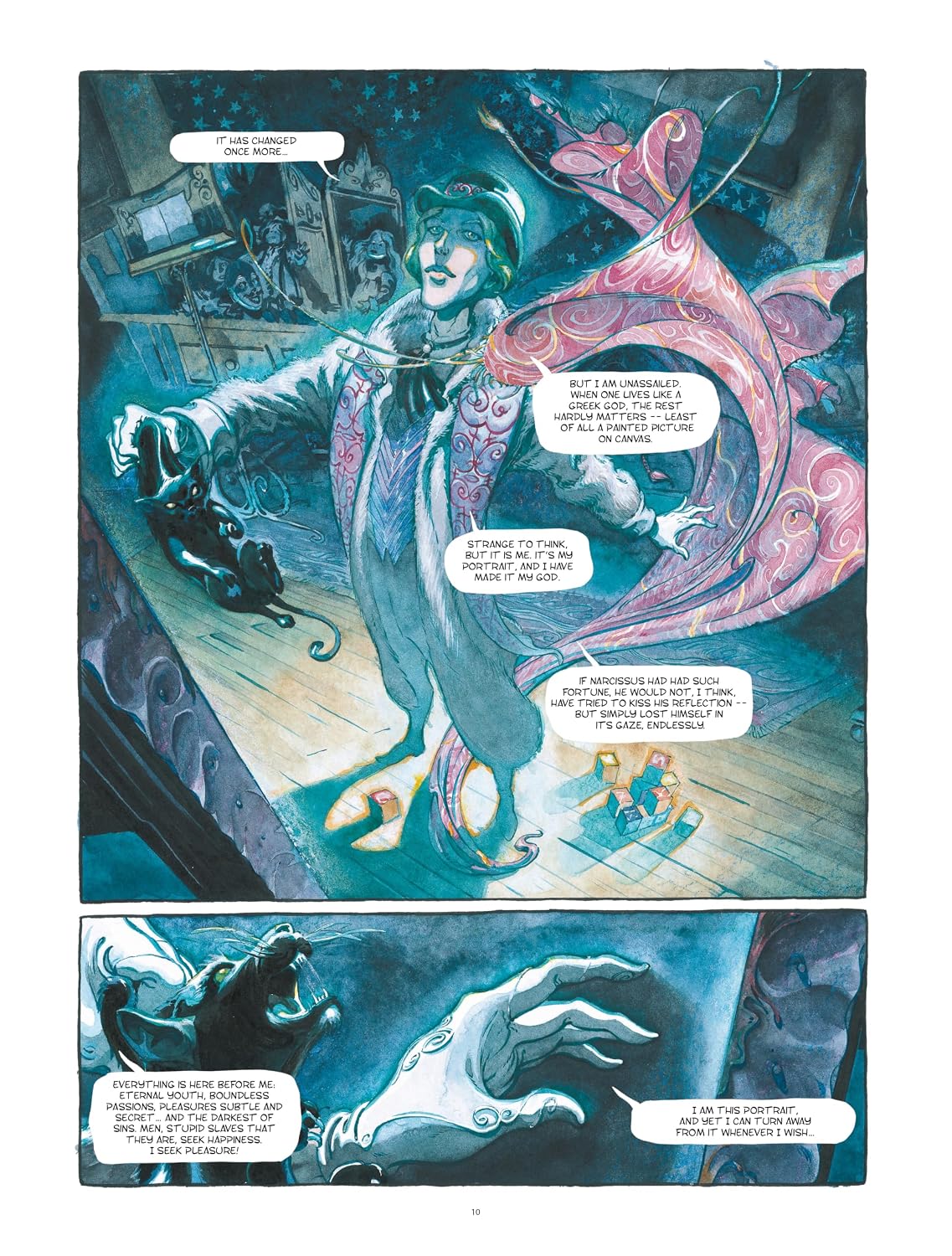
Enrique Corominas opens with the text preface Wilde added to the expanded edition of the story, but otherwise sticks to the material as first published, but starting with a preface of his own in which Gray stands before his portrait, noting with satisfaction that it’s again changed. We then have the start of the story as originally conceived with Lord Henry Wooton in the studio of painter Basil Hallward admiring the creation of Gray’s portrait, as Hallward explains how Gray’s beauty has become his muse. Wooton is then introduced to Gray, and their subsequent friendship excludes Hallward.
There’s a decorative delicacy to the painted art that Wilde himself would surely have admired, Corominas filling Hallward’s studio with objects and pictures, and taking a similar expansive approach to other scenery. Rather than rely on the conversations of the novel he places the cast in the mentioned locations. He’s also adept at visual characterisation, and is able to restore the simmering sexual undercurrent excised from the original novel due to the prudishness of the times. The looks between people positively sparkle with desire. Gray himself is visually compared to a butterfly, flitting between desires, yet Corominas understates the debauchery beautifully, alluding to rather than depicting. He also switches between styles, the pleasing pastel approach accounting for most of the book, but some scenes requiring something more vivid, which is equally accomplished.
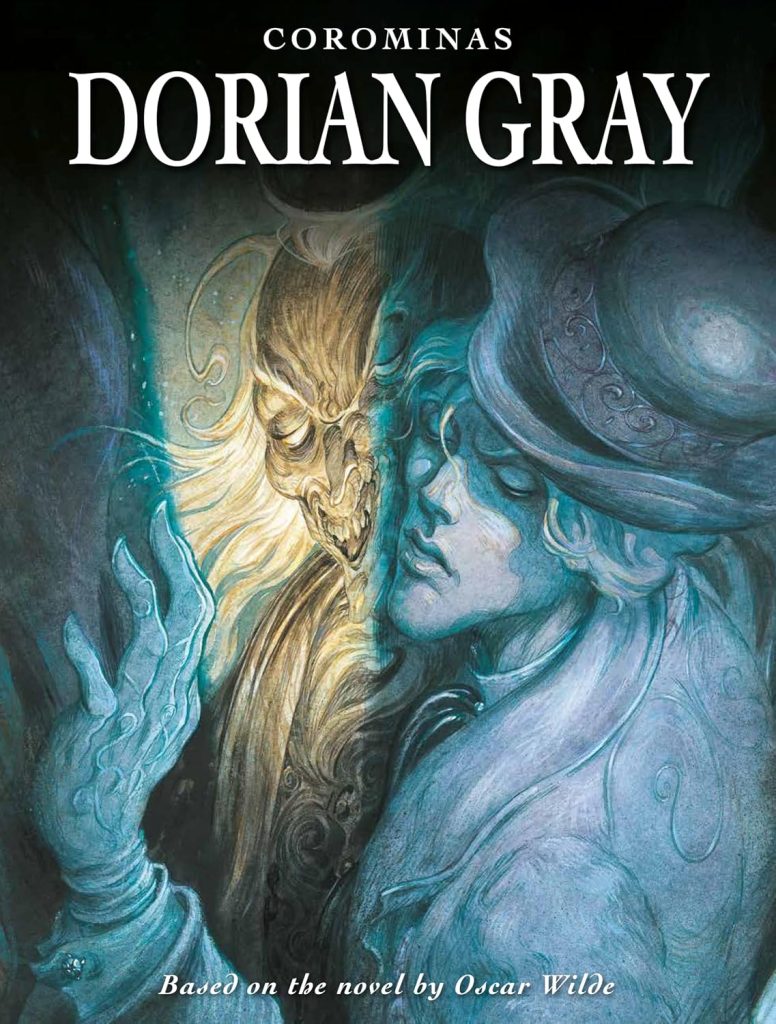
As in the story, the painting of Gray is key, and rather than saving it for a shocking revelation toward the end Corominas instead uses it as his chapter-separating illustration. The decay is gradual, but by the fifth chapter the dissolute figure has a suitably repulsive effect.
This is an immensely appealing adaptation, Corominas remaining faithful to Wilde’s intentions while able to add to them. His back of the book consideration is insightful with regard to the original work and the visual influences used, and features several additional full page paintings. Dorian Gray is a superlative adaptation of a great story, and it’s a real surprise that’s it’s been circulating in European editions for fifteen years before this English translation, so congratulations to Titan Comics for the rescue.