Review by Frank Plowright
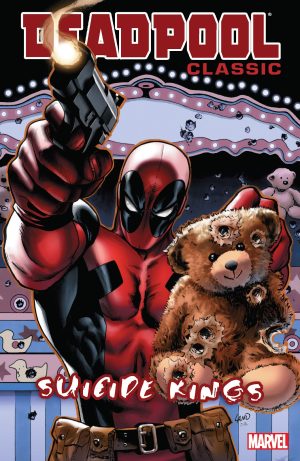
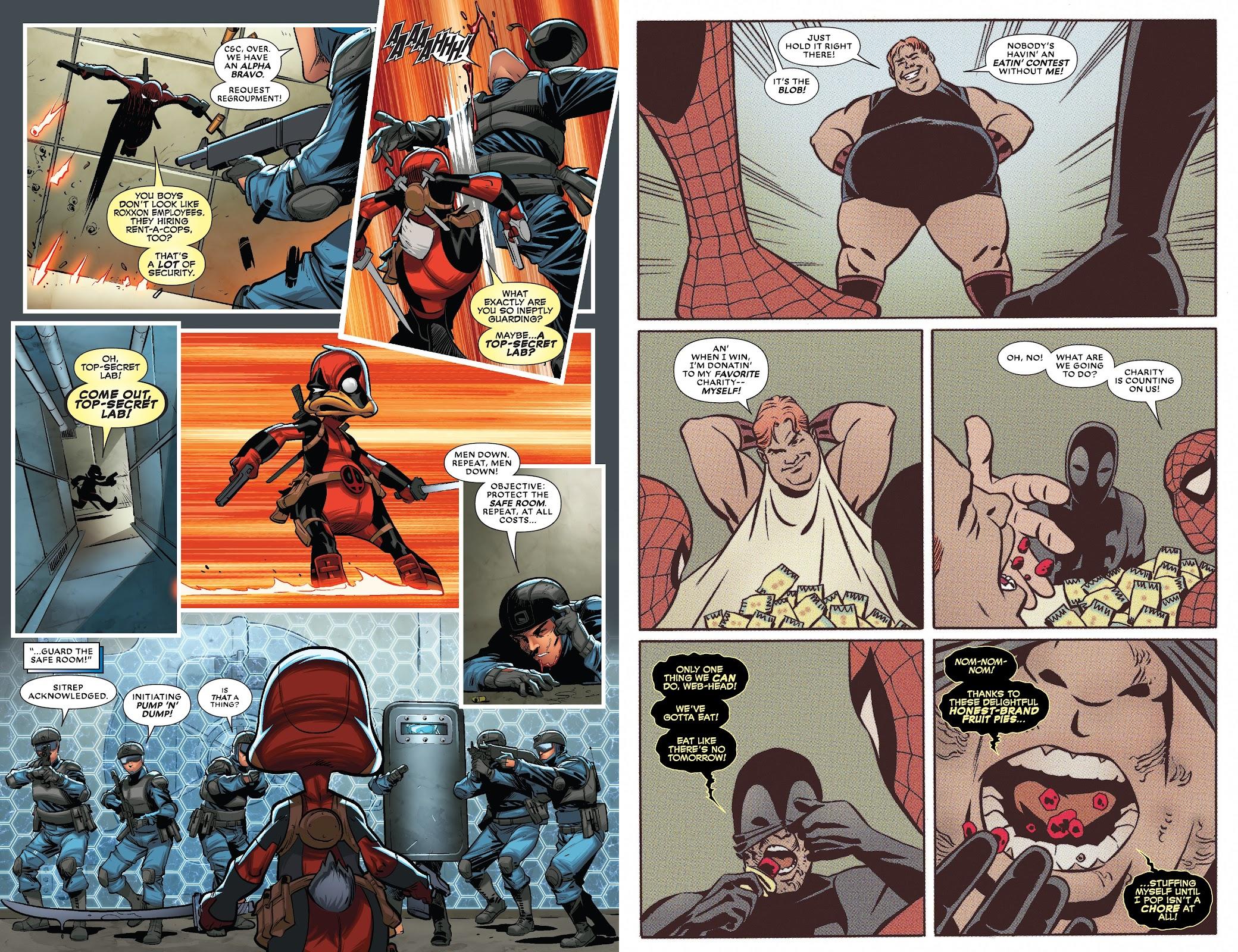
This volume takes its title from the weakest of the three stories included, in which Deadpool is transformed into a duck. Has he had a weirder experience? Well, it is Deadpool…
Infected with a virus, Rocket Raccoon crashes to Earth in the vicinity of Howard the Duck after Deadpool has found a teleportation device. Stuart Moore manages a few good jokes, but crucially not enough, and doesn’t have any great idea where to take the plot after Deadpool becomes a duck. He looks great as drawn by Jacapo Camagni, and you’ll believe Wade is an assassin in even duck form, but too much is too random. If you’d prefer just this in paperback, it’s Deadpool the Duck, naturally enough.
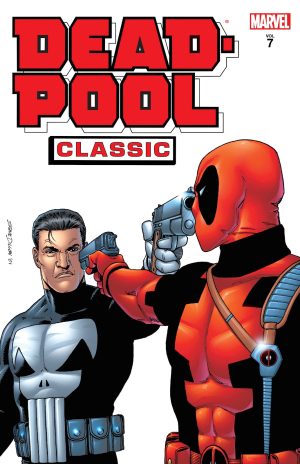
What was originally Deadpool versus the Punisher is a whole lot more fun as long as you don’t become too fixated on the “versus” aspect of the title. Fred Van Lente sets things up so the assassins are in opposition to start with, and conceives a good repeated chapter-ending joke on that theme, but for most of the time their interests coincide. Both are concerned about the wife and son of a financier who appear to have been killed during an assault on his home at which both Deadpool and the Punisher are present.
Van Lente’s clever plot keeps twisting away from expectation all the way to the end, and Pere Pérez draws great versions of both characters while relishing the changes of scenery, selling every new location. The suspense is maintained until the end, and the jokes come thick and fast.
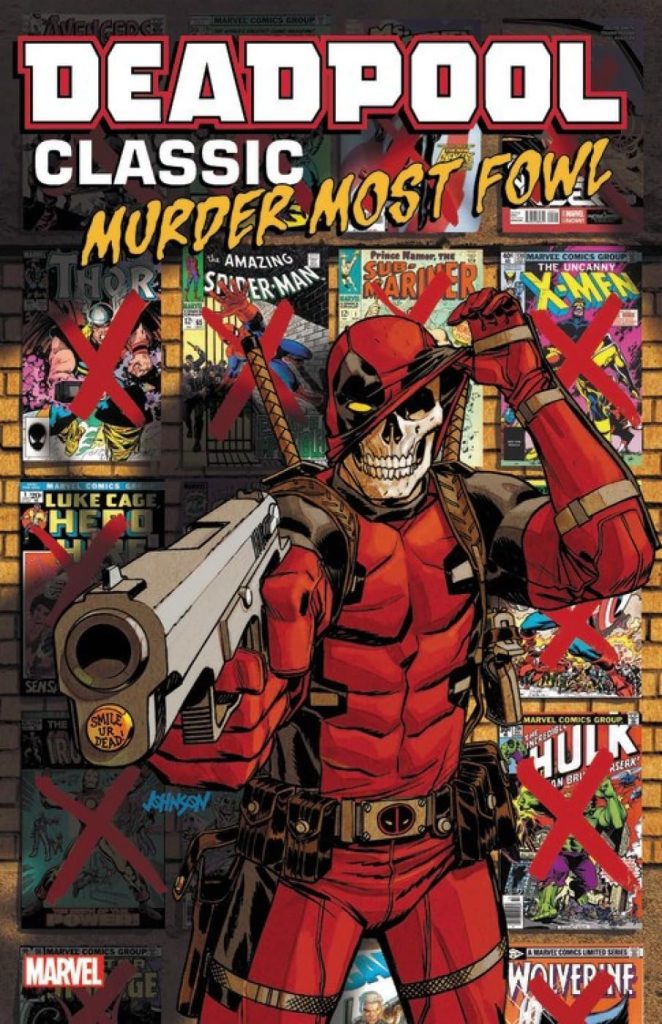
Deadpool’s already killed the Marvel universe, appropriately enough in Deadpool Kills the Marvel Universe (or Deadpool Classic Vol. 16), but is it an idea worth repeating? Definitely, not least because Cullen Bunn and Dalibor Talajić aren’t supplying a reprise, but a variation. This isn’t the same Deadpool and this isn’t the same Marvel universe. This Deadpool makes jokes and he’s funny, but without being the full-on madcap personality. He’s part of an X-Men team investigating who might be murdering superheroes.
Bunn’s story is good, but in Talajić he has an artist who excels at differentiating the world as it is and the world as Deadpool sees it. The art throughout this collection is excellent, but Talajić is nonetheless the star turn, working convincingly with both action and detail, while also managing to transfer from cartoon exaggeration to gritty realism.
Good use is made of a character not around when the other Deadpool killed the other Marvel universe, and Bunn has a good plot going behind the scenes, making this even better than the first time round. It’s also found in Deadpool Kills the Marvel Universe Omnibus.
Two really good Deadpool stories and one that’s not great, but raised by fine art make this a worthwhile collection.