Review by Frank Plowright
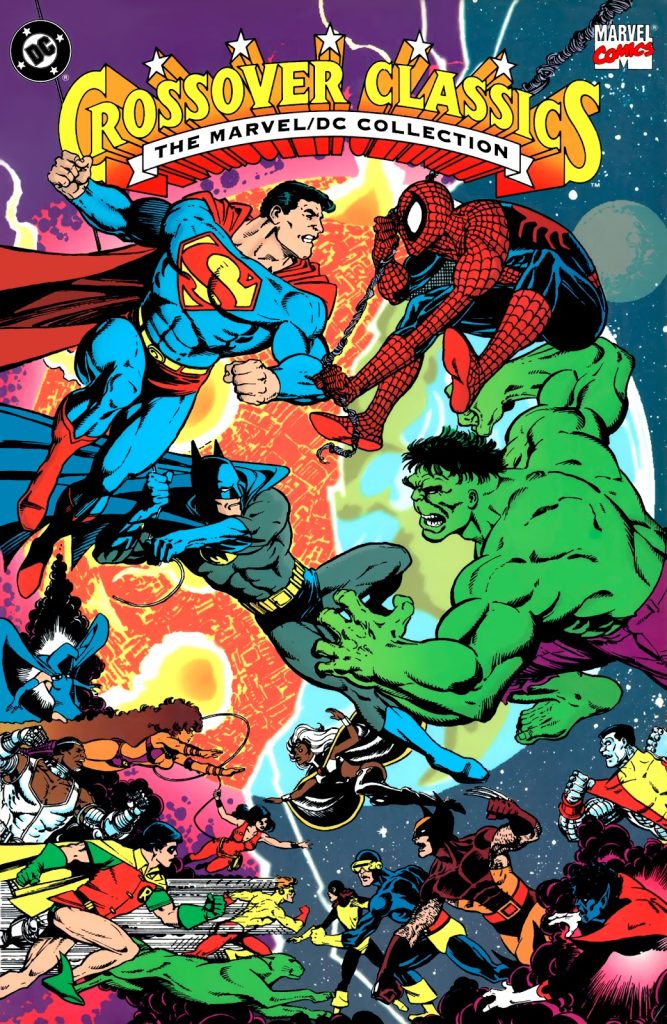
Crossover Classics reprints the first four teamings of Marvel characters with DC superheroes, the seeming disparity of characters on the cover due to this including both Superman/Spider-Man team-ups.
The first of them by Gerry Conway and Ross Andru is still very enjoyable allowing for signifiers of the times. Conway has fun pointing out both Clark Kent and Peter Parker work for newspapers, while Ross Andru puts in the extra effort to allow for the larger page size of the original printing. Although the spreads featuring the heroes are iconic, the more attractive pages present the cast as civilians. Doctor Octopus and Lex Luthor prove troublesome and ambitious villains, and the character notes are well considered.
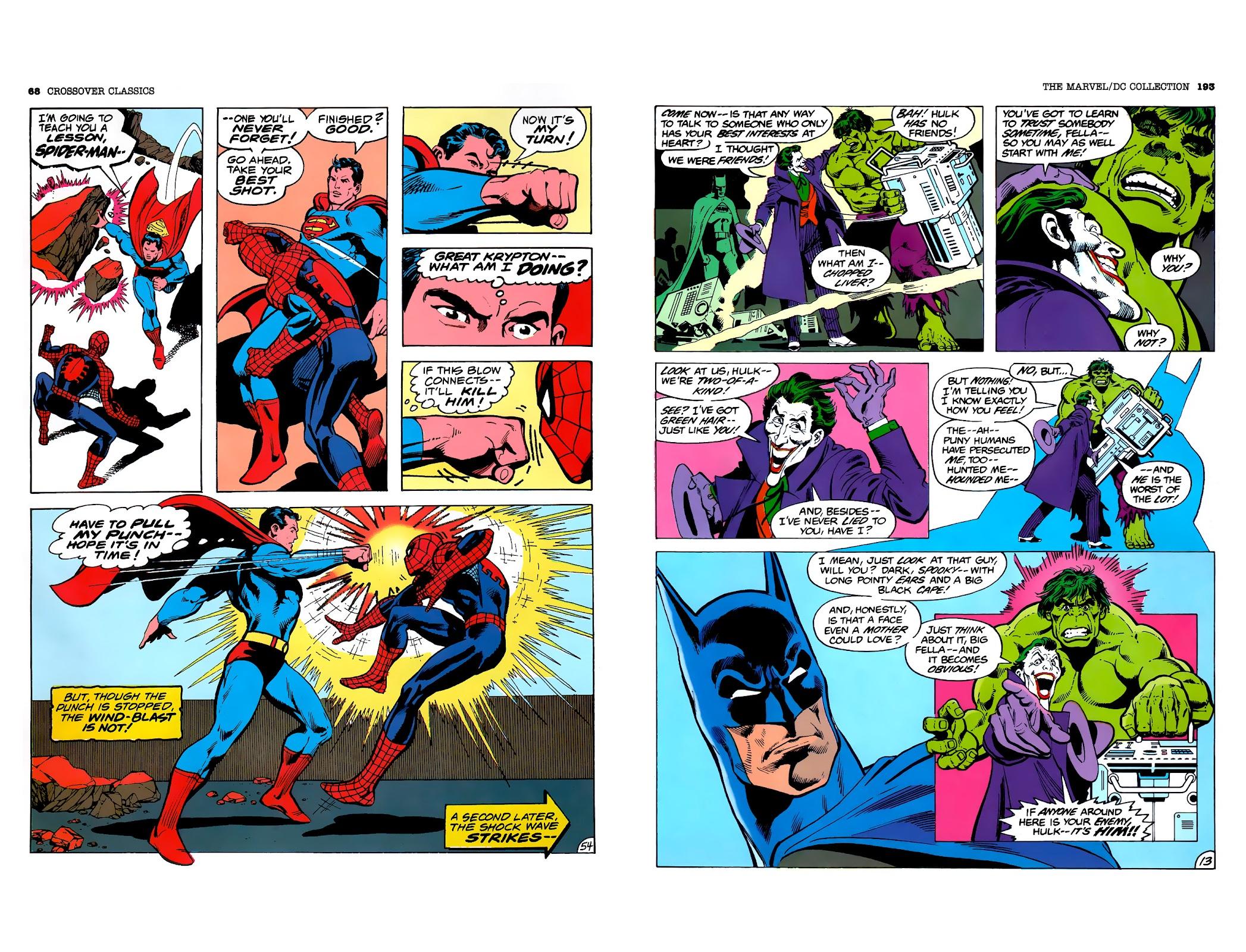
Despite a creative team of Jim Shooter and John Buscema, the sequel isn’t as much fun for being greatly diluted. Company executives wanted the Hulk and Wonder Woman featured as both then had TV shows, and while seeing Superman fight the Hulk entertains, in what’s a shorter story it just takes up space. The Parasite would only be the editorial choice for the role of second Superman villain, while an extraordinarily verbose Doctor Doom isn’t generally associated with Spider-Man. Buscema plays with the visual iconography of all characters, but unlike Andru, his art loses power for being reduced. A better moment is Kent and Parker switching papers, but this is disappointing overall.
Batman and the Hulk are up next, and although Len Wein’s on form, the wonderful art of José Luis García-López is the highlight, supplying personality along with storytelling excellence. Wein’s introduction points out the disparities between Batman and the Hulk, intellect versus power, but not why he opted for the extremely obscure Shaper of Worlds as a primary foe. To be fair to Wein, they propel the plot and work well alongside the Joker’s form of reality, Wein supplying some sparkling dialogue for a character in 1981 not the dark and psychotic character he is now. This is greatly more entertaining than the second Superman and Spider-Man pairing and builds to a spectacular finale.
Closing this volume is the meeting of the X-Men and the Teen Titans from 1984. There’s no reason to have a hard and fast rule for the villains to be known to the respective teams, and like the Shaper before, Darkseid propels the plot by resurrecting Phoenix, who’d not that long ago been killed for destroying worlds. For purists, though, Deathstroke also plays a part. Chris Claremont hasn’t yet entered his mega-verbose phase, and works well to fit a massive cast into 64 pages, while Walter Simonson’s art amazes, deliberately echoing Jack Kirby. One can only wonder what it might have looked liked at a larger size, but this was the first of the company crossovers not to be printed in the treasury format.
It’s surprising how well three of four stories still hold up, allowing for several of the featured characters having changed considerably over the years. All this content has more recently been reprinted in the DC vs. Marvel Omnibus. It doesn’t quite restore the page size for the first three stories, but is a midway point. A second volume of Crossover Classics jumps to the 1990s.