Review by Lewis Savarese
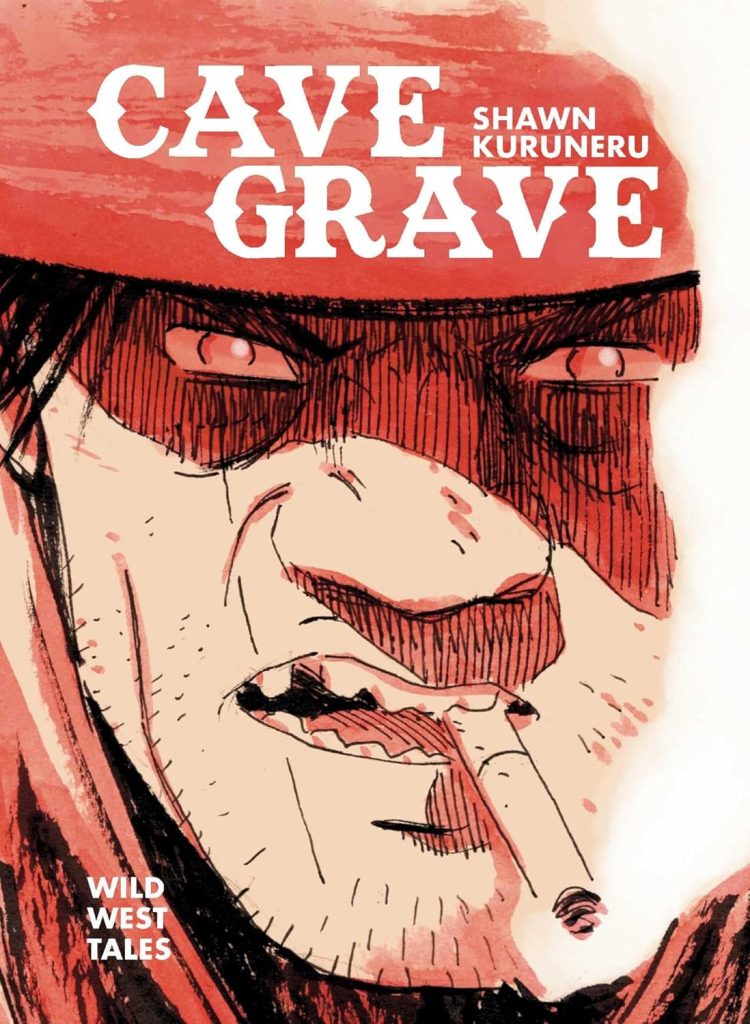
Cave Grave: Wild West Tales collects two of Shawn Kuruneru’s previously self-published works. Like the western tales once featured in dime novels and pulp magazines, modern musing on the American frontier vary in quality. For every talented creator who crafts a story with fully developed characters and themes, there are many more who come up short, often too preoccupied with western iconography (hats, horses, landscapes, six shooters). Kuruneru falls into the latter category. His duology is a genre simulacrum with slight stories and stock characters.
In ‘Cave Grave’ a trio of thieves steal a glowing bag from a retired arms dealer. At their hideout, the eponymous cave, they encounter a monster that most likely does not exist, but is instead a representation of greed and the violence it begets. With its nonlinear narrative structure and glowing bag maguffin, ‘Cave Grave’ is indebted more to Quentin Tarantino’s Pulp Fiction than any western. However, Kuruneru’s characters, dialogue, and plot beats are largely forgettable. Every bit of action is either telegraphed or overexplained by hamfisted narration.
‘Poor Moon’ follows an aging bounty hunter named Held as he tracks down his final bounty. Held brings in his bounties using nonlethal methods as a means of atoning for his involvement in a fictional American Civil War between the East and West. Not only does Held fall in love with his final bounty, a woman dubbed Cassie the Killer, but a brutal rival named Algar is also in pursuit. Algar functions as Held’s doppelganger who represents his violent past self. All told, ‘Poor Moon’ is a bundle of clichés from the repentant bounty hunter to his “one last bounty” gone wrong. Like the conclusion of ‘Cave Grave’, this story ends with several lines of narration that superficially reflect upon its themes.
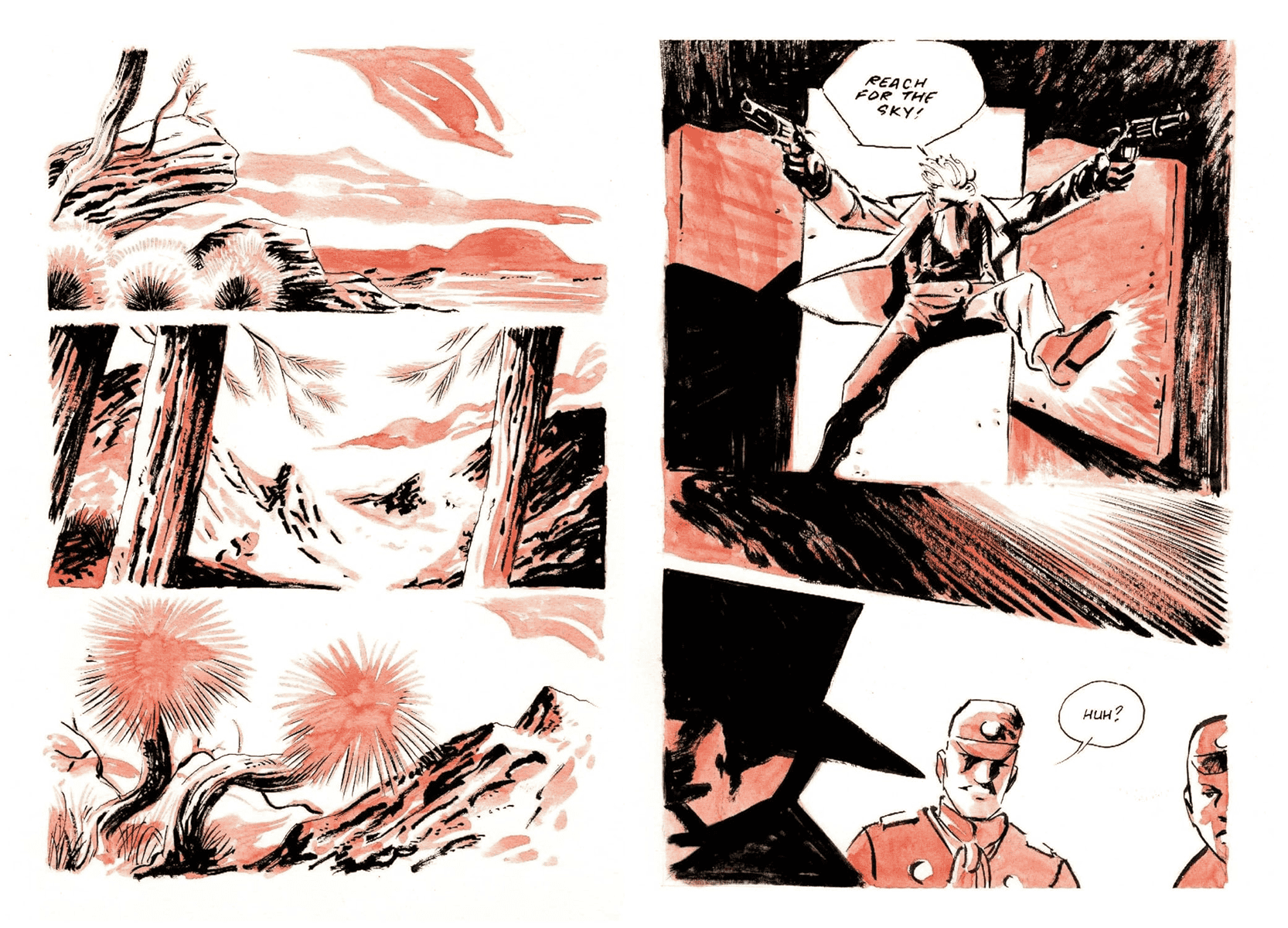
It’s no surprise that Kuruneru’s strength is his art, with experience in the world of fine art and previous comic collaborations with Chris Condon and Jeff Lemire. His use of watercolours and ink, a reserved palette of burnt orange and black on white, evokes the grittiness of the revisionist western films of the 1960s and 1970s. ‘Cave Grave’ begins with several pages of landscapes that feel alien yet familiar, another staple of the genre. Kuruneru understands the aesthetics of the western, both the iconography and atmosphere, but his stories ring hollow. The book’s back matter, which Kuruneru titles the “shooting gallery,” is full of character designs and vistas, the artbook he was meant to make instead.