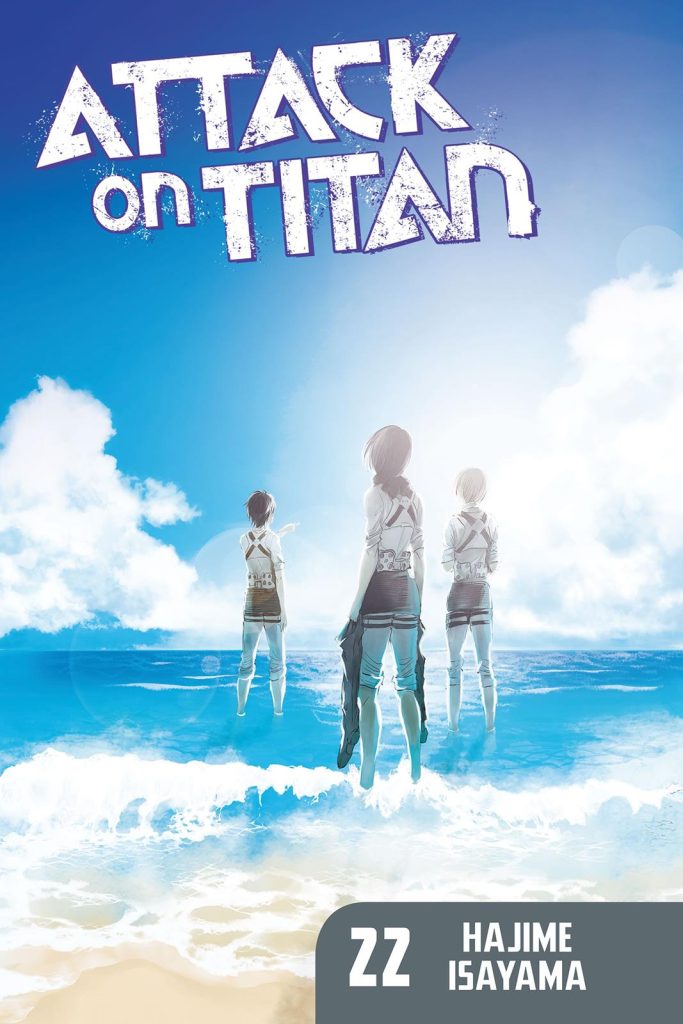
Review by Frank Plowright
A mystery hanging over much of Attack on Titan to date was what might be hidden in the basement of Eren Yeager’s family home. It remained unknown as the home was in territory only recently relieved from being occupied by Titans, and therefore previously inaccessible. That changed in Attack on Titan 21, when the journals of Grisha Yeager, Eren’s missing father were located. In a land where people’s memory of history has largely been erased, the journals these tell a story of a community beyond the walls keeping out the Titans, the place where Grisha originated.
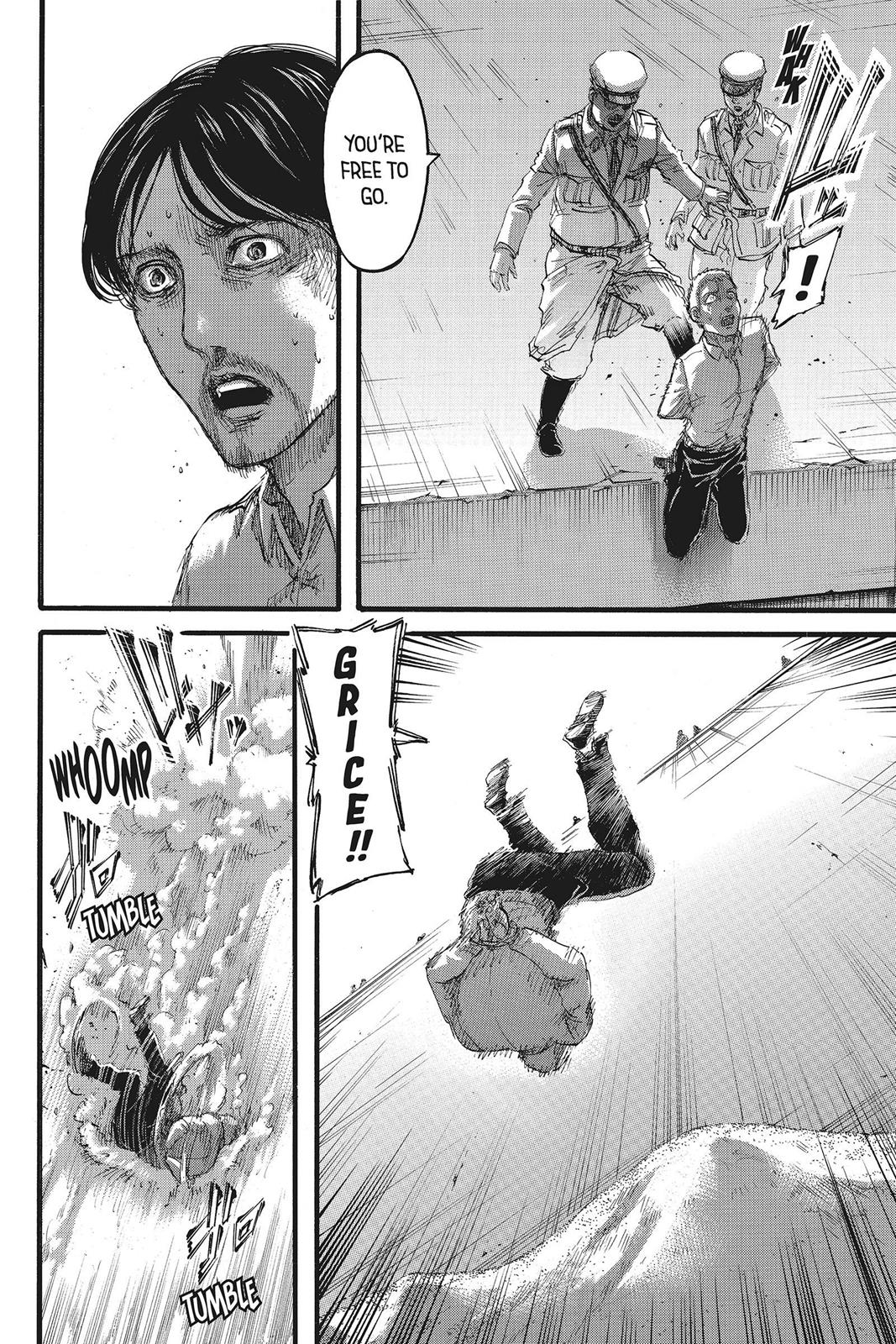
Much of this volume continues Grisha’s early life, growing up the equivalent of Jewish in Nazi Germany. His arrival on the island containing the Titans is suitably horrific, but Hajime Isayama is an extraordinary storyteller, and there are plenty of twists to Grisha’s story beyond the intended fate we knew he survived. We’ve known the main parts of Grisha’s story from Eren’s childhood, but what’s told here gives some sense to what he’s been doing.
With Attack on Titan sustained for so long on a form of science and advancing technology, the introduction of mysticism seems a strange narrative choice, but Isayama has made very few mistakes over a long series, so there has to be faith in its purpose. The revelations certainly explain what Eren can do to some degree, but also lead to the conundrum of all those in power: how much should be revealed to the people? For the cast we’ve followed to date the information is world-shattering in revealing that the Titans aren’t their primary enemy.
For the series this is a transformative volume. It reshapes everything in a rush of information and leaves Attack on Titan at a crossroads. The next volume will be equally important as decisions are made. Alternatively both are combined in the eighth Omnibus.