Review by Frank Plowright
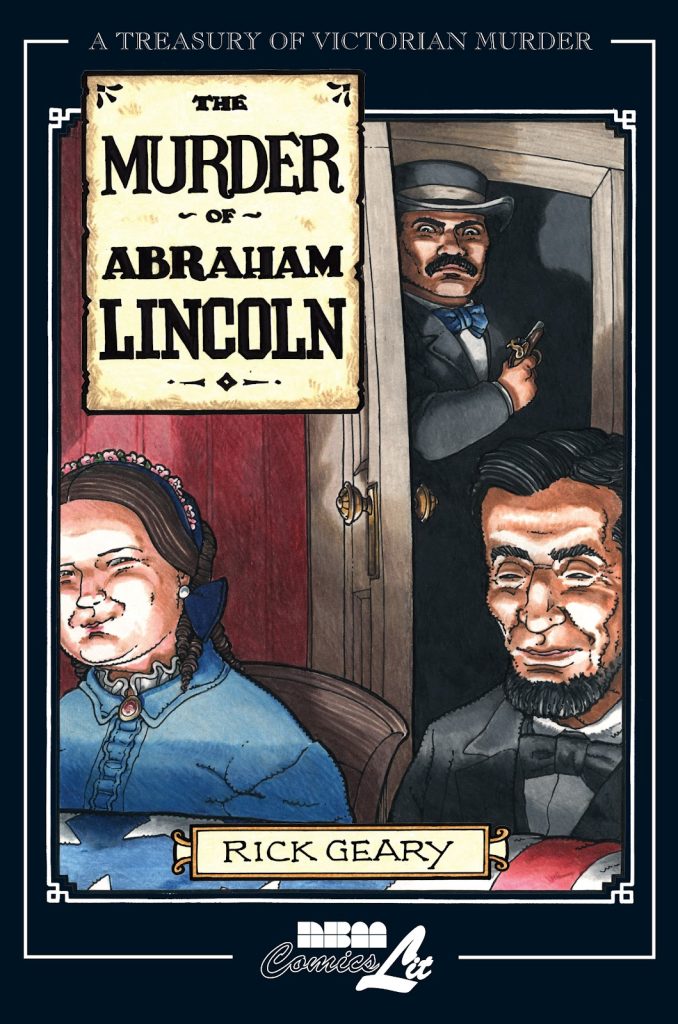
To find the assassination of Abraham Lincoln included in Rick Geary’s Treasury of Victorian Murder series is somewhat surprising. Since beginning with Jack the Ripper, Geary has otherwise tended to steer clear of high profile incidents, and yet this is probably the most famous 19th century killing in American history. What can Geary provide that hasn’t been on the menu for countless previous historians, investigators and commentators? Perhaps little, but what he will do is add considerably to events as perceived by most members of the public.
The bare bones are well known. Feeling he had no other option, President Abraham Lincoln’s decisions made the US Civil War inevitable, and its great cost left simmering resentments that endure to this day. These fed into his murder by stage actor John Wilkes Booth, who escaped, but was tracked and killed by government agents when he refused to surrender.
As ever, Geary begins with a carefully drawn map, in this case showing how the streets were laid out in Washington in 1865, presumably much the same as today, except with the Washington Monument noted as incomplete. It’s followed by another map showing Booth’s flight after killing Lincoln, and yet another depicting the route of Lincoln’s funeral train, which studiously avoids any southern states.
Unusually for the series, Geary indulges himself with full page portraits of his protagonists, Lincoln giving his second Presidential address and the handsome Booth observing. Otherwise, it’s business as usual with Geary composing elegant smaller portraits of others and incredibly detailed cutaways of crowded places, such as the building to which Lincoln was transferred after being shot.
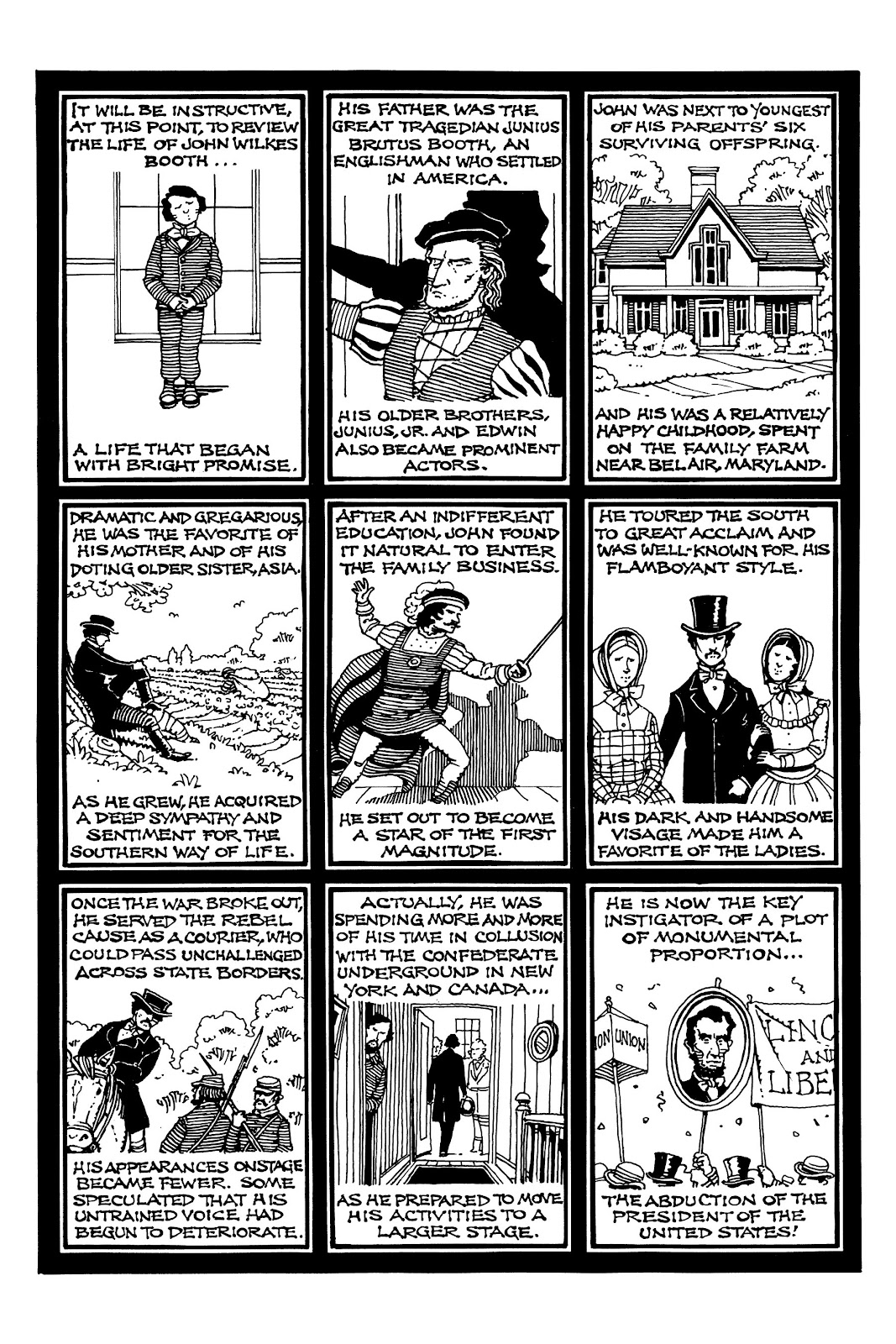
Booth in the common knowledge is seen as a solo act when in fact he was a conspirator, and the initial plan wasn’t murder, but abduction of the President as he attended a theatrical performance. Geary lays out the procedure as planned, revealing it as too complicated and unlikely to succeed. It’s one of many small cameos Geary highlights, adding tone and perspective to the eventual murder. He also shows similar strange incidents applied to Lincoln and those close to him, including Mrs Lincon’s strange paranoia and the President’s dream of his own death. It’s one of several references attributed to Lincoln when considering the possibility of a killer’s attempt on his life and the possibility of his imminent demise.
Geary’s levels of factual detail will astound all bar historians. Who knew Lincoln turned up at the theatre where he would die thirty minutes after the performance had already begun, or that it was interrupted for the orchestra to play ‘Hail to the Chief’ as he arrived? The only time Geary incorporates speculation is in the form of unanswered questions, several concerning Lincoln’s Secretary of War Edwin McMasters Stanton. Well over a century later, Geary acknowledges the answers are never likely to be known.
If there’s a slight drawback to this particular presentation it’s that Geary might have expanded on Booth’s specific objections to Lincoln, but he could equally say the circumstances of the deed and its ramifications are his priority.
No matter how much you think you know about Lincoln’s death and Booth’s participation, Geary will inform in another monumental investigation. It was later combined with four other volumes in the second Treasury of Victorian Murder Compendium.