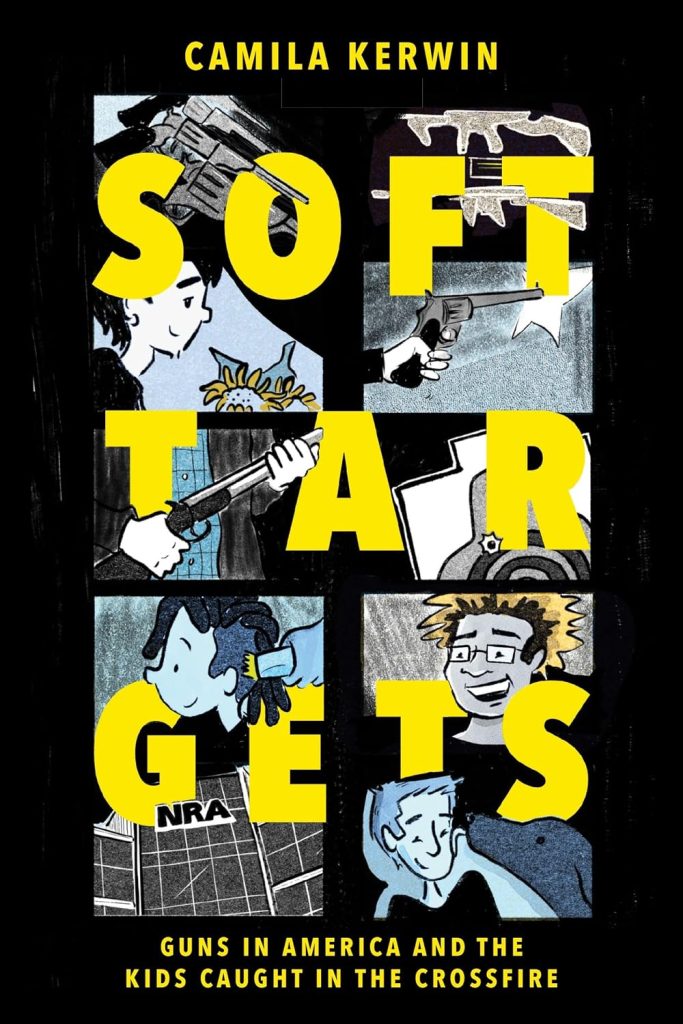
Review by Frank Plowright
In the eyes of the remainder of the world, the USA has a gun problem. However, the constitutional right to bear arms is so entrenched that no amount of atrocities in which multiple innocents die can shift that view among those who could do something about it. In Soft Targets Camila Kerwin begins with her personal childhood experience of firearms before talking with families who’ve experienced the tragedy of their child shot dead. This is in a nation where seven children under seventeen die from gunshots every day. Raise that threshold to nineteen, and the figure rises to a dozen.
The tales of the children’s lives are interspersed with recent gun control campaigns and legislation, and historical material, much of which will surprise. For instance, 19th century frontier towns being locations of frequent shootouts is largely a myth created by mid-20th century films and TV shows. The reality is of far tighter gun control in the 1880s. We’re also introduced to the pro-gun lawyer vilified for advocating laws prioritising child safety with guns, told how the National Rifle Association became politicised and the remarkable story of Bill Dickey and Mark Rosenberg.
For all the history, though, it’s the stories of the victims that are the most powerful, delivering people, not statistics. Joaquin Oliver aged 17 and Makiyah Wilson aged 10 both died as innocent bystanders, Jonah Payne aged 17 took his own life, and Ethan Song aged 15 died in a gun accident, an astonishingly common incident. We learn of their personalities, ambitions and important times in their short lives, and it underlines the often forgotten truth that we all have remarkable moments.
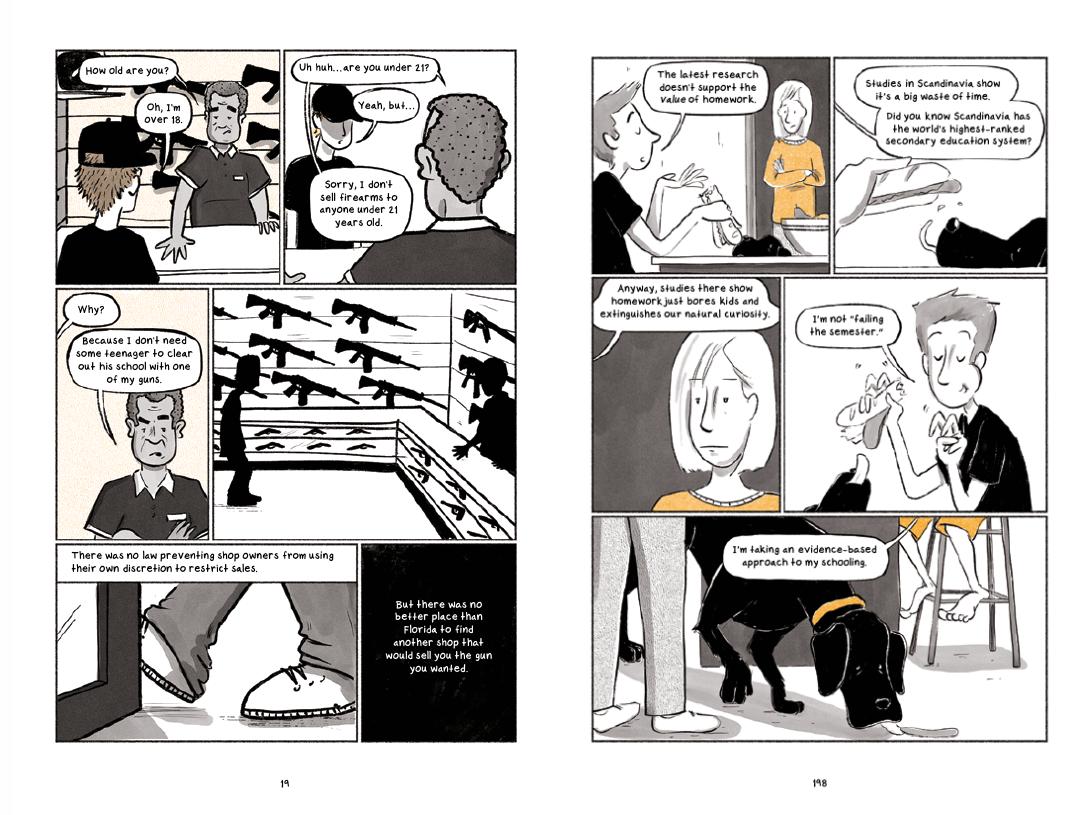
Considering Kerwin’s background is journalism she has an intuitive understanding about telling stories in comics form. Her style is loose, but tidy and complete, ensuring everything that’s required in a panel is present, and diagrams feature when that’s the best option. A similar efficiency applies to the continuity, with viewpoints varied and stylistic techniques such as silhouettes used.
Many interesting statistics populate Soft Targets. One concerns elements of gun control, with the public perception being of a nation divided down the middle, when in fact on several issues a considerable majority are in favour. Kerwin’s view is that guns should be more restricted, which is likely to alienate many pro-gun advocates, but she talks to the Chair of the National African American Gun Association, and to people visiting the NRA headquarters in Virginia. Ultimately, though, however informative Soft Targets is, the common sense imparted will be preaching to the converted, which is so sad.