Review by Frank Plowright
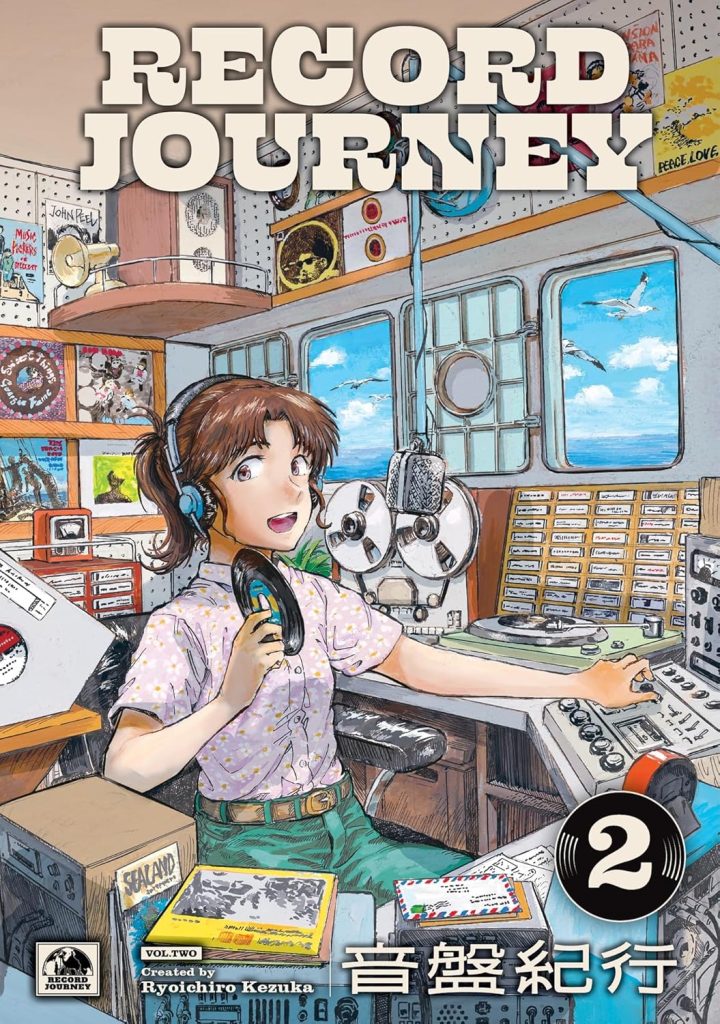
Ryoichiro Kezuka’s first volume of Record Journey was an absolute delight, explaining via eight intimately focussed short stories how music inspires and delights. There’s no departure from formula for Record Journey 2, which is equally memorable.
Kezuka’s stories are distanced from the glamour and hype that the music industry sells, dealing instead with more intense personal excitement generated by reconnecting with a memory or the dedication to hunt down a treasure or to promote it. While music is generally perceived as having a male dominated fan culture, most of Kezuka’s protagonists are women.
Several characters who featured in the first volume are seen again, starting with Lana, her Soviet-era hometown now identified as Riga. It’s another lesson about how fans connected with music when normal methods such as radio and records weren’t available. Former 1960s pirate radio DJ Nikki is also revisited, her story showing how Kezuka either knows his subject really well, or has conducted deep research to discover how the first UK pirate radio stations were supplanted by more commercial alternatives. It’s the longest chapter, taking in police chases, the World War II Maunsell forts and a brief inspirational talk from one of the Staggs, the recurring band featured. Also returning are contemporary record store owner Miyama in two stories. One is a little too insubstantial as an ethereal consideration of music, but the other is a charming journey any obsessive will recognise.
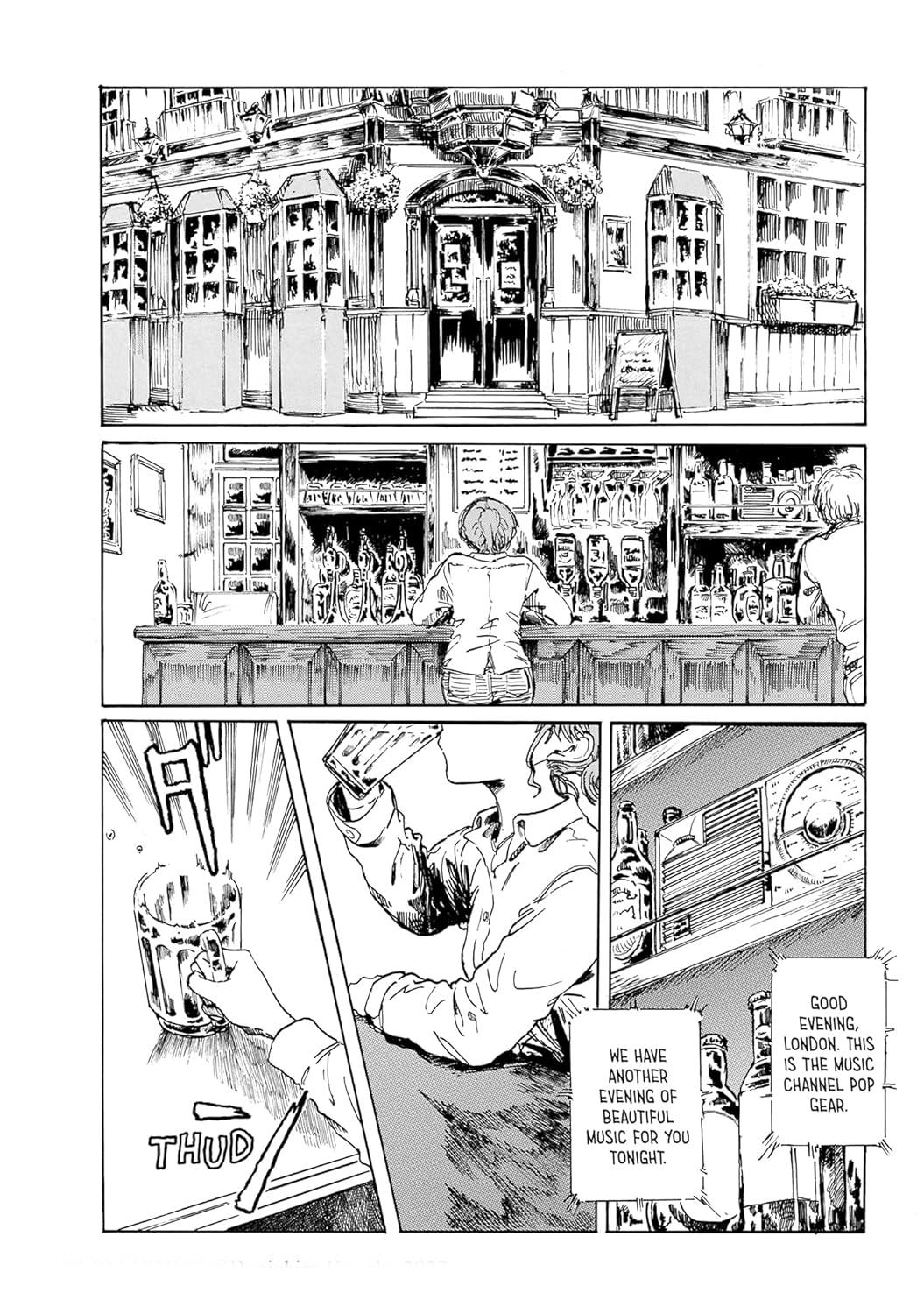
As before, everything is neatly drawn, giving a good sense of time and place, with to attention to background detail and people differentiating cultures and locations. Not to be skipped are the lovingly created chapter endings, each featuring a small, but exquisitely detailed diagram of a location used, the exceptional detail convincing that Kezuka has based them on actual places.
Music as liberation in one form or another is a common theme, and as before grandparents also feature more than once, but there’s perhaps a greater mythologising sentimentality about this selection than previously. Despite that, Kezuka continues to provide thoughtful insights into music, such as how it’s appreciated by a restoration specialist. That’s actually a more whimsical inclusion, moving away into horror, but it’s brief, and Kezuka’s soon back to reality showing how records imported by Americans occupying Japan after World War II influenced culture. It’s a clever tale that can be understood on its own terms, but observant readers will pick up how it connects with other stories.
Record Journey 2 is another wonderful selection for music fans to admire, but Kezuka’s concentration on convincing people places a human heart at the centre of everything able to reach out to a general audience as well.
Tragically, between the publication of Record Journey’s first and second volumes in English, Kezuka died.